

Spain is one of Europe’s most rewarding countries to cross from end to end, but the sheer number of options can leave even experienced travelers overwhelmed. High speed trains, revamped bus routes, cheap domestic flights and scenic road trips all compete for your attention. With a bit of planning and a realistic sense of pace, you can turn what might feel complicated into a smooth, low stress journey from the Atlantic to the Mediterranean and everywhere in between.
Understanding How Spain Fits Together
Spain is larger than many visitors expect, and that is the first key to avoiding stress. Madrid to Barcelona can take around three hours by high speed train, but reaching coastal corners like Galicia, Asturias or Cádiz can add many more hours. Distances that look manageable on a map can quickly turn into long days of travel if you try to do too much. Build your itinerary around a few regions instead of trying to tick off every famous city in one trip.
Spain’s geography also shapes your options. The central plateau around Madrid is linked to coastal regions by major rail and highway corridors, while mountain ranges such as the Pyrenees and the Sierra Nevada slow overland connections. High speed rail covers many of the main north south and east west axes, while buses and regional trains fill in gaps. Understanding that you will often funnel through Madrid, Barcelona, Seville or Valencia will help you design realistic routes with simple connections.
Regional identity is strong in Spain, and transport is partly managed at regional level. This means you may find different ticketing systems, names for suburban trains, and local passes in places like Catalonia, the Basque Country or Andalusia. You do not need to master every detail before you arrive, but it is helpful to know that intercity travel is mainly handled by national rail and long distance bus companies, while local mobility is handled by city or regional authorities.
Finally, Spain’s travel infrastructure is generally modern and reliable, which removes a lot of stress compared with more fragmented systems elsewhere. High speed rail in particular has expanded steadily, with new direct services such as Seville to Barcelona reducing connection times between regions. At the same time, the government has been reforming long distance bus concessions to create more direct, frequent routes between key corridors like Madrid and Valencia, which increases your options if trains are full or expensive.
Choosing the Right Mode of Transport
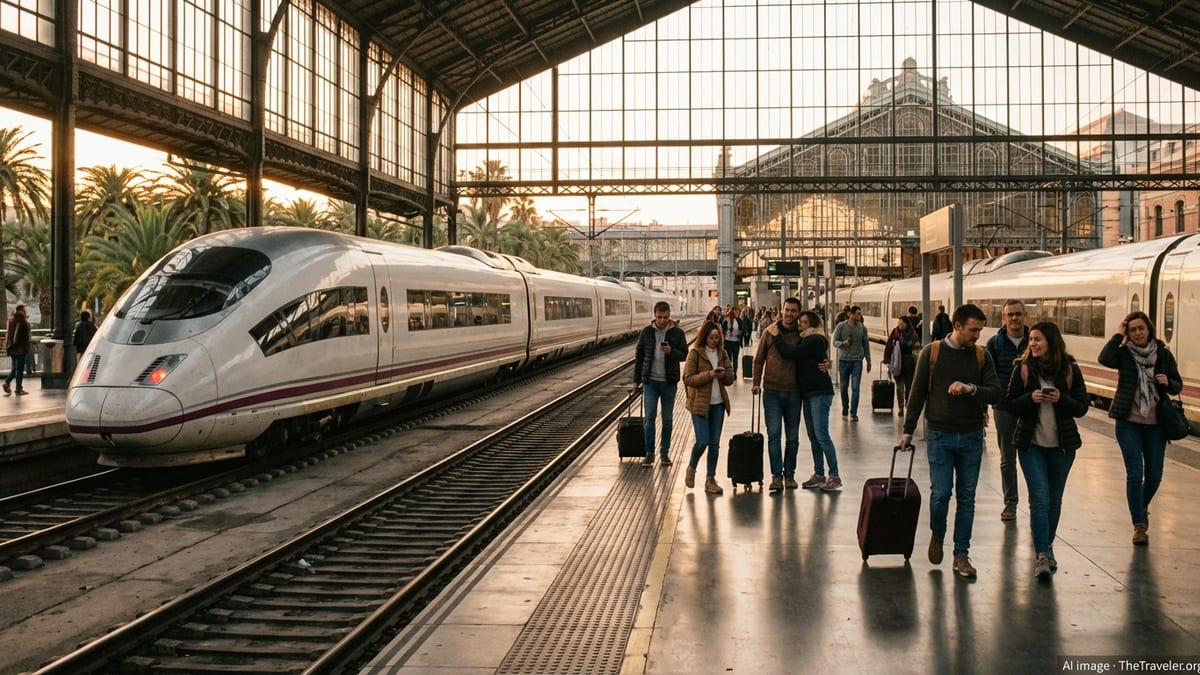
To keep your journey across Spain relaxed, start by deciding which mode of transport fits each leg best instead of committing to just one. High speed trains are usually the fastest and most comfortable way to move between major cities such as Madrid, Barcelona, Seville, Valencia, Málaga, Zaragoza and Alicante. They offer assigned seating, luggage racks and cafe cars, and they connect city centers directly without the need for airport transfers.
Long distance buses cover more destinations than trains and can be especially useful for medium size cities and cross country routes without direct rail links. Companies such as Alsa and Avanza operate many of these lines, and the national government has recently worked on streamlining concessions and creating more direct bus corridors to reduce travel times and fares. Modern coaches generally include air conditioning, Wi Fi on many routes and onboard toilets, making them a comfortable yet economical choice.
Domestic flights can still make sense for very long jumps, such as from Barcelona to the Canary Islands or between the mainland and the Balearic Islands. For strictly mainland travel, however, flying is often less convenient once you factor in transfers to airports, security checks and potential delays. High speed trains on key routes are competitively fast and usually less stressful because you arrive directly in the city center at predictable times.
Renting a car offers maximum flexibility, especially for rural areas, small villages and national parks that can be hard to reach by public transport. Spain’s highway network is extensive and mostly in good condition. Still, driving introduces its own stressors: city traffic, parking restrictions, different traffic laws and the need for an International Driving Permit if you are from outside the European Union. For many travelers, a hybrid approach works best: use trains and buses between big hubs and rent a car only for a few days to explore the countryside.
Making Sense of Trains, Passes and Seat Reservations
Spain’s rail system is centered on the national operator Renfe, with a mix of high speed AVE and similar services, long distance lines and mid distance regional trains. Almost all intercity services require a seat reservation, even when you are using a rail pass, so advance planning is important. In busy periods like summer weekends, seats on popular routes can sell out, and arriving at the station without a reservation can quickly become a major source of stress.
For visitors who plan multiple long journeys in a short time, the Spain Rail Pass is worth considering. It is available to travelers who reside outside Spain and lets you pre purchase a set number of trips, usually valid for several months from purchase and for about a month after your first trip. You still need to reserve a seat for each train, but the pass simplifies budgeting and can be cost effective if you are taking several high speed routes. The key is to compare the total cost of individual advance tickets with the pass price for your specific itinerary.
Travelers using broader European passes such as Interrail or Eurail should know that reserving seats on Spanish trains used to involve long lines or phone calls, which deterred many people. In the last couple of years this has become easier, as some major booking platforms now allow online reservations specifically for passholders on Renfe trains. This reduces the need to queue at ticket counters and makes it more realistic to rely on a pass for a multi country trip that includes Spain.
To keep rail travel calm, decide on your main long distance legs before you arrive and book those seats early, especially for peak days like Fridays, Sundays and holiday periods. Aim to arrive at major stations at least 30 to 40 minutes before departure so you can pass luggage scanners, find your platform and board without rushing. Carry a printed or offline copy of your ticket or reservation and keep your passport or identification handy, as staff may check both before boarding or on the train.
Using Buses, Urban Transport and New Public Passes
Intercity buses provide a valuable safety net when train options are limited or expensive. Routes run between most provincial capitals and many smaller towns, and they can be more frequent than trains in certain corridors. When booking, pay attention to whether the bus uses a central station or an out of town stop, as this can affect your onward connections and how much time you need to change between modes.
Within cities, public transport is usually efficient and straightforward. Madrid, Barcelona, Valencia, Bilbao, Seville and Málaga all have integrated systems combining metro, light rail and buses, often with travel cards that allow unlimited rides over a set period. Using these passes for urban sightseeing keeps costs predictable and removes the hassle of buying single tickets for every short trip. It also reduces your reliance on taxis, which can be harder to find during peak hours or in bad weather.
Spain has also moved toward broader public transport discounts and passes at the national level. In recent years the government has supported free or heavily discounted commuter and mid distance passes on state run rail services for residents who make a minimum number of trips within a set period. More recently, it has announced a nationwide public transport pass that is planned to offer unlimited bus and train travel for a flat monthly fee, with a lower price for younger travelers. These schemes are subject to change and may target residents more than visitors, but they reflect a wider trend toward making public transport more accessible and can influence crowding and availability.
For travelers arriving or leaving by air, intermodal programs linking buses and flights can simplify transfers. Some airlines and bus companies now sell combined tickets that cover a coach ride from regional cities directly to a major airport terminal and then a connecting flight, all under one booking. This takes the guesswork out of coordinating separate tickets and can be a low stress way to reach or depart from less connected regions without renting a car.
Driving Across Spain Without Losing Your Nerve
If you decide to drive, treating it as its own part of the adventure will help you avoid frustration. Spanish roads vary from multilane autovías and autopistas to narrow rural routes through mountains or farmland. Traffic in major cities like Madrid and Barcelona can feel faster and more aggressive than in some countries, and lane markings or traffic lights may not match what you are used to at home. Give yourself time to adjust, avoid driving immediately after a long flight if you can, and plan first days that use simpler routes.
Legally, visitors who want to drive in Spain usually need an International Driving Permit in addition to their home license, especially if their license is not from the European Union. Car rental agencies often request it, and police can fine drivers who do not have one during a roadside check. All occupants must wear seat belts, mobile phones can only be used with hands free operation, and roadside safety rules require reflective vests and warning triangles in case of breakdowns. Observing these basics helps you avoid on the spot fines and stressful encounters.
Parking is another factor that can quickly complicate a road trip. Historic centers in cities like Granada, Seville or San Sebastián often have restricted access zones where only residents or authorized vehicles are allowed. Entering by mistake can result in fines triggered by cameras, sometimes weeks after your trip. To minimize stress, book accommodation with parking on the edge of old towns and rely on walking or public transport for sightseeing. Many Spanish cities offer park and ride facilities or public garages near central areas.
Outside the big cities, driving can be a pleasure. Distances between smaller towns can be short, roads are often well surfaced, and stopping at viewpoints, vineyards or hilltop villages becomes simple. Still, night driving on rural roads deserves caution due to limited lighting, the possibility of animals on the road and occasional unclear signage. Building in realistic driving hours and scheduling daylight arrivals where possible will keep the experience enjoyable rather than exhausting.
Planning Routes, Timing and Accommodation for Calm Travel
The biggest enemy of stress free travel across Spain is an overambitious schedule. Trying to squeeze four or five regions into a week will almost guarantee rushed mornings, tired evenings and too much time in transit. Instead, think in clusters: combine Madrid with nearby cities like Toledo or Segovia; pair Barcelona with Girona or Tarragona; explore Andalusia by linking Seville, Córdoba and Granada; or focus on the northern coast with stops in Bilbao, San Sebastián and Asturias.
Once you have chosen your clusters, sketch the logical order of travel and check which legs are best served by high speed rail, regional trains, buses or a rental car. Pay close attention to travel days that cross long distances, such as between Barcelona and Seville or between Madrid and Galicia. Aim to keep your longest travel days to one or two per trip and surround them with lighter days focused on local exploration. This rhythm gives you time to recover, reduces the feeling of living on a suitcase and lowers the risk that any delay will cause a cascade of problems.
Accommodation choices can also support stress free travel. Staying near major train or bus stations on nights before early departures can save time and anxiety. In cities with excellent public transport, you may not need to be in the absolute center as long as you are close to a metro or tram line. In smaller towns, a central location allows you to walk to most sights, which simplifies your days and decreases the need to navigate unfamiliar bus networks.
Timing matters at a more granular level as well. Spanish daily rhythms differ from those in some countries, with later meal times and an evening paseo culture. Trains and buses, however, run on their own schedules and can depart quite early in the morning. Decide whether you prefer to travel early and arrive by midday, or to move in the afternoon and enjoy a slow morning. Making that choice in advance and booking accordingly will help you align your transport with your personal energy patterns so that days on the move feel manageable instead of draining.
Staying Safe, Avoiding Scams and Managing Crowds
Overall, Spain is considered a safe country to travel in, especially compared with many global destinations, but certain risks deserve attention. Travel advisories from foreign governments typically recommend exercising increased caution due to the general risk of terrorism and occasional unrest, particularly in large cities. In practice, this means staying alert in major transport hubs, tourist sites and crowded events, and following the instructions of local authorities if demonstrations or incidents occur.
Petty crime such as pickpocketing and bag snatching is more common than violent crime in Spain and tends to concentrate in busy urban areas, popular tourist attractions, metro systems and train stations. To minimize the risk, carry only what you need on travel days, use money belts or inside pockets for passports and cards, and keep bags closed and in sight on trains and buses. Avoid leaving valuables on empty seats or overhead racks, and be cautious if strangers create distractions in tight spaces.
Transport related scams are less widespread than in some destinations but still appear from time to time. At airports and major train stations, use only clearly identified taxis or reputable ride hailing services, and confirm that the meter is running on non flat fare routes. Be wary of individuals offering unofficial transfers or insisting that your hotel or train is canceled and steering you toward alternative services. Buying tickets directly from airline, rail or bus company channels, or from well known booking platforms, will help you avoid most problems.
Crowds are another source of stress, particularly in peak seasons and in cities that receive large numbers of cruise passengers. To manage them, book timed entry for major attractions where possible and plan your internal travel legs for midweek rather than weekends. When you can, travel in shoulder seasons such as late spring and early autumn, when weather is still pleasant but demand is lower. On the ground, keeping a flexible mindset and allowing extra time for queues, security checks and boarding will reduce anxiety even when conditions are busy.
Digital Tools, Language Tips and Travel Mindset
Spain is generally well covered by digital tools that can make your journey smoother. Official apps from rail and urban transport operators allow you to check timetables, buy and store tickets, and receive alerts about platform changes or disruptions. Intercity bus companies provide similar options, and real time mapping services show platform numbers or station exits in many major hubs. Downloading key apps before you arrive, and enabling offline access where possible, lets you navigate confidently even if mobile data is slow or temporarily unavailable.
Language is less of a barrier than it once was, but it still helps to learn some basic Spanish transport phrases. Station announcements and signage are often bilingual, especially in airports and on high speed rail, yet staff and drivers may not always be fluent in English, particularly outside major tourist zones. Simple phrases for asking about platforms, delays, reservations and tickets can speed up interactions and reduce misunderstandings. In regions with strong local languages, such as Catalan or Basque, you will see additional names for stations and destinations, but Spanish is widely understood everywhere.
Keeping essential information backed up in multiple forms also lowers stress. Save digital copies of passports, tickets, car rental agreements and insurance details in secure cloud storage, and carry at least one printed copy of your most important reservations for days when batteries or phones might fail. A small notebook with your accommodation addresses, key Spanish words and emergency contacts can be surprisingly useful if technology lets you down at an awkward moment.
Finally, cultivate a flexible mindset. Spain’s relaxed approach to daily life does not always match tightly controlled schedules, and minor delays or timetable changes are part of reality. Accepting a margin of unpredictability, having alternative connections in mind and viewing hiccups as part of the journey will help you enjoy the country’s warmth and diversity instead of fixating on strict plans. When you design your trip with buffer time and realistic expectations, the overall experience of crossing Spain becomes calm, rewarding and memorable.
The Takeaway
Traveling across Spain without stress is less about discovering a single perfect route and more about combining the strengths of each mode of transport. High speed trains handle the main corridors quickly and comfortably, long distance buses fill in gaps and offer budget friendly flexibility, and driving opens up rural corners at your own pace. With thoughtful planning, you can move smoothly between major cities, regional highlights and quieter landscapes without constant rushing.
The keys are to respect Spain’s scale, choose realistic clusters of destinations, secure rail and bus reservations in advance for busy legs, and avoid overloading your days with transfers. Paying attention to safety basics, crowds, language and digital tools further reduces friction. Most of all, allowing time to slow down in each place, rather than racing to the next, will transform your cross country journey into a relaxed exploration of Spain’s cultures, cuisines and landscapes.
FAQ
Q1. What is the least stressful way to travel between major Spanish cities?
The least stressful option for most travelers is usually high speed rail, which links many major cities directly, avoids airport transfers and offers predictable journey times.
Q2. Do I need to reserve seats on Spanish trains in advance?
On most long distance and high speed trains you do, whether you have a regular ticket or a rail pass. Reserving early for busy routes and dates reduces the risk of sold out trains.
Q3. Are long distance buses in Spain comfortable for multi hour trips?
Yes, modern coaches on main routes generally have air conditioning, reclining seats and toilets, and many offer Wi Fi, making them comfortable for journeys of several hours.
Q4. Is it safe to travel alone across Spain by public transport?
For most visitors it is, provided you follow normal precautions, stay aware of your surroundings, watch for pickpockets in crowded places and keep valuables secure on travel days.
Q5. Should I rent a car for my entire trip across Spain?
Not necessarily. Many travelers find it less stressful to use trains and buses between big cities and rent a car only for a few days in rural or coastal areas that lack good public transport.
Q6. How far in advance should I book trains and buses?
For popular high speed routes and peak dates, booking several weeks ahead is sensible. For most buses and off peak trains, a few days in advance is often enough, though earlier rarely hurts.
Q7. What travel documents do I need if I plan to drive?
You should carry your passport, your regular driving license and, if required for your nationality, an International Driving Permit, along with your rental contract and insurance details.
Q8. Are Spanish train stations and bus terminals easy to navigate?
Major stations are generally well signed, but they can be large and busy. Arriving early, checking departure screens calmly and asking staff for help when unsure keeps the experience manageable.
Q9. How can I reduce stress during airport transfers in Spain?
Use official taxis or prebooked services, allow generous time for traffic and security, and consider using public transport links or combined bus and flight tickets when available from your departure city.
Q10. When is the best time of year to cross Spain to avoid crowds?
Late spring and early autumn tend to offer a balance of mild weather and fewer crowds. Traveling midweek instead of weekends further reduces crowd related stress on transport and at attractions.