

Sprawling from the Aegean to the eastern highlands, Turkey is far larger than most first-time visitors expect. Crossing it efficiently means understanding where to fly, when to use the expanding high-speed rail network, how to make the most of intercity buses, and how local transport cards and taxis fit into the picture. With a bit of planning, you can move quickly between major regions while still keeping costs and travel fatigue under control.
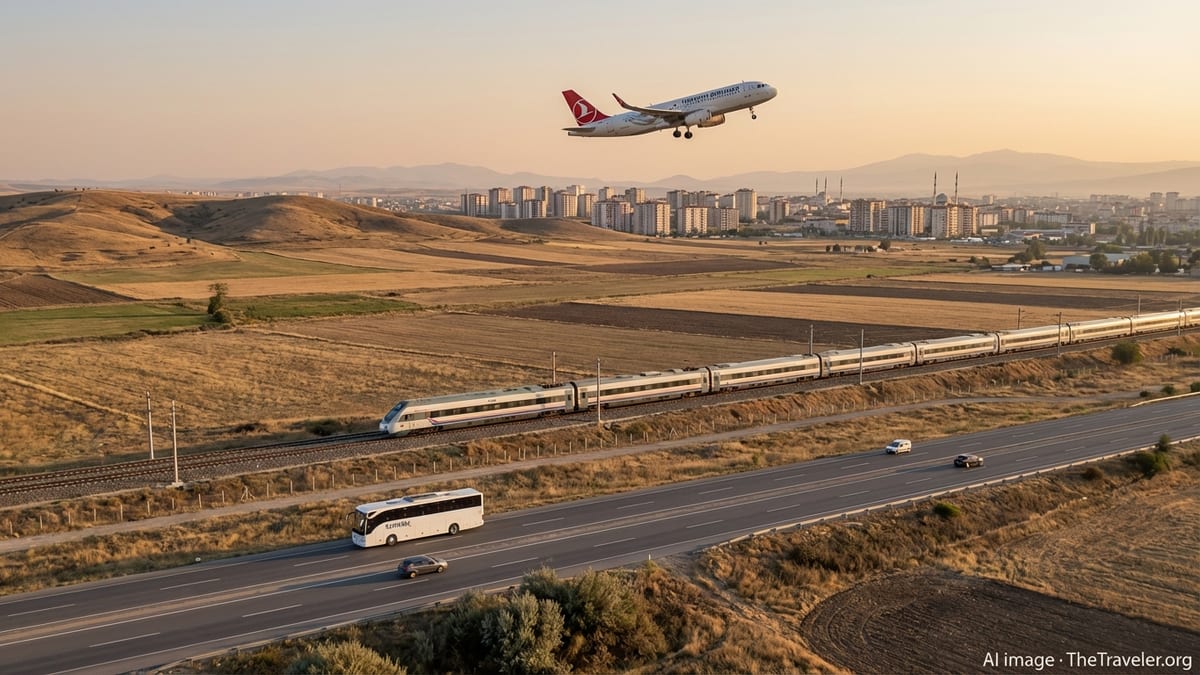
Understanding Turkey’s Distances, Regions, and Hubs
Turkey covers more than 1,600 kilometers from west to east, and the country’s main sights are spread widely between coastal resorts, inland cultural centers, and remote mountains. Istanbul, Ankara, Cappadocia, the Aegean coast, the Mediterranean riviera around Antalya, and the far east around Kars or Van can look close together on a map, but overland journeys can easily run to eight or ten hours. Efficient travel starts with accepting these distances and building an itinerary that prioritizes smart point-to-point connections rather than backtracking.
Most visitors will enter and exit through a few key hubs. Istanbul’s main airport on the European side is a major global mega-hub with extensive connections, while Sabiha Gökçen on the Asian side serves many low-cost and domestic routes. Antalya, Izmir, and Ankara are the other primary air gateways. Thinking in terms of these hubs helps you structure a route: for example, arriving in Istanbul, flying onwards to Cappadocia, drifting slowly along the Aegean or Mediterranean coast, and then flying back out from Izmir or Antalya instead of returning overland to your starting point.
Turkey’s geography also favors a rough west-to-east or east-to-west progression. On a shorter trip, that might mean Istanbul to Cappadocia and then to the Mediterranean, or Istanbul to the Aegean and then inland to Pamukkale and Ankara. On a longer itinerary, you may extend that spine into the Black Sea region or as far as the eastern cities linked by long-distance trains and domestic flights. Efficient travel is less about rushing and more about lining up modes of transport that match each leg of the journey.
Season and terrain matter too. Mountain passes in eastern Anatolia can be affected by winter weather, while summer heat in the interior makes overnight or early morning travel more comfortable. Coastal areas generally have better road and bus coverage, and flights are especially dense on routes that link popular resort areas with Istanbul and Ankara. Timing your crossings through central and eastern regions outside of peak heat or heavy snow will make even long overland journeys smoother.
Flying Within Turkey: When It Makes Sense
Domestic flying is often the most efficient way to cover long distances in Turkey, especially between major hubs or when moving from one coast to another. Turkish Airlines, its low-cost offshoots, and Pegasus operate extensive domestic networks linking Istanbul’s two airports with Ankara, Izmir, Dalaman, Bodrum-Milas, Antalya, and dozens of smaller regional cities. Passenger numbers through Turkish airports exceeded 230 million in 2024, a sign of how central air travel has become for both locals and visitors.
For travelers, that translates into frequent daily services on the busiest routes and competitive fares if you book early or are flexible with times. Journeys that would take 10 to 14 hours by road, such as Istanbul to Van or Antalya to the eastern provinces, shrink to 1 or 2 hours in the air. Even medium distances, like Istanbul to Antalya or Izmir, often make more sense by plane if you want to maximize time on the ground. Antalya Airport’s recent expansion and rising passenger capacity also reflect the growing role of air travel in shuttling visitors quickly to the Mediterranean coast.
To use domestic flights efficiently, pay attention to which Istanbul airport you are using, and try to avoid unnecessarily crossing the city between them, as traffic can be slow. Istanbul Airport on the European side and Sabiha Gökçen on the Asian side serve different airlines and route networks. Planning connections through a single airport simplifies logistics. Where possible, align your long-haul arrival or departure with a domestic connection in the same terminal complex, and allow a comfortable buffer for immigration, baggage, and possible schedule changes.
Unchecked luggage rules, check-in cut-offs, and seasonal demand fluctuations are also worth considering. The summer high season and national holidays can see fuller flights and higher fares on coastal and eastern routes. Booking ahead and traveling light will help you navigate delays or rebookings. For efficiency, focus on chaining your longest jumps by air at the start or end of each travel segment, then relying on trains, buses, or car rentals for shorter regional hops.
High-Speed and Intercity Trains: Smart Rail Routes
Turkey’s modern high-speed rail service, Yüksek Hızlı Tren, connects several key inland cities at competitive journey times. As of 2025, high-speed lines link Ankara with Istanbul, Eskişehir, Konya, Karaman, and Sivas, forming a backbone through northwest and central Anatolia. The Ankara to Istanbul route, for example, runs multiple times daily and can bring the journey down to a manageable rail trip that avoids airport transfers and security lines.
For travelers who value comfort and predictable schedules, these trains can be a highly efficient alternative to buses, especially on the Ankara, Eskişehir, Konya, and Sivas corridors. Trains typically offer reserved seating, various classes, and onboard refreshments. Because demand has grown in recent years, it is wise to book tickets in advance where possible, especially during weekends, holidays, and major events when locals also rely on these services.
Intercity rail beyond the high-speed network remains a mix of classic overnight services and regional trains. These can be atmospheric and scenic but are slower and more prone to delays compared with high-speed lines or express buses. For efficiency, consider them where they align neatly with your route, such as using an overnight train to cover a long stretch while you sleep, but do not rely on them for tight connections or same-day onward flights.
When planning rail travel, factor in station locations and onward links. In many cities, main railway stations are centrally located or well connected by local transport, which saves transit time compared with airports on the outskirts. Using a combination of high-speed train between major inland hubs and buses or local transport for the last leg can be an efficient and comfortable way to cross large segments of the country without excessive backtracking.
Intercity Buses and Coaches: The Workhorse of Overland Travel
Despite the growth of domestic flights and high-speed trains, intercity buses remain the backbone of overland travel within Turkey. Large operators link almost every town and city, with frequent departures on popular routes such as Istanbul to Ankara, Istanbul to Izmir, Ankara to Cappadocia, and the coastal corridors. Modern long-distance coaches generally feature assigned seats, air conditioning, and basic refreshments, making them a reliable and cost-effective choice.
For efficient planning, treat buses as your default mode for medium distances and for reaching smaller destinations away from the rail network. Many routes offer both daytime and overnight services, and the overnight option is particularly helpful on long runs between Istanbul and the Aegean or Mediterranean coast, or from Ankara and Istanbul towards Cappadocia and eastern Anatolia. Sleeping on the bus saves a night’s accommodation and allows you to arrive in the morning ready to explore, though you should build in a quiet day if sleep is light.
Bus stations, known as otogars, tend to be substantial transport hubs located slightly outside city centers, with shuttle buses or local transport connecting to central districts. Efficient travel means allowing time to navigate these terminals, buy tickets, and transfer to local buses, trams, or taxis on arrival. In Istanbul, the newer intercity bus terminal and various company offices across the city can complicate navigation, so verify your departure point in advance and arrive early until you are familiar with the layout.
Compared with flights or high-speed trains, intercity buses are more flexible but can be affected by road traffic and weather, especially in winter or around major holidays when many people travel at once. When possible, book tickets in advance for busy dates, and favor well-known operators that maintain newer fleets and clearer customer service. For maximum efficiency, use buses to stitch together regional segments backed by fixed air or rail legs that anchor your overall itinerary.
Local Transport in Major Cities: Cards, Metros, and Ferries
Efficient travel across Turkey is not just about long-distance hops. Once you arrive in a city, mastering local transport saves both time and money. Nowhere is this more important than in Istanbul, where a tangled network of metros, trams, buses, funiculars, ferries, and the Marmaray cross-Bosphorus rail line all operate under a unified payment system. The Istanbulkart, a rechargeable contactless card, is the key to this network and allows seamless transfers at discounted fares compared with single-use tickets.
As of early 2025, the cost of acquiring an Istanbulkart has risen compared with previous years, and base fares on buses, trams, and metros have also increased. However, the card still offers excellent value given the size of the network. A typical ride costs the equivalent of well under a euro at standard rates, with progressively cheaper charges for multiple transfers within a set time window. Night services between about half past midnight and early morning incur higher fares, but they provide a useful safety net when you are returning from late dinners or flights.
Beyond Istanbul, other major cities such as Ankara, Izmir, Bursa, Konya, and Antalya have their own metro, tram, and bus systems, often supported by rechargeable local cards. These systems are generally straightforward once you learn the card name and where to buy or reload it, typically at kiosks, vending machines, or stations. Using local cards instead of paying cash keeps boarding quick and avoids small currency hassles. In many coastal cities, local buses and trams are the most efficient way to move between beach districts and historic centers without getting stuck in parking searches or taxi queues.
Taxis and ride-hailing services can fill gaps, especially late at night or in areas with limited public transport, but it is worth knowing that taxi fares in Istanbul and other large cities have increased significantly since early 2024. Always check that the meter is running, confirm approximate costs in advance for longer journeys, and rely on reputable taxi stands in busy areas. For sheer efficiency at busy times, especially during rush hours, metros and ferries often outperform road vehicles, particularly in Istanbul where the Marmaray and ferry lines elegantly bypass gridlocked bridges.
Driving, Car Rentals, and Regional Road Trips
For certain routes, renting a car can be the most efficient way to explore Turkey, especially if your focus is on scattered coastal towns, remote ruins, or mountain villages not well served by public transport. Driving gives you the flexibility to stop at viewpoints, detour to quieter beaches, and adjust your schedule on the fly. Modern highways between major cities are generally in good condition, and road signage on main routes increasingly includes Latin script alongside Turkish, easing navigation for visitors.
However, driving in large cities requires patience and caution. Istanbul’s traffic is often congested, parking can be scarce in historic areas, and local driving styles can feel assertive to those unfamiliar with them. For efficiency, many travelers choose to avoid car rentals while based in Istanbul, instead picking up a vehicle only when leaving the city for a road trip along the Aegean or Mediterranean coasts, or through the lakes region and Cappadocia. Dropping the car in another city with a return flight or train can save unnecessary backtracking.
Fuel prices, motorway tolls, and parking fees add to the cost of driving, which may make buses or shared transfers more economical for solo travelers. For couples or small groups, however, a car can be both time-efficient and cost-effective over several days, especially where public transport connections involve multiple changes. To travel efficiently, plan realistic driving days that allow for stops and avoid driving long unfamiliar routes at night, especially in rural or mountainous areas where lighting and signage may be limited.
In many regions, a hybrid approach works best. You might fly from Istanbul to Izmir, rent a car to explore the Aegean coastline and inland sites like Ephesus and Pamukkale, then drop the car and continue by bus or domestic flight to Antalya or Cappadocia. Thinking in terms of regional loops anchored by airports or high-speed train stations lets you enjoy the freedom of the open road without committing to a long, tiring cross-country drive.
Planning an Efficient Multi-Stop Itinerary
Turning these transport options into a coherent route is where efficient travel across Turkey really comes together. The key is to combine fast long-distance hops with slower regional exploration, minimizing unnecessary returns to the same city. For a first-time visitor with around ten days, one efficient pattern is to start in Istanbul, spend several days exploring with an Istanbulkart and ferries, then fly to Cappadocia for hot-air balloons and valleys, and finally fly on to Izmir or Antalya for coast time before flying out. Each leg uses air travel to leapfrog long overland stretches, while local transport or short transfers cover the rest.
On a longer two- or three-week trip, rail and bus can take a larger role. You might begin in Istanbul, take a high-speed train to Ankara, continue by bus to Cappadocia, then bus or drive down to the Mediterranean coast, working your way along to Antalya or further west towards Fethiye, Marmaris, and Bodrum. From there, short domestic flights or intercity buses can return you to a major hub like Izmir or Istanbul. Structuring the route as a rough line or loop rather than a zigzag minimizes both costs and transit days.
Public holidays and peak summer months require extra attention. During Eid periods and school holidays, demand for buses, trains, and flights rises sharply, and popular routes and overnight services may sell out. Booking long-distance segments in advance and leaving more flexible days for local exploration allows you to keep moving without being trapped by fully booked departures. Outside peak times, a balance between advance bookings and some on-the-ground flexibility works well.
Finally, think realistically about your own pace. Efficient travel is not the same as constant motion. Building in occasional slower days, especially after overnight buses or long train journeys, actually keeps your overall route efficient by preventing burnout and last-minute changes. Aim to cluster sights within each base city using local transport passes, so you are not constantly checking in and out of accommodation. Two or three nights in key hubs, linked by thoughtfully chosen transport modes, will give you a smoother and more rewarding journey across Turkey than racing to tick off every region.
The Takeaway
Traveling efficiently across Turkey means matching each leg of your journey to the transport mode that best fits its distance, terrain, and timing. Use domestic flights to cross long stretches between major regions, rely on high-speed trains where they exist to anchor inland journeys, and lean on Turkey’s extensive intercity bus network for medium distances and smaller cities. In Istanbul and other large urban centers, local transport cards and metro or tram networks keep you moving quickly while keeping costs manageable.
By structuring your itinerary around logical hubs such as Istanbul, Ankara, Izmir, Antalya, and Cappadocia, and by plotting a broadly linear route instead of constant backtracking, you make the most of your time on the ground. A willingness to book key flights and trains in advance, balanced with flexibility for local exploration, allows you to respond to weather, energy levels, and newfound interests without derailing your plans.
Above all, efficiency in Turkey is about understanding the country’s scale and embracing its layered transport system rather than fighting it. When you treat each leg as an opportunity to choose the best tool for the job, the distances shrink, connections become smoother, and the journey itself becomes part of the experience. With a little forethought, you can cross continents within the same country and still arrive with energy left to enjoy what awaits at the other end.
FAQ
Q1. What is the most efficient way to travel long distances within Turkey?
The most efficient option for long distances is usually a domestic flight between major hubs, backed up by high-speed trains where they fit your route.
Q2. When do high-speed trains make more sense than flying?
High-speed trains are ideal when stations are central, security is light, and total door-to-door time rivals or beats flying, such as between Ankara, Eskişehir, Konya, and Istanbul.
Q3. Are intercity buses in Turkey comfortable for overnight trips?
Many long-distance coaches are modern and reasonably comfortable, making overnight trips a practical way to save time and a night’s accommodation on longer routes.
Q4. Do I need to book bus and train tickets in advance?
Advance booking is strongly recommended during holidays and summer on popular routes, while off-peak you often have more flexibility, especially for buses.
Q5. How useful is the Istanbulkart for visitors?
The Istanbulkart is extremely useful, giving access to almost all public transport in the city with discounted fares and easy transfers compared with single-use tickets.
Q6. Is renting a car in Turkey a good idea for efficiency?
Renting a car is efficient for exploring coastal areas and rural regions with limited public transport, but it is less practical inside big cities with heavy traffic.
Q7. How should I handle transport during major Turkish holidays?
Check holiday dates in advance, book long-distance tickets early, and allow extra time at stations and airports, as demand is significantly higher during these periods.
Q8. Can I rely on public transport for reaching beaches and ruins?
In many resort areas you can reach beaches and some ruins by local buses and minibuses, but remote sites may require taxis, tours, or a rental car for efficiency.
Q9. What is the best way to move between Istanbul’s two airports and the city?
Airport buses, metro lines, and taxis all connect the airports with central districts; for speed at busy times, rail links and dedicated coaches are often superior to regular taxis.
Q10. How many regions can I realistically cover in a two-week trip?
For a balanced and efficient trip, plan on three or four main regions, such as Istanbul, Cappadocia, and one or two coastal areas, linked by flights or key train routes.