

More news on this day
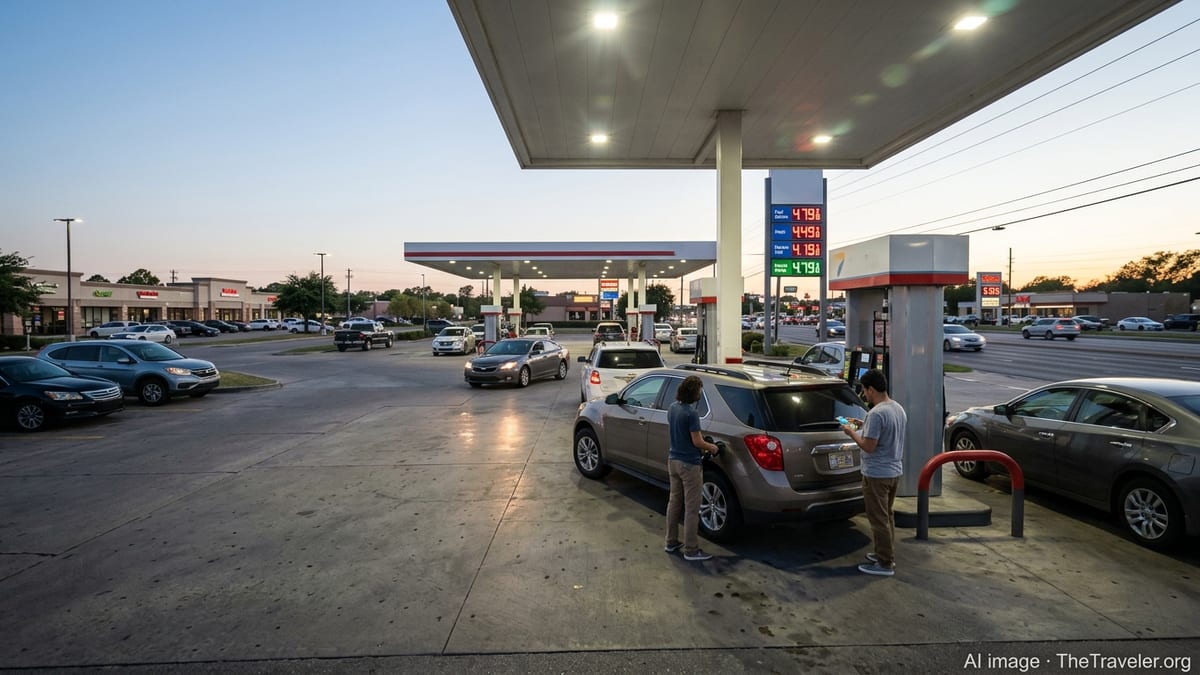
With the U.S. national average for regular gasoline hovering just under 4 dollars a gallon in late March 2026, according to widely cited AAA data, budget-conscious drivers are searching for ways to blunt the impact. One of the most widely used tools is GasBuddy, a long-running app built on crowdsourced fuel prices that now offers route planning, payment options and fuel tracking aimed at helping motorists pay less every time they fill up.
Get the latest news straight to your inbox!
Why GasBuddy Matters As Prices Climb
GasBuddy launched in the early 2000s as a simple website where drivers could share pump prices in real time. Over two decades, it has grown into a major platform covering tens of thousands of stations across North America, with a mix of user reports and commercial data feeds. Industry analyses describe it as one of the largest sources of retail gasoline price information, used by consumers and energy companies alike to understand what is happening at street level.
That breadth of coverage has become more important as volatility returns to the fuel market. Recent geopolitical tensions and refinery disruptions have pushed prices sharply higher in many U.S. regions, with local news outlets reporting jumps of 40 cents or more per gallon in a matter of weeks. In that environment, price gaps of 20 to 40 cents between stations just a few miles apart are increasingly common, turning accurate, localized data into a meaningful way to save money.
GasBuddy’s core promise is to surface those differences before a driver commits to a station. Rather than relying on highway signs or guesswork, the app shows a live map of nearby prices, highlighting the lowest options within a set radius or along a planned route. For many motorists, that is now a first line of defense against fast-moving increases at the pump.
Getting Started: Finding the Cheapest Station Nearby
For everyday commuting, the quickest way to use GasBuddy is through its standard price map. The company’s help documentation notes that, once location permissions are enabled, the “Find Gas” feature on the app home screen pulls in nearby stations and lists current prices for regular, midgrade, premium and diesel fuel. Drivers can also search manually by entering a city name or ZIP code to check prices before leaving home.
From there, users can filter by fuel grade, sort by price or distance, and refine the map to focus on specific brands or amenities such as car washes and convenience stores. Color-coded pins make it easier to see where the cheapest options cluster, while a list view ranks stations from lowest to highest price. For anyone filling up several times a week, consistently choosing the cheapest station within a short detour can add up to noticeable monthly savings.
Accuracy is a common concern with any crowdsourced platform, and GasBuddy has publicly emphasized its focus on data integrity. The service highlights how timestamps show when a price was last updated, rewarding frequent contributors with points and perks while allowing other users to flag and correct outdated entries. Third-party reviews note that this combination of incentives and verification has helped keep error rates relatively low compared with older, purely manual reporting systems.
Using Route Planning and Price Tools on Road Trips
GasBuddy’s tools become especially useful away from home, when drivers may be unfamiliar with local stations and regional price patterns. Travel-focused reviews point to the app’s trip planning features, which allow users to enter a starting point, destination and vehicle details. The app then suggests where to stop for fuel along the route, factoring in tank size and typical range.
On long drives, that can help motorists avoid expensive stretches where prices spike, such as isolated highway exits or metro areas with particularly high averages. By identifying cheaper stops a few exits earlier or later, the app can shift a family road trip budget by several dollars per fill-up, multiplied across multiple tanks.
Some versions of the app also display historical price trends and daily averages for specific cities or states. While these charts do not guarantee future movements, they can help travelers understand whether a sharp rise is part of a short-term shock or a longer pattern. When prices are climbing quickly, that information may encourage drivers to top off earlier; when markets are easing, it might make sense to buy only enough to reach a cheaper region.
Stacking Savings With Pay-At-Pump Features
Beyond simple comparison shopping, GasBuddy has introduced financial tools designed to cut a few more cents off each gallon. Coverage in consumer finance and technology outlets describes the “Pay with GasBuddy” program as a debit-style card or in-app payment method linked to a user’s bank account. Participating stations offer discounts for customers who pay through this channel, with advertised savings that can range from a couple of cents per gallon to larger promotional offers.
Drivers considering these options are urged by consumer advocates to read the fine print. While the potential savings can be meaningful for high-mileage commuters, the programs typically draw funds directly from checking accounts, and may not carry the same rewards or protections as some credit cards. For careful users who track balances closely, combining per-gallon discounts with the app’s station comparisons can deepen overall savings.
GasBuddy also surfaces digital coupons and limited-time promotions from certain fuel retailers. These offers, which might include cents-off discounts or bundle deals on in-store items, tend to be most visible in areas with heavy competition among stations. Regular users who check the app before filling up can take advantage of those extras when they align with planned purchases.
Tracking Your Fuel Spending Over Time
For many households, the impact of higher gas prices is felt gradually in monthly budgets rather than just at the moment of purchase. To address that, GasBuddy has added tools to log fill-ups and monitor long-term fuel costs. The company’s support pages describe a “Fuel Logs” feature that lets drivers record gallons purchased, total cost and odometer readings, either manually or by linking transactions made through its payment program.
Over time, that data can show how much a driver spends per month on fuel, how prices have changed in their area, and how vehicle efficiency shifts with different driving patterns or maintenance. For those watching every dollar, this kind of record makes it easier to adjust commuting habits, compare the cost of alternative routes, or evaluate whether a more efficient vehicle might be justified.
Analysts who track consumer behavior note that pairing price-comparison apps with simple budgeting tools often leads to more consistent savings. By turning each tank into a data point rather than an isolated purchase, drivers can see the cumulative effect of choosing cheaper stations and timing fill-ups strategically. In an era of unpredictable fuel costs, that level of visibility may be as valuable as any single discount at the pump.