

Getting around Thailand can feel intimidating at first glance, but the country’s mix of modern rail networks, classic tuk tuks, river boats and long distance buses is surprisingly easy to master once you know how each system works. Whether you are navigating Bangkok’s rush hour, island hopping in the south or exploring smaller provincial towns, understanding local transport will save you time, money and stress while keeping your trip safe and enjoyable.
Understanding Thailand’s Transport Landscape
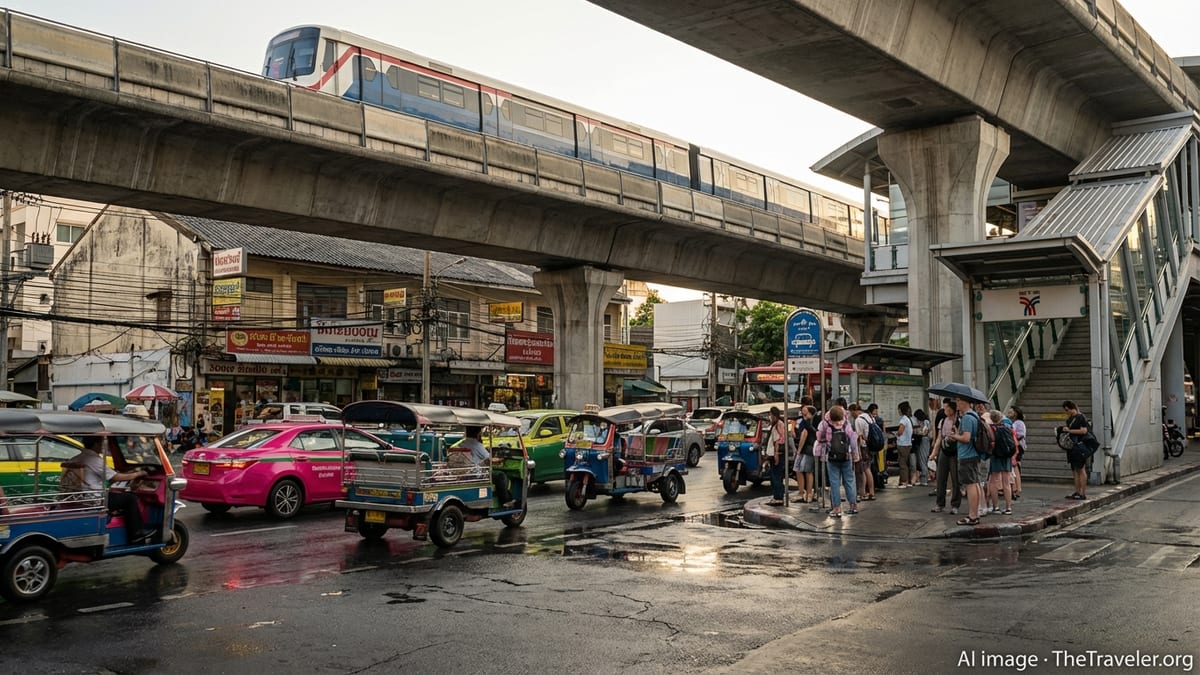
Thailand’s transport network combines cutting edge urban rail with informal systems that have evolved over decades. In Bangkok and several major cities, you will find modern skytrains and metros running on fixed timetables with clear signage and air conditioned carriages. At the same time, traditional modes such as tuk tuks, motorcycle taxis, songthaews and river boats remain popular for short hops and local connections, particularly where rail and formal bus routes do not reach.
For visitors, this variety is both a strength and a source of confusion. Fares, payment methods and levels of comfort vary widely from one mode to another. Bangkok’s BTS Skytrain, MRT metro and Airport Rail Link use electronic cards, tickets or contactless payments, while local buses in provincial towns often rely on cash paid directly to the driver or conductor. Optional ride hailing apps and private transfers add yet another layer of choice, especially for those willing to pay more for convenience.
Broadly speaking, Thailand’s public transport is affordable by international standards, and many options are well suited to budget travel. City rail lines tend to be the most efficient way to avoid traffic, while local buses and songthaews help you travel like a resident for very low fares, provided you are comfortable with basic conditions and sometimes vague schedules. Understanding when to choose each option is the key to traveling efficiently.
Before you set out each day, it helps to think in terms of connections. Consider using rail or express boats for long cross city journeys, then switching to tuk tuks, motorcycle taxis or ride hail for the final short leg. On longer routes between cities, combine intercity buses, trains or domestic flights with local services at either end. With a little planning, the system becomes intuitive after only a few days.
Bangkok’s Rail Systems: BTS, MRT and Airport Rail Link
Bangkok’s rail network is the backbone of urban transport for many residents and visitors. The BTS Skytrain runs on elevated tracks across central districts, connecting popular areas such as Siam, Sukhumvit, Silom and the riverside. Fares are distance based and typically sit within a moderate range per ride for most tourist journeys. You can buy single journey tickets from vending machines or counters, but frequent users will find it far more convenient to purchase a reloadable Rabbit card at any BTS ticket office and top it up as needed.
The MRT metro network, which includes the Blue and Purple Lines, operates mostly underground in central districts and above ground in outlying areas. MRT fares are similarly distance based and remain relatively low for most inner city trips. Tickets are sold as plastic tokens from machines and counters, while locals often use stored value cards. Since 2025, a unified Mangmoom card has been gradually rolled out across MRT operated lines, but it does not replace the Rabbit card and currently does not function on the BTS system. Visitors should be prepared to hold at least one card for BTS and another for MRT if they plan to rely heavily on rail.
The Airport Rail Link connects Suvarnabhumi Airport with central Bangkok, providing a reliable alternative to congested highways. Trains run frequently during the day, with stops at several interchange stations where you can switch to the BTS or MRT. Tickets can be purchased from machines using cash or cards, or by using the line’s own stored value card or supported contactless bank cards at selected gates. For many travelers, combining the Airport Rail Link with BTS or MRT is the fastest and most predictable way to reach central hotels during peak traffic.
One useful detail is that integrated fare and ticketing across all systems is still a work in progress. While Thai citizens who register through government platforms may qualify for special flat fare schemes on certain lines, visitors typically pay regular distance based fares and must tap in and out separately on each system. When transferring between BTS, MRT and Airport Rail Link, allow a few extra minutes to exit, buy a new ticket or tap a different card, and pass through security checkpoints where required.
City Buses, Songthaews and Local Shared Transport
Beyond the rail network, local buses and shared vehicles remain essential for reaching neighborhoods, markets and smaller towns that trains do not cover. In Bangkok, a mix of air conditioned and open window public buses ply fixed routes across the city. Fares are low compared with rail and can vary by distance or bus type. You usually pay a conductor or the driver in cash, often by handing over coins and small notes after boarding and telling them your destination. Signage is sometimes only in Thai, so it helps to check route numbers in advance, use navigation apps or ask locals for confirmation before hopping on.
In many provincial cities and tourist hubs such as Chiang Mai, Chiang Rai, Krabi and Phuket, songthaews serve as flexible shared taxis. These are pickup trucks with two rows of bench seats in the back, operating on semi fixed routes but also willing to deviate slightly for a small group or chartered ride. You normally hail one from the roadside, tell the driver your destination and confirm the fare in advance. Prices remain modest for short rides, but can increase if you are the only passenger or traveling further than the usual route.
Songthaews and local minibuses can feel less structured than city rail, yet they offer a valuable window into everyday Thai life. Riders may include school children, market vendors and office workers, and the pace is unhurried. Keeping small change handy is important, as many drivers cannot easily break large bills. If you are unsure whether a vehicle is operating as a shared service or a private charter, a quick clarifying question about price per person versus total fare can prevent misunderstandings.
In tourist centers, you may also encounter informal shared vans for short inter town routes or shuttles to attractions such as waterfalls, temples or night markets. These can be an economical option when scheduled services are scarce, but quality and safety standards vary. Checking the condition of the vehicle, the number of passengers on board and the driver’s demeanor before boarding is a simple way to gauge whether you are comfortable proceeding.
Tuk Tuks, Motorcycle Taxis and Ride Hailing Apps
No discussion of Thai transport would be complete without tuk tuks and motorcycle taxis. Tuk tuks, the iconic three wheeled motorized rickshaws, are common in Bangkok and other cities, particularly around tourist neighborhoods and major attractions. They are best suited to short to medium distances, especially at times when traffic is heavy and you prefer an open air ride to a crowded bus. Tuk tuks do not use meters, so fares should always be negotiated before departure. Drivers often quote higher prices initially around popular sights, so polite bargaining can bring the rate down to a more reasonable level.
Motorcycle taxis provide one of the fastest ways to cut through traffic, especially at rush hour. They operate from clearly marked stands near intersections, BTS and MRT stations, and major office complexes. Riders wear orange or other colored vests, and fares are usually posted on a small board or agreed verbally. Short rides typically cost a modest amount, increasing with distance. While helmets are legally required, the quality and availability of passenger helmets can vary. If you are not comfortable with the safety standards, consider another mode of transport or use motorcycle rides booked through ride hailing apps that emphasize helmets and basic safety rules.
Ride hailing services have expanded rapidly in Thailand and are now a familiar part of the urban transport mix. Apps such as Grab operate in Bangkok, Chiang Mai, Phuket and many secondary cities, offering options including private cars, licensed taxis, motorbikes and lower cost saver tiers. These platforms are popular with international visitors because they provide upfront fare estimates, built in navigation and cashless payment options through cards or wallets. Data from recent years indicates strong growth in airport transfers and trips to shopping districts and event venues booked via ride hail, reflecting how central these apps have become to tourist mobility.
When using ride hailing apps in Thailand, keep a few practical points in mind. First, pick up locations at major shopping centers, transport hubs and airports may be designated or slightly away from official taxi queues, so follow the in app map carefully. Second, check the license plate and driver information before getting in, and confirm the name on the booking to avoid mix ups. Finally, remember that while fares are generally reasonable, surge pricing can apply during heavy rain, major concerts or festival nights, so public transport may still be the better option at peak times.
Boats, Ferries and Island Connections
Water transport plays a larger role in Thailand than many visitors initially expect. In Bangkok, river and canal boats are an efficient way to avoid gridlocked roads while enjoying a different perspective on the city. Public express boats on the Chao Phraya River stop at piers serving historic districts, temples and riverside neighborhoods. Fares are low, and tickets can be purchased at the pier or paid on board depending on the route. Tourist boats and hop on hop off services cost more but provide onboard guidance and clearer explanations for first time visitors.
On islands and along the coasts, ferries and speedboats connect main ports to smaller islands and beach destinations. Routes in areas such as the Gulf of Thailand and the Andaman Sea are operated by a mixture of larger companies with scheduled car ferries and smaller operators using passenger only speedboats. Crossing times and comfort levels differ widely, particularly in choppy seas during the monsoon seasons. Crew usually provide basic safety instructions, though enforcement of life jacket use can vary. If you are prone to motion sickness, planning travel for earlier in the day and choosing larger vessels where possible can make journeys more comfortable.
Local boat services also exist within island communities, linking piers with beachfronts or outlying villages. Traditional long tail boats remain common, especially in southern provinces. These boats often operate on a flexible, demand driven schedule: they leave when there are enough passengers or when a private charter is arranged. As with tuk tuks, it is crucial to fix the price before departure, clarify whether it is per boat or per person, and ask about any extra charges for luggage or fuel. Cash payments are the norm, and services can be temporarily suspended in rough weather.
For longer coastal trips, overnight ferries and combined bus boat tickets are sold by travel agencies and transport companies, particularly on routes linking Bangkok or Surat Thani with islands such as Koh Samui, Koh Phangan and Koh Tao. While these packages are convenient, it is worth verifying departure times, transfer points and approximate travel durations, as schedules can change with seasons and sea conditions. When possible, choose reputable operators, check the basic condition of the vessel and avoid overcrowded boats.
Intercity Travel: Trains, Buses and Domestic Flights
Thailand’s intercity transport network offers multiple options for moving between regions. Traditional rail lines connect Bangkok with major cities and border points, and new high speed and upgraded routes are being phased in over time. Regular trains vary from basic third class carriages with fans and open windows to air conditioned sleepers on popular overnight routes. Tickets can usually be purchased at stations or via authorized booking channels, with prices that remain attractive for budget and mid range travelers. Train journeys are slower than flights on most routes but allow you to see the countryside and avoid some of the stresses of highway travel.
Intercity buses remain the workhorse of long distance travel in Thailand. They originate from large bus terminals in Bangkok and regional hubs and range from basic government operated services to higher comfort VIP and first class coaches. Fares are generally moderate across all tiers, though the best equipped buses with extra legroom, snacks and on board toilets carry a price premium. For safety and reliability, it is usually better to book with established companies or through official counters at major terminals, instead of unverified touts or low cost operators with minimal information about their vehicles.
Safety remains an important consideration on long distance buses. While many companies maintain modern fleets and professional drivers, some routes still suffer from overnight schedules with limited rest stops and drivers working long hours. Whenever possible, choose departures that allow you to arrive during daylight, and consider breaking very long routes into segments. On any night bus or train, keep valuables close, either in a small daypack that you can keep by your seat or bunk, or in a money belt.
Domestic flights are often the fastest way to cover large distances, especially between Bangkok and southern or northeastern provinces. Several Thai and regional airlines operate frequent services between major cities and tourist centers. Flight prices fluctuate with season and demand, so booking ahead can yield better fares. Once you land, you can use airport buses, shared shuttles, metered taxis or ride hailing apps to reach your final destination. While domestic air travel is efficient, combining one or two flights with slower overland segments allows you to experience both convenience and the character of local transport.
Tickets, Cards, Payments and Practical Tips
Successfully navigating local transport in Thailand often comes down to understanding how to pay and which tickets or cards you really need. In Bangkok, a combination of a BTS Rabbit card and some form of MRT ticket or stored value card remains the most practical approach for frequent users of rail. Rabbit cards can be issued at BTS ticket counters for a modest fee plus an initial stored value. They can then be topped up at machines, station counters and various partner outlets, which makes them useful for both commuters and longer stay visitors.
On the MRT and monorail lines, stored value cards and the newer Mangmoom card simplify repeated travel, although many short term visitors still rely on single journey tokens. For occasional trips, purchasing a token each time is perfectly workable, though queues can build at peak hours. Selected stations now support contactless payment through major bank cards, which lets you tap in and out without purchasing a separate ticket. However, coverage is not yet universal, so relying solely on foreign bank cards can be risky if gates or readers are temporarily out of service.
Elsewhere in Thailand, cash continues to dominate for local buses, songthaews, tuk tuks, boats and smaller operators. Keeping a mix of small denomination notes and coins is extremely helpful, as drivers and conductors may not have change for larger bills. While digital wallets and QR code payments are widespread among locals, they are usually tied to Thai bank accounts or mobile numbers, which most short term visitors do not have. In practice, this means that cash and, in cities, ride hailing apps remain your most dependable tools.
Several general habits will make using local transport smoother. Aim to travel slightly outside rush hours in Bangkok when possible, both for comfort and to reduce stress when transferring between systems. Double check the operating hours of the last trains or boats for the evening, particularly around public holidays or festival periods when special schedules can apply. Finally, factor in Thailand’s climate: midday heat and sudden tropical downpours can quickly make a short walk feel longer, so consider planning your routes to minimize exposure and use shaded walkways or indoor connections where available.
Safety, Etiquette and Cultural Considerations
Most journeys on local transport in Thailand are uneventful and safe, but a few basic precautions will help you avoid problems. On crowded trains, buses and boats, keep your bag in front of you with zippers closed, and avoid displaying large amounts of cash or expensive devices. On night journeys, particularly in open buses or songthaews, keep valuables zipped away rather than left on seats. When using motorcycle taxis or scooters booked through apps, wear a helmet if provided and avoid riding if you feel the driver is speeding or weaving through traffic too aggressively.
Scams targeting visitors are relatively limited on formal public transport, but there are a few recurring patterns to watch for. Around major tourist sites, some tuk tuk drivers may offer very low fares in exchange for shopping stops at gem stores or tailor shops where they receive commissions. If you are not interested in shopping, politely decline these offers and request a straightforward point to point fare instead. Similarly, if a quoted price seems vague, ask clearly whether it is per person or for the whole group before you get in.
Understanding basic etiquette makes rides more pleasant for everyone. On trains and buses, priority seats are reserved for monks, older people, pregnant passengers and those with disabilities; if you are using one of these seats and see someone in need, you should stand and offer your place. It is customary to queue in an orderly line on platforms and at bus stops, and to stand clear of carriage doors until passengers have disembarked. Loud phone calls, eating strong smelling food and placing bags on seats are generally discouraged, especially during busy periods.
Cultural sensitivity is also important when sharing space with monks or when traveling through rural communities. Women should avoid sitting directly next to monks on crowded buses or trains and should not touch them. Dress codes on transport are relatively relaxed, but very revealing swimwear is best kept to beaches and pools rather than used as regular clothing on buses or trains. A friendly attitude, a simple greeting in Thai and patience with occasional delays go a long way toward creating positive interactions with drivers and fellow passengers.
The Takeaway
Learning to use local transport in Thailand transforms your trip from a series of point to point transfers into a richer experience of the country’s everyday life. Modern rail networks in Bangkok provide a comfortable backbone for cross city travel, while buses, songthaews, boats and ride hailing services fill in the gaps to take you door to door. Each mode has its quirks, but most are straightforward once you have observed them in action and made a few short journeys.
Plan ahead by identifying which systems you will rely on most, and consider investing in the appropriate stored value cards if you expect to use rail frequently. Balance cost and convenience by mixing public options with occasional app based rides, especially late at night or with heavy luggage. Above all, stay flexible. Weather, traffic and festivals can affect schedules, but they also create memorable encounters that come from sharing a bus with local families or watching the city glide by from a river boat.
With realistic expectations, a basic grasp of payment systems and a willingness to ask for help, you will find that Thailand’s varied transport landscape is more accessible than it first appears. Mastering it not only saves money and time, it also opens up neighborhoods, markets and viewpoints that many visitors never reach, giving you a deeper and more authentic sense of the country.
FAQ
Q1. Do I need a transport card to use public transport in Bangkok?
Not strictly. You can buy single journey tickets for BTS, MRT and Airport Rail Link, but a Rabbit card for BTS and a stored value or Mangmoom card for MRT make frequent travel faster and more convenient.
Q2. Can one card be used on both BTS and MRT systems?
At present, no single card reliably covers both BTS and MRT for most visitors. Rabbit cards are primarily for BTS and some monorail lines, while Mangmoom and MRT cards focus on MRT operated lines, so many travelers carry at least two cards or mix cards with single journey tickets.
Q3. Are tuk tuks cheaper than taxis in Thailand?
Not always. Tuk tuks can be good value for short trips if you agree a fair price beforehand, but metered taxis or ride hailing cars are often cheaper and more comfortable for longer distances, especially in heavy traffic.
Q4. Is it safe to use motorcycle taxis?
Motorcycle taxis are widely used by locals and can be safe for short trips, but they carry more risk than enclosed vehicles. Always wear a helmet when available, avoid riding without one on busy roads, and do not hesitate to refuse a ride if the driver seems reckless.
Q5. How late do BTS and MRT trains run at night?
Operating hours can vary slightly by line and station, but services in Bangkok typically run from early morning until around midnight. It is wise to check the last train time posted in the station and aim to arrive at the platform at least 10 to 15 minutes earlier.
Q6. Can I pay for buses and songthaews with a foreign bank card?
In most cases, no. Local buses, songthaews and many small operators only accept cash. Some urban routes and premium buses are experimenting with cashless options, but visitors should not rely on foreign cards for these services and should carry small change instead.
Q7. What is the best way to get from Bangkok airports into the city?
From Suvarnabhumi, the Airport Rail Link combined with BTS or MRT is fast and avoids traffic, while official taxis and ride hailing apps offer door to door convenience. From Don Mueang, rail and bus links exist, but many travelers prefer metered taxis or ride hail due to luggage and irregular schedules.
Q8. Are intercity buses in Thailand comfortable for long journeys?
Comfort depends on the class and operator. Higher tier VIP and first class coaches usually provide air conditioning, reclining seats and onboard toilets, while basic services may be more crowded and less comfortable. For overnight routes, choosing reputable companies and earlier booking can significantly improve the experience.
Q9. How do I avoid being overcharged on local transport?
Use metered taxis or ride hailing apps when possible for transparent pricing. For tuk tuks, songthaews and boats, always agree the full fare in advance, clarify whether it is per person or per vehicle, and be prepared to walk away politely if a quoted price feels unreasonably high.
Q10. Is public transport suitable if I do not speak Thai?
Yes, particularly in major cities. Signage on BTS, MRT and Airport Rail Link is in Thai and English, and many staff are accustomed to assisting visitors. On buses and local services, communication may rely more on gestures and maps, but most drivers and passengers are patient, and a few key phrases plus a written address usually suffice.