


Tonlé Sap is more than a day trip from Siem Reap. It is the pulsing heart of Cambodia, a vast floodplain that swells and shrinks with the monsoon and supports millions of people along its shifting shores.
Visiting the lake from Siem Reap is straightforward, but choosing the right village, tour, and timing can make the difference between a rushed, commercialized boat ride and a memorable look at life on Southeast Asia’s largest freshwater lake.
This guide explains how to get from Siem Reap to Tonlé Sap, what to expect from the main floating and stilted villages, how boat tours work, and how to visit responsibly.
Understanding Tonlé Sap Lake and Its Seasons
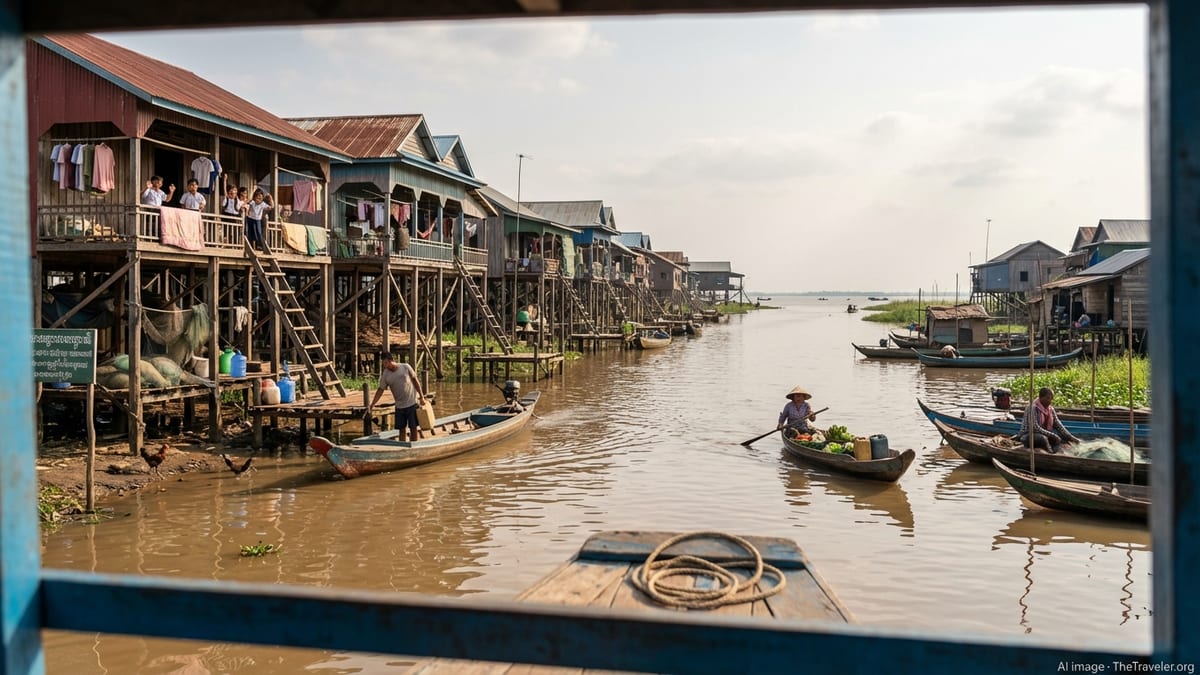
Before planning a visit from Siem Reap, it helps to understand that Tonlé Sap is not a static lake. It behaves like a living organism, expanding and contracting dramatically between dry and wet seasons. During the rainy months, usually June to October, monsoon rains and the reversal of the Tonlé Sap River cause water levels to rise several meters. The lake spreads across the central Cambodian plain, flooding forests and fields and turning roadside villages into waterfront settlements.
In the dry season, typically November to May, the waters retreat. Channels shrink, muddy banks appear, and what were lakeside homes may stand far above the ground on spindly stilts. In some communities you can walk along dusty lanes beneath houses that seemed to float just a few months earlier. This seasonal pulse shapes everything from fishing patterns and transportation to school schedules and religious festivals, and it is the main reason why the same village can look completely different depending on when you visit.
For travelers, seasonality affects not only scenery but also logistics. In the high-water months around October to January, boat trips are smoother, flooded forests are accessible, and classic images of houses hovering just above the lake feel very real. In the driest stretch from about March to May, water levels at some docks can drop so low that boats may ground in mud, and certain routes or smaller floating villages can become impractical. Local operators recommend checking current water conditions, especially if you are interested in more remote communities where canals are shallow near the end of the dry season.
Despite these variations, Tonlé Sap is accessible year-round from Siem Reap. The experience you have will simply be different. In wetter months you glide through a world of brown water and flooded trees. In drier months you gain more insight into how houses, roads, and rice fields are arranged when the water is gone. If you understand that Tonlé Sap is a changing landscape, you are far less likely to feel disappointed if your photographs do not match someone else’s trip from another time of year.
Choosing Your Floating Village: Chong Kneas, Kampong Phluk, Kampong Khleang, Mechrey
From Siem Reap, most travelers visit one of four main communities on or near Tonlé Sap: Chong Kneas, Kampong Phluk, Kampong Khleang, and Mechrey. All are reached by a combination of road and boat, but they differ in distance, atmosphere, and how heavily they are oriented to tourism. Picking the right one for your expectations is the most important decision you will make when planning the trip.
Chong Kneas is the closest to Siem Reap, roughly 15 to 16 kilometers from town, and serves as the main departure point for passenger boats to Battambang and Phnom Penh. Because of this convenience, it has become the default option for many large tour buses and hotel-arranged excursions. Boat trips are short and easy to arrange, but the experience can feel highly commercial, with organized stops at crocodile and fish farms and souvenir platforms. Travelers who want convenience may still find it useful, especially in the peak of the dry season when other routes suffer from low water, but those seeking authenticity often look elsewhere.
Kampong Phluk lies about 30 kilometers from Siem Reap and is made up largely of high stilt houses lining a river channel that runs into Tonlé Sap. In the wet season, these houses appear to rise directly from the water, and boats pass beneath walkways and trees; in the dry months, the village towers above dusty roads. Kampong Phluk typically sees fewer group tours than Chong Kneas, offers an atmospheric flooded-forest boat ride in high water, and is often described as a good compromise for first-time visitors who want a more village-like environment without spending a full day on the road.
Farther afield, Kampong Khleang is set roughly 35 to 55 kilometers from Siem Reap depending on the route, and it is widely considered the most impressive and least touristed of the main sites. Here the houses rise as much as ten meters above the floodplain, and the settlement stretches for kilometers along the water’s edge. Many travelers choose Kampong Khleang for its scale and more local feel, acknowledging the longer drive and higher cost of specialized community-based tours. For those who want to see both stilted areas and a separate floating section further out on the lake, this is often the top choice.
Mechrey, meanwhile, is a smaller floating village located on the northern side of the lake, about an hour by road from Siem Reap. It has become an access point for eco-oriented trips and birdlife excursions in the direction of the Prek Toal bird sanctuary. In high water, it feels very much like a lake-bound community of houseboats, fish farms, and simple floating shops. In low water, visits may be curtailed. Mechrey appeals to travelers seeking a quieter, more nature-focused outing, provided they travel when water levels support boat access.
Getting from Siem Reap to Tonlé Sap: Transport and Travel Times
Logistically, visiting Tonlé Sap from Siem Reap involves two main stages: a road journey to the appropriate boat dock and a subsequent boat trip to and through the village area. The exact transport combination you choose depends on budget, comfort preferences, and how independently you want to travel. Most travelers either join an organized tour that bundles everything, hire a private driver and arrange a boat on arrival, or negotiate a package with a trusted local agency or hotel.
For the overland part, tuk-tuks, private cars, and minivans are the usual options. Tuk-tuks are fine for the shorter run to Chong Kneas or even to the Kampong Phluk road in the dry season, but they are slower and less comfortable over bumpy rural tracks, especially in the heat. Private cars or minivans are faster and more comfortable, particularly for the longer trip to Kampong Khleang, which can take about 75 to 90 minutes from downtown Siem Reap. Journey times vary with road conditions and whether sections are flooded or dusty.
At the lake edge, visitors must switch to boats run by local operators or community cooperatives. At Chong Kneas and Kampong Phluk, there are designated ticket areas where prices for standard boats are posted per person or per boat, and group tours often pre-arrange these fees. At Kampong Khleang and Mechrey, systems are more community-based, with local boat owners collaborating on shared services to the village and open lake. While it is possible to negotiate directly with a boat captain at the dock, language barriers, variable pricing, and the need to support community-approved services make it simpler and often fairer to arrange boats through a reputable tour operator or your accommodation.
In total, allow at least three to four hours for even the shortest excursion from Siem Reap, including road travel and boat time, and more if you are heading to Kampong Khleang or combining the lake with countryside stops. Afternoon outings with sunset on the water are popular, but morning departures can be cooler and less crowded. If your priority is photography or birdwatching, an early start from Siem Reap is usually worth the extra effort.
Boat Tours, Prices, and What to Expect on the Water
Once you reach the dock, the core of any Tonlé Sap visit is the boat ride. Boats are typically long, open-sided wooden craft with simple seating and a canopy roof. They can range from small community boats carrying just a handful of passengers to larger vessels used by group tours with dozens of seats. Safety standards are improving gradually, but they remain basic. Life jackets may not always be readily visible; if you are concerned, ask the crew where they are stored before departure and insist on having one nearby.
Prices vary by village and whether you have booked through a tour company or are arranging on the spot. At more popular docks, standard tickets for foreigners are usually sold at a fixed per-person rate for a shared boat or at a flat rate per boat that can be split among up to six or eight travelers. Costs are higher at Chong Kneas and Kampong Phluk, which receive more tourists, and somewhat lower at more remote community-based options. Organized tours that include hotel pickup, a guide, and sometimes drinks or meals understandably charge more, but they can add context and reduce the likelihood of being overcharged on the pier.
On the water, you can expect a slow cruise through narrow canals lined with stilt houses or floating platforms, followed by broader stretches as you approach the open lake. Fishermen work nets and traps, children paddle small boats to school, and vendors move between houses selling vegetables, fuel, or household items. In Kampong Phluk, many itineraries include an optional side trip through a flooded mangrove forest in smaller paddle boats when water levels are high. At Kampong Khleang, the boat may carry you all the way out to an open expanse where floating clusters of Vietnamese and Khmer households bob in the muddy water.
Sunset-focused tours time the cruise so you reach the open lake as the sun drops toward the horizon, turning the water copper and rose. In the dry season, the sun often descends into a hazy band of dust above the far shore, while in the wet months clouds can deliver dramatic color. Night falls quickly in Cambodia, so once the sun disappears, boats usually head straight back to the dock and road transport to Siem Reap.
Responsible and Ethical Ways to Visit
Tonlé Sap’s communities are not living museums; they are home to families whose livelihoods depend on fishing, small-scale trade, and increasingly, tourism. The way you visit can either support or undermine those livelihoods. Over the past decade, some villages closest to Siem Reap have seen the rise of exploitative practices such as staged crocodile farms, pressure to donate or buy overpriced school supplies, and tours that channel most revenue to private intermediaries rather than residents. Understanding these dynamics helps you make more ethical choices.
Whenever possible, seek tours that are clearly community-based or that advertise transparent partnerships with local cooperatives. In places like Kampong Khleang and Mechrey, community-managed boat services direct income back into village schools, pagodas, and infrastructure. Reputable operators explain where your money goes and avoid activities that treat residents as props. They are also more likely to observe local rules about fishing zones, protected bird areas, and waste disposal on the water.
As a visitor, your own behavior matters. Ask permission before photographing individuals at close range, especially children. Avoid thrusting cameras through house windows, and accept that some people will say no. Resist offers that trade on guilt, such as buying expensive bags of rice or school items from a single shop supposedly for distribution to “poor children.” Such schemes have been widely criticized for lacking transparency and sometimes never delivering goods as promised. If you want to support education or social projects, your guide or hotel can point you toward well-established organizations in Siem Reap that work in partnership with lake communities.
Finally, be mindful of the lake’s fragile ecosystem. Do not throw any rubbish overboard, and minimize single-use plastics by bringing a refillable water bottle and reusable bag. Tonlé Sap’s fish populations and water quality are under stress from overfishing, upstream dams, and pollution. Small choices, multiplied by thousands of visitors, can make a tangible difference. By traveling thoughtfully, you encourage tour operators and local authorities to prioritize long-term sustainability over short-term gain.
Best Time of Day and Year to Visit
The “best” time to visit Tonlé Sap from Siem Reap depends on what you want to see. For classic flooded-forest scenery and the visual drama of stilt houses nearly touching the water, the period from roughly October to January is ideal. This is when the lake is near its peak, boat channels are deep, and excursions to Kampong Phluk’s mangroves or Kampong Khleang’s outer floating communities are most rewarding. Birdlife is also abundant around the lake edges and in protected zones, making this a good window for nature enthusiasts.
In the shoulder months at the start and end of the rainy season, conditions can vary. In June and July, rising water may already cover low fields and trails, while by February and March some canals become narrow and boat routes may require adjustments. During the very driest period, often late March through May, operators may shift to villages that retain deeper access, such as Chong Kneas, while routes to smaller or more distant floating hamlets can be cut altogether. When planning a trip in late dry season, it is essential to ask local agencies which areas are currently reachable by boat and whether you should expect mud banks and longer walks from distant docks.
Time of day also shapes your experience. Morning trips usually mean gentler temperatures, softer light, and fewer crowds. Fishermen may be returning with early catches, and school traffic on the canals is busiest. Midday brings high heat and harsher light, which can make long boat rides less comfortable but may suit travelers on tight schedules. Late-afternoon and sunset visits, popular with tour groups, deliver cooler breezes and golden light over the lake, though they also tend to be the busiest and may coincide with day-tripper traffic on the roads back to Siem Reap.
If you have flexibility, a morning visit during the high-water season offers a balanced combination of comfortable conditions, village activity, and good photography. If you prize sunset views over the open lake, choose a reputable late-afternoon tour and be prepared to share the experience with others. Either way, keeping your expectations aligned with the time of year and day will help you appreciate what you encounter rather than focusing on what the lake “should” look like.
Health, Safety, and Practical Tips on the Lake
Tonlé Sap excursions are generally safe, but conditions are rustic, and preparations will make your visit more comfortable. Sun exposure on the open lake can be intense even on cloudy days, so bring a wide-brimmed hat, sunglasses, and high-SPF sunscreen. Light, loose clothing that covers shoulders and knees is both respectful in village areas and practical for heat and insects. In the wet season, a lightweight rain jacket or poncho can be useful during sudden showers, though most boats have basic roofs.
Motion on the boat is usually gentle, but chop can pick up when crossing more open stretches of lake. If you are prone to motion sickness, consider taking suitable medication beforehand. Life jackets, while present on many boats, are not always obvious or in perfect condition, so do not hesitate to ask your captain or guide to show you where they are stored. Stick to your seat while the boat is moving, and avoid standing near the edge with heavy cameras or bags, especially when passing other vessels or navigating narrow, crowded channels.
Water quality in Tonlé Sap is poor, and you should avoid swimming or dangling hands and feet in the lake. Drink only sealed or filtered water, and carry more than you think you will need, as refreshment options on the water itself are limited and can be more expensive. Simple snacks from Siem Reap can tide you over on longer trips, but remember to take all waste back with you. Insect repellent is advisable, particularly in the late afternoon and near mangrove areas, where mosquitoes can be active around dusk.
Cash is essential, and small U.S. dollar bills are widely accepted in addition to Cambodian riel. Card facilities are rare outside Siem Reap, and you may want to have enough on hand for entrance or boat fees, tips, and small purchases in the village. Mobile reception around the northern shore is generally decent but can fade in more remote parts of the lake. Lastly, if your itinerary includes walking in villages during the dry season, bring sturdy sandals or shoes that can handle dust, uneven boards, and occasionally muddy riverbanks.
The Takeaway
Visiting Tonlé Sap from Siem Reap offers a chance to see a side of Cambodia that is entirely different from the temples of Angkor. It is a landscape of slow-moving water, shifting shorelines, and communities that have adapted to a tidal rhythm of rising and falling lakes. With a bit of planning, you can match your expectations to the right village, season, and time of day, turning what might otherwise be a generic tourist cruise into a meaningful look at everyday life on the water.
If you value convenience and have limited time, Chong Kneas remains the easiest option, especially at the driest time of year when other areas can be difficult to reach. For a more atmospheric, village-centered visit, Kampong Phluk balances accessibility with a stronger sense of place, particularly when its flooded forest is navigable by boat. Travelers with a full half-day to spare and an interest in less touristed experiences will gravitate toward Kampong Khleang, while those drawn to birds and quieter floating hamlets often head to Mechrey when water levels allow.
Whatever you choose, travel respectfully. Remember that you are a guest moving through someone’s neighborhood, not a spectator in a theme park. Spend your money where it benefits communities, avoid exploitative activities, and treat people with the same courtesy you would expect in your own hometown. Do that, and Tonlé Sap will not just be a ticked box on an itinerary from Siem Reap, but a vivid memory of a lake that defines a country.
FAQ
Q1. How long does it take to visit Tonlé Sap Lake from Siem Reap?
For the closest village, Chong Kneas, you should allow about three hours in total, including the drive from Siem Reap, boat time, and a short visit in the village. Trips to Kampong Phluk or Mechrey typically take four to five hours, while Kampong Khleang can easily fill half a day due to the longer drive and more extensive boat journey.
Q2. Which village is best for a first-time visitor?
Kampong Phluk is often recommended for first-time visitors because it combines relatively easy access with a strong sense of local life and dramatic stilt houses. In high-water season its flooded forest adds variety to the experience, and it usually feels less commercial than Chong Kneas yet does not require as much travel time as Kampong Khleang.
Q3. Is it better to book a tour in advance or arrange everything on arrival?
Booking a tour in advance through a reputable operator or your accommodation is usually smoother, especially in high season. It secures your transport, boat, and often a guide, while reducing the risk of surprise charges at the dock. Independent travelers can arrange tuk-tuks and boats on arrival, but should be prepared to negotiate and verify prices carefully.
Q4. Are Tonlé Sap boat tours suitable for children?
Yes, many families visit the lake with children, but you should take extra care with sun protection, hydration, and safety on board. Young children must be supervised closely near railings and steps, and it is sensible to request or bring appropriately sized life jackets if possible. Shorter outings to Chong Kneas or Kampong Phluk are usually more comfortable for younger travelers.
Q5. What should I wear when visiting Tonlé Sap villages?
Light, breathable clothing that covers shoulders and knees is both practical and respectful. Sun hats, sunglasses, and sturdy sandals or shoes are recommended, especially if you plan to walk through villages during the dry season when paths can be uneven and dusty. In the wet season, it is wise to bring a light rain layer as showers can develop quickly.
Q6. Can I visit Tonlé Sap during the dry season, or will there be no water?
You can visit Tonlé Sap throughout the year, but the scenery changes. In the dry season, channels narrow and some areas may become muddy, with boats occasionally struggling in shallow sections. The villages still function, and you can gain an interesting view of towering stilt houses and exposed fields, but you may not see the classic “floating” scenes unless you travel to deeper parts of the lake.
Q7. Is it safe to eat or drink in the floating villages?
Simple food and drinks are available in some villages and on certain larger tour boats, but standards vary. If you have a sensitive stomach, you may prefer to bring snacks from trusted places in Siem Reap and rely on sealed bottles of water or drinks. Always avoid drinking untreated lake water, and use hand sanitizer before eating when moving between boats and village walkways.
Q8. How can I visit Tonlé Sap in an environmentally friendly way?
Choose operators who emphasize responsible practices, such as community partnerships and proper waste management. Bring a refillable water bottle and avoid single-use plastics, keep all rubbish with you until you return to town, and do not disturb wildlife or purchase products made from protected species. By supporting ethical tours and minimizing your own footprint, you help preserve the lake’s fragile ecosystem.
Q9. Are there English-speaking guides available on Tonlé Sap tours?
Yes, many tours from Siem Reap include English-speaking guides who can explain village life, seasonal changes, and the broader importance of the lake. If having a guide is important to you, confirm this when booking. Private tours can usually provide guides in other major languages from the region with advance notice.
Q10. Can I combine a Tonlé Sap visit with other activities in the same day?
Absolutely. Many travelers pair a half-day on the lake with temple visits, countryside cycling, or time in central Siem Reap. Morning trips to Tonlé Sap leave you free for afternoon activities, while sunset cruises on the lake can follow an early temple visit. Just remember to factor in travel times and the midday heat when planning a full-day schedule.