

More news on this day
From complimentary hotel nights on long layovers to economy cabins serving champagne, several of the world’s leading full-service airlines are quietly rolling out perks that blur the line between standard and premium travel. Qatar Airways, Singapore Airlines, and British Airways are among the carriers using stopover offers, enhanced inflight service, and bundled vacations to keep long-haul passengers loyal at a time of intense global competition.
Get the latest news straight to your inbox!
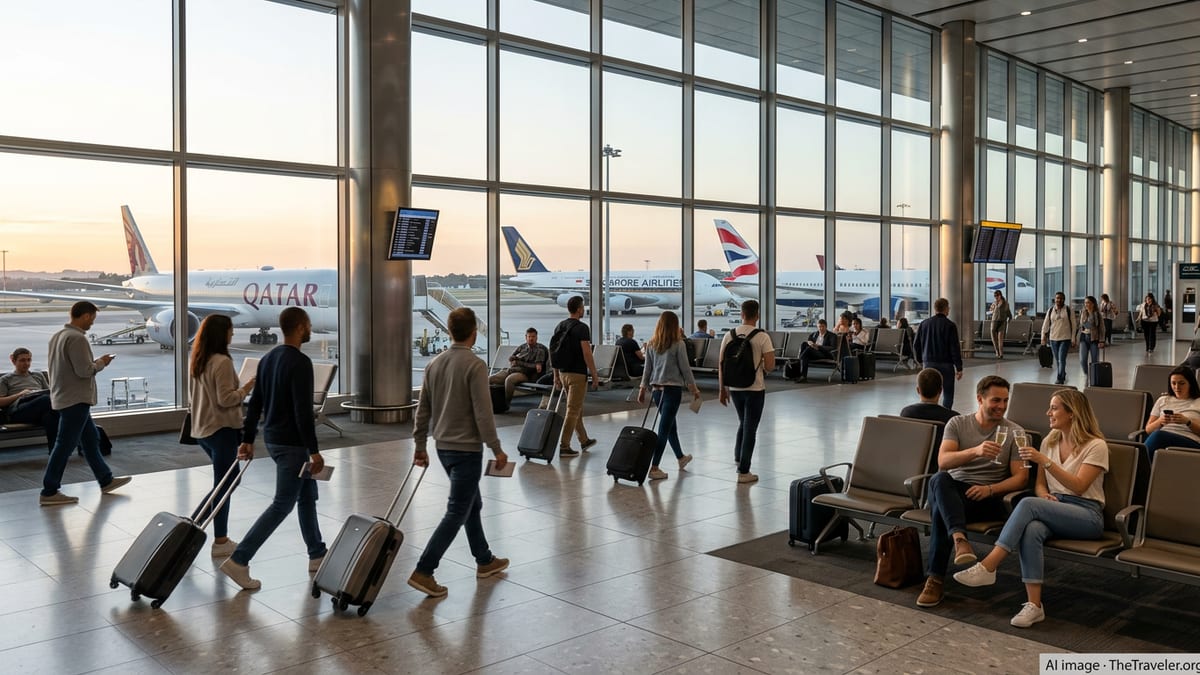
Qatar Airways Turns Layovers Into Mini Stopover Holidays
For many long-haul passengers, Doha is no longer just a place to change planes. Qatar Airways has been steadily expanding the reach of its Qatar Stopover and associated hotel offers, using low-cost and occasionally complimentary accommodation to encourage travelers to spend extra time in the country. Publicly available information from Discover Qatar, the group’s destination-management arm, highlights heavily subsidised packages with rates starting at the price point of a budget city hotel, but packaged around four and five-star properties.
Recent coverage of global stopover programmes indicates that while Qatar Airways does not typically advertise blanket free hotel stays for all transit passengers, it has built one of the most aggressively priced subsidised schemes. Travelers booking multi-city or stopover itineraries directly with the airline can access short stays in branded international hotels, with add-ons such as room upgrades, discounted spa treatments, and dining offers often folded into the package. Reports from the airline’s own updates show that the relaunched stopover programme has driven sharp growth in hotel bookings and visitor numbers.
The line between complimentary and paid accommodation can be complex. Transit hotel stays offered on very long connections, which are handled under a separate policy, are typically granted at the airline’s discretion and depend on factors such as fare type and schedule options. The paid stopover programme, by contrast, is designed to be more predictable: passengers can see prices and availability in advance and use a long layover to turn a connecting itinerary into a short city break in Doha, with airport transfers and optional tours bookable through the same platform.
For travelers weighing airline options between Europe, Asia, Africa, and Australasia, these details matter. Competitors in the Gulf and beyond also promote stopover experiences, but current comparisons of 2026 offerings point to Qatar’s blend of five-star brands and comparatively low nightly rates as one of the more accessible ways to secure a proper bed and shower between long sectors without dramatically increasing the total trip cost.
Singapore Airlines Brings Champagne and Upgrades Closer to Economy
In Southeast Asia, Singapore Airlines has spent the past two years refining how it segments the space between traditional economy and the premium cabins. Its most visible move has been a revamp of Premium Economy, which launched in 2015 and received a comprehensive refresh in 2024. According to the airline’s own March 2024 announcements and later trade circulars, Premium Economy customers now see upgraded dining, curated wines, and champagne served shortly after take-off, bringing a touch of business-class style service to a cabin that is still more accessible in price.
The carrier has also developed more flexible upgrade pathways for economy passengers. Programmes such as instant upgrade offers via the airline’s digital channels, often described in loyalty guides and frequent flyer reports, allow eligible travelers to move from Economy to Premium Economy or Business on selected flights by paying a supplement or using miles close to departure. While these are not free upgrades, published guides suggest that the cost can sometimes represent relatively strong value compared to booking a higher cabin outright from the start.
For passengers in standard economy, the most immediate impact is often the spillover of premium touches rather than a wholesale change in service. On some routes, travelers report that special cocktails or champagne-based drinks tied to the airline’s brand can be ordered subject to availability, particularly when crew have capacity and stock. More consistently, the closer integration between inflight service, loyalty status, and digital upgrade tools is changing expectations about what an economy ticket can unlock if a passenger is willing to pay a little extra or deploy their miles strategically.
Industry analysts note that this approach allows Singapore Airlines to protect the exclusivity and yield of its top cabins while still marketing “elevated” journeys to price-sensitive customers. Rather than promising complimentary luxury, the airline is positioning its economy and Premium Economy products as modular: drinks, seat selection, lounge access, and upgrades are increasingly offered in bundles that can be tailored before or after booking, encouraging travelers to view enhancements as part of the planning process rather than an unattainable splurge.
British Airways Leans on Hotel Bundles and City Breaks
British Airways is taking a different route to elevating the travel experience, using flight-and-hotel bundles to offer what can feel like a free or heavily discounted stay at the destination when compared with separate bookings. Recent announcements through the airline’s media channels in 2025 highlight seasonal sales packaging economy flights with several nights in mid-range London or European hotels, often with notable savings relative to published fares and room rates purchased independently.
These packages do not operate as transit stopovers in the way Gulf carriers promote, but the effect for many leisure travelers is similar. A customer booking a return economy ticket from North America to London, for example, can secure a three or four-night hotel stay at a central property for only a modest increase over the flight-only price during promotional periods. Analysts following the airline sector describe this as a way for legacy carriers to retain control of the customer relationship against online travel agencies, bundling what looks like near-complimentary accommodation with the core air product.
British Airways also uses its holiday division to market side trips and multi-city itineraries, encouraging passengers to tag on short breaks in secondary European destinations once they are committed to a transatlantic ticket. With pressure from low-cost rivals in both the short-haul and long-haul markets, this strategy leans on convenience and perceived value: one payment, one booking reference, and a package that appears to stretch the utility of an economy fare into something closer to a full city break.
Although the airline does not typically provide free champagne in standard economy cabins, its positioning of city-break bundles and occasional cabin upgrades via offers or status benefits aims to keep travelers in the ecosystem. For passengers comparing options from major hubs such as London Heathrow, these added-value holiday products can be a deciding factor, particularly when paired with inclusive baggage allowances and the ability to earn or redeem loyalty points across both flights and hotels.
What Travelers Should Watch For When Booking
For passengers planning long-haul trips in 2026, the common thread across Qatar Airways, Singapore Airlines, and British Airways is that value increasingly lies in the details of the fare, not just the headline price. Publicly available guides and airline communications stress that stopover hotels, upgrade offers, and bundled accommodation are almost always tied to specific booking channels, fare types, and minimum connection times. A ticket bought through a third-party website may not be eligible for the same hotel or upgrade opportunities as one purchased directly.
Travel-industry commentary also notes that many of the most eye-catching perks come with limited availability or blackout periods. Qatar’s discounted Doha stopover rates, for instance, can be suspended during major events, and complimentary add-ons such as spa vouchers or transfers are often subject to capacity controls. Singapore Airlines’ instant upgrade offers only appear on certain routes and dates, with invitations generated according to internal criteria, while British Airways’ flight-and-hotel sale prices are typically restricted to specific travel windows.
Experts therefore encourage travelers to read the small print and consider the total value of a trip rather than chasing a single benefit. A Qatar Airways itinerary with a paid but heavily subsidised five-star stopover night, a Singapore Airlines ticket that can be upgraded at a favorable rate using miles, or a British Airways package that effectively folds several hotel nights into an economy fare may each represent better overall value than a cheaper base fare with no extras. The trade-off is that passengers need to plan proactively, checking airline holiday sites and stopover pages before committing.
As competition on long-haul routes intensifies and new aircraft cabins roll out, these kinds of offers are likely to evolve further. For now, travelers who are willing to navigate airline-specific rules and book strategically can look forward to more comfortable layovers, better onboard drinks, and hotel-inclusive city breaks, often without stepping far beyond the price of a conventional economy ticket.