

More news on this day
With U.S. travelers losing an estimated 1.5 million hours to flight delays in 2025, long waits at the gate are no longer an exception but a defining feature of modern air travel, pushing passengers to develop new strategies for how they endure and respond to disruptions.
Get the latest news straight to your inbox!
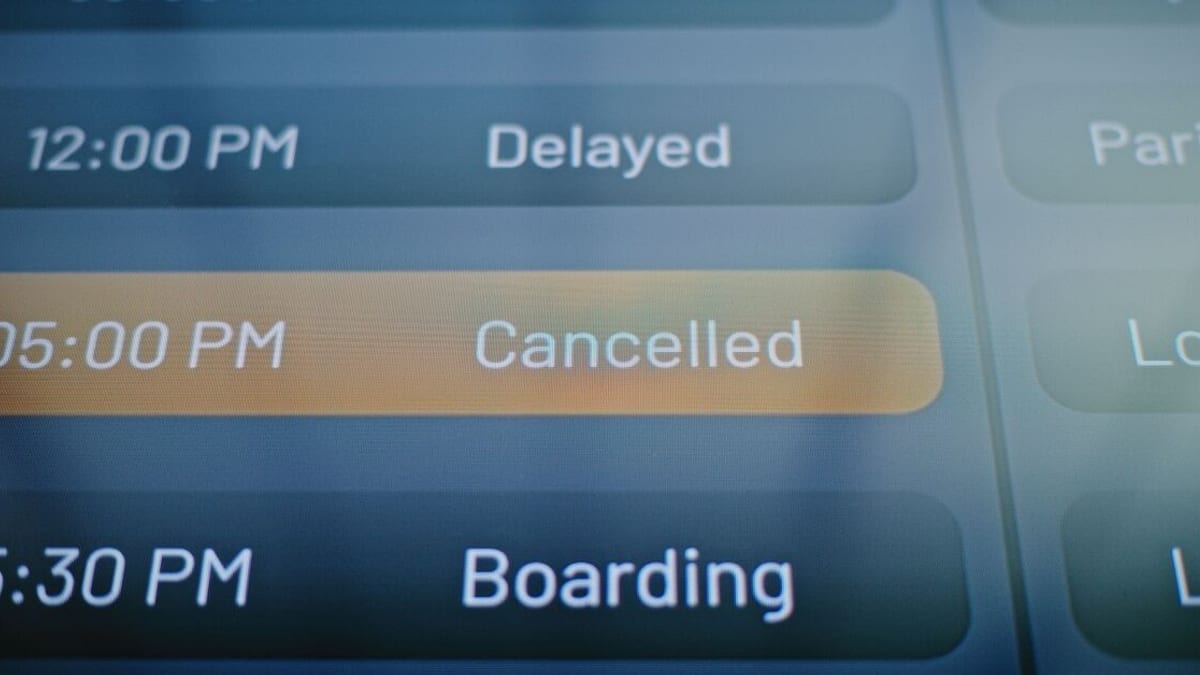
Delays Grow Longer As Travel Demand Stays High
Recent operational data shows that long flight delays are rising in tandem with strong travel demand. Analysis of disruption minutes at U.S. airports for 2025 indicates that the bulk of delay time stemmed from airline-controlled or logistical factors, rather than extreme weather alone. Publicly available figures suggest tens of millions of minutes of delays accumulated across the network in just the first three quarters of the year, effectively converting into more than a million lost passenger hours at gates and on tarmacs.
Internationally, infrastructure capacity and air traffic control constraints have also contributed to delays. Industry assessments in Europe point to multibillion-dollar costs associated with air traffic management bottlenecks between late 2024 and late 2025, underscoring how congestion in the skies can keep aircraft waiting to depart or reach a gate even after landing. As a result, travelers are facing not only longer flight times but also extended periods of uncertainty at airports worldwide.
These trends mean that a “long delay” is no longer a rare edge case. For many frequent travelers, it has become a predictable part of the trip planning equation. The question facing passengers in 2026 is shifting from whether a delay will happen to how they prepare to handle one when it does.
Knowing Your Rights Becomes a First Line of Defense
One of the clearest changes in how travelers handle long delays is a growing emphasis on understanding passenger rights. Survey data from advocacy and compensation services in 2025 found that roughly six in ten respondents had experienced a significant delay, yet many still reported confusion about what they were owed in the event of long disruptions. At the same time, a majority expressed support for stronger protections and clearer compensation rules.
Regulators are responding. In the United States, the Department of Transportation launched rulemaking in December 2024 aimed at requiring airlines to compensate passengers for lengthy delays and cancellations when the cause is within the carrier’s control. The proposal outlined payments ranging from a few hundred dollars up to the mid-hundreds for significant disruptions, mirroring more robust compensation practices already established in parts of Europe.
Across the Atlantic, European Union institutions continued work in 2024 and 2025 on revising long-standing air passenger rights rules. Draft positions discussed in 2025 would adjust the delay thresholds and amounts for compensation, particularly for shorter flights, while preserving structured payouts for long waits attributed to airlines. Travel industry coverage notes that these reforms remain politically contested but signal continued pressure to give passengers predictable remedies when schedules collapse.
Consumer advocates and legal services specializing in flight disruption report steady demand as travelers attempt to navigate differing regimes between regions. For passengers stuck at the gate, this regulatory backdrop is changing how many approach a long delay: documenting timelines, checking dashboards from transport authorities, and keeping records of meal or hotel expenses has become a standard part of coping.
Digital Tools Shape Real-Time Responses at the Gate
Technology is also reshaping how passengers manage long waits. Travel coverage in 2025 and early 2026 highlights airline and third-party apps as critical tools for tracking rolling departure estimates, monitoring standby options, and initiating rebooking without joining lengthy lines at service counters. Experts recommend that even infrequent travelers install their airline’s app for the duration of a trip in order to receive push alerts when a delay crosses key thresholds.
Some passengers are increasingly using flight tracking platforms to cross-check official announcements, watching inbound aircraft progress and broader network disruptions to gauge whether posted times are realistic. In parallel, credit card and travel insurance apps allow travelers to upload boarding passes and receipts while they are still at the airport, shortening claims processes later for compensation or trip interruption benefits.
Behind the scenes, airlines and airports are experimenting with predictive systems that aim to reduce the impact of cascading delays. Recent research in operations and air traffic management describes new machine learning models that attempt to forecast where disruptions will cluster, enabling more targeted rerouting of aircraft and crews. While these tools are designed primarily for operators, their indirect effect is felt by travelers if they shorten recovery times and prevent small delays from turning into overnight disruptions.
Yet for passengers in the middle of a long delay, these digital advances can still feel abstract. What makes a practical difference is often the ability to act quickly: rebooking through an app before a queue forms, finding an earlier connection on a partner airline when rules allow, or identifying when a delay is severe enough that requesting a refund and rebuilding the trip is the more rational choice.
Micro-Strategies For Staying Comfortable And In Control
Alongside regulatory awareness and technology, individual habits continue to play a significant role in how travelers endure long waits. Travel features over the past year describe a pattern of “micro-strategies” that frequent flyers use to maintain a sense of control during prolonged disruptions. These range from packing essential medications and a change of clothes in carry-on bags to keeping portable chargers and offline entertainment ready in case airport outlets and wi-fi become congested.
Some seasoned travelers build flexibility into their itineraries when long delays seem likely, adding buffer time before important events or choosing earlier flights in the day, when schedules are generally more resilient. Others prioritize routes through hubs with reputations for better on-time performance or more robust amenities, noting that a three-hour delay in an airport with reliable seating, food options, and quiet areas is easier to endure than a similar wait at a smaller facility.
Mental framing also matters. Commentators in travel advice columns suggest treating any delay beyond a certain threshold as an unscheduled layover, using the time for walking the terminal, stretching, or catching up on work instead of repeatedly refreshing the departure board. This shift does not shorten the delay, but it can reduce stress and help passengers arrive less exhausted when flights finally depart.
Despite these strategies, equity concerns remain. Not all passengers can easily absorb added expenses for meals or hotel nights, and not everyone has access to premium lounges or flexible tickets. That reality continues to fuel public debate about how far airlines and regulators should go in providing automatic compensation, basic care, and clear communication during long disruptions.
A Global Conversation About Fairness In The Air
The question of how travelers handle long flight delays increasingly overlaps with broader policy debates about fairness in air travel. In North America, updated consumer reports from transport authorities in 2025 tracked on-time performance, mishandled baggage, and wheelchair incidents, reflecting growing scrutiny of how disruptions affect vulnerable travelers in particular. In Canada and parts of Europe, proposed regulatory revisions seek to clarify what constitutes “exceptional circumstances” that exempt airlines from paying compensation.
Passenger surveys and online discussions show mounting frustration with inconsistencies between regions and carriers. Some travelers on transatlantic routes note that the same multi-hour delay can generate a structured payout when governed by European rules yet result in only vouchers or rebooking options under other jurisdictions. This patchwork encourages more passengers to study the legal environment that applies to each leg of their itinerary before they fly.
As 2026 unfolds, long delays remain a stress test for the relationship between airlines, regulators, and the traveling public. On one side are carriers wrestling with capacity limits, weather volatility, and complex global networks; on the other are passengers who increasingly expect that when hours are lost to preventable disruptions, time and money should be meaningfully acknowledged. How travelers handle those long waits, and what they can reasonably demand in return, is likely to stay at the center of travel conversations for some time.