

More news on this day
President Donald Trump’s executive order directing immediate pay for Transportation Security Administration officers working through the latest Department of Homeland Security shutdown is intended to calm chaos at airport checkpoints, but early indications suggest travelers may continue to face prolonged security lines and unpredictable wait times in the days ahead.
Get the latest news straight to your inbox!
What Trump’s Executive Order Actually Does
The executive order, signed on Friday in Washington, instructs the Homeland Security secretary to resume pay for TSA officers who have worked for weeks without regular paychecks during the ongoing partial shutdown of the Department of Homeland Security. According to published coverage, the directive is narrowly focused on compensating security screeners and related staff deemed essential, rather than fully reopening shuttered parts of the department.
Reports indicate the order aims to unlock existing funds and prioritize them for front line airport security staff, rather than authorizing an entirely new stream of money. That distinction is important, because it means broader questions about DHS funding, staffing levels and long term protections for workers during shutdowns remain unresolved in Congress.
Publicly available information also shows that TSA officers are expected to receive both current pay and back wages for the weeks they have already spent on duty without compensation. For officers who have been relying on food banks, emergency loans and community donations, the promise of paychecks as early as Monday could offer immediate financial relief, even as uncertainty over future shutdowns lingers.
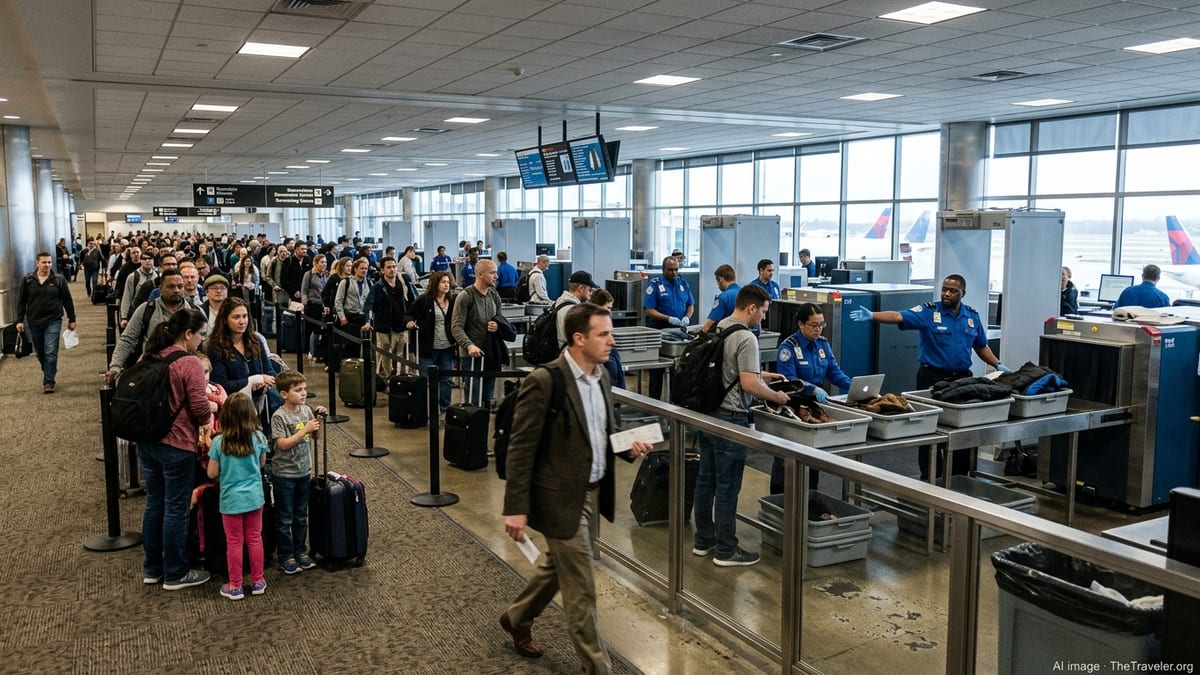
The order follows days of visible strain at major hubs such as Houston, Atlanta and New Orleans, where passengers encountered hours long lines and reports of missed flights as unscheduled absences climbed and airports consolidated checkpoints to stretch limited staffing.
Why Airport Security Lines May Not Improve Overnight
Travel industry analysts and former TSA officers cited in recent coverage caution that the executive order is unlikely to clear security bottlenecks instantly. Large airports need time to rebuild staffing schedules, reopen closed lanes and recalibrate passenger flows that have been disrupted by weeks of call outs and resignations.
Data summarized in recent shutdown reporting shows that hundreds of TSA officers have already quit since paychecks stopped, including a significant share with several years of experience. Once those workers leave, simply restoring pay does not immediately bring them back into the rotation, leaving airports to operate with thinner teams even as passenger traffic continues to grow.
Published analysis of previous shutdowns suggests that absenteeism tends to remain elevated for days after back pay is authorized, as employees juggle second jobs, overdue bills and family obligations that piled up while they were unpaid. That pattern may repeat now, especially for officers in high cost cities who burned through savings or took on debt during the current standoff.
At the same time, some airports have adjusted by temporarily closing smaller checkpoints and funneling travelers through fewer security lanes, a strategy that can create visible logjams even when wait times elsewhere in the terminal remain manageable. Reversing those changes and restoring a normal checkpoint footprint will likely happen in stages rather than all at once.
How the Shutdown and Pay Order Affect TSA Staffing
The pay directive lands in the middle of a longer running staffing challenge for TSA. In the years since the 2018 to 2019 shutdown, Congress and the agency moved officers into a new pay system that raised salaries and expanded civil service protections, an improvement that labor advocates and travel groups say has helped retain staff during the current crisis compared with a decade ago.
Even with those gains, publicly available figures from this shutdown period point to mounting pressure on the workforce. Hundreds of officers have resigned since February, and unscheduled absences at some airports have at times more than doubled their usual levels. New recruits, who already face weeks of training and background checks, are unlikely to arrive in sufficient numbers to offset those departures in the short term.
Reports from major hubs describe officers taking on extra overtime, working split shifts and even driving for ride share companies between shifts to make ends meet. While the order to resume pay may ease the immediate financial burden, analysts note that lingering mistrust about future shutdowns could make it harder for TSA to recruit and retain staff, especially in competitive job markets where private sector employers can offer higher wages without the risk of missed paychecks.
Some lawmakers have responded by reintroducing proposals that would guarantee pay for TSA and Federal Aviation Administration personnel during any future funding lapse. Those measures have repeatedly stalled in past sessions of Congress once shutdown pressures eased, and it remains unclear whether this latest episode, combined with Trump’s pay order, will generate enough momentum to change that pattern.
What Travelers Can Expect at Airports in the Coming Days
For travelers with upcoming flights, the most immediate impact of the executive order is likely to be gradual, rather than dramatic. Security lines that stretched past two hours at the height of recent disruptions could begin to shorten as more officers feel able to report for work, but published accounts from airport managers and travel experts suggest conditions will vary significantly by city and time of day.
Airports that experienced the most severe bottlenecks, including major hubs in Texas and the Gulf Coast, may prioritize restoring full checkpoint operations and rebalancing staff between terminals. Smaller or mid size airports that never saw extreme delays, and in some cases even hosted supplemental personnel from other agencies, could return to near normal operations more quickly.
Travel publications and aviation analysts recommend that passengers treat the coming week as a transitional period, building in extra time before departure and checking airport and airline communications regularly for any updates about checkpoint closures or rerouted queues. Third party apps and crowd sourced wait time tools can offer additional context, although recent reporting notes that some rely on data feeds that may lag behind real conditions during fast moving shutdown related disruptions.
Families, infrequent flyers and passengers with tight connections may feel the impact most acutely. Even if average waits begin to decline, sporadic surges in traffic or staffing gaps at individual checkpoints can still lead to missed flights, forcing airlines to rebook customers and adding pressure to already busy gate areas.
Longer Term Questions About Airport Resilience
Beyond the immediate headache of long lines, Trump’s order to pay TSA officers during the shutdown highlights a deeper question for the U.S. aviation system: how to safeguard critical travel infrastructure from recurring political standoffs. Publicly available assessments from industry groups argue that airports and airlines have grown more vulnerable to disruptions as passenger volumes reached record levels and staffing margins tightened.
Analysts point out that security screening has become a single point of failure in that system. When TSA staffing falters, there is limited redundancy to absorb the shock, leading to cascading delays that can ripple through airline schedules, crew availability and even airport concessions. While deploying personnel from other federal agencies can provide temporary relief, experts say those workarounds raise their own concerns about training, efficiency and public perception.
Some policy specialists have called for structural changes such as multi year aviation funding, automatic pay protections for essential transport workers during shutdowns, or clearer protocols for when and how to consolidate or close checkpoints in a way that balances security, fairness and operational continuity. Trump’s pay order addresses only a slice of those issues, focused on getting money into officers’ hands quickly rather than redesigning the underlying system.
As summer travel season approaches, how these questions are resolved will shape not only the experience at security lines, but also broader confidence in the reliability of U.S. air travel. For now, the executive order offers short term relief for thousands of officers, while leaving travelers and the industry to navigate a still uncertain landscape around shutdown politics and airport resilience.