

More news on this day
From Caribbean cruise itineraries to remote island lifelines in Greece and Asia, a booming trade in secondhand ships is quietly redrawing the global travel map, shifting capacity, prices and even the sustainability profile of passenger transport at sea.
Get the latest news straight to your inbox!
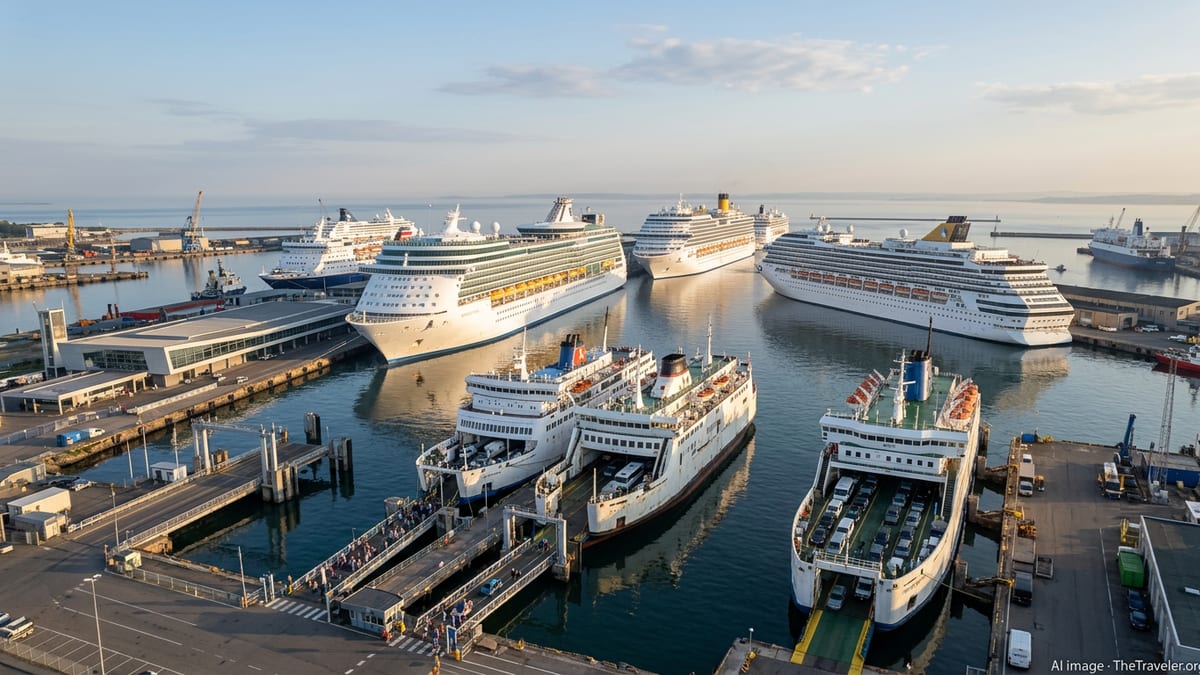
Surging Demand for Used Tonnage in a High-Cost Era
As newbuild prices and shipyard slots remain tight, the secondhand market has become a strategic pressure valve for passenger shipping and cruise operators. Brokers report that overall secondhand activity across all vessel types stayed strong through 2024 and into 2025, even as the mix shifted toward larger ships and middle-aged tonnage rather than elderly vessels headed directly for scrap. That dynamic is increasingly visible in travel-facing segments, from mega-cruise ships to regional ferries.
For cruise lines still rebuilding balance sheets after the pandemic, acquiring or chartering existing vessels is often faster and less capital intensive than commissioning new builds. Industry specialists say the bulk of recent cruise transactions involve ships built in the early 2000s that can be upgraded with new interiors, shore-power connections and efficiency technologies to extend their commercial lives. While the very oldest tonnage continues to be retired, a wide band of 15 to 25 year old ships is trading into new brands and new geographies.
The result is a market where secondhand prices have stayed elevated, even as freight earnings in some cargo segments soften. Operators serving the travel market are competing with pure cargo buyers for shipyard capacity and technical talent, reinforcing the role of used tonnage as the most realistic way to add capacity before the end of the decade.
From Costa to Carnival and Beyond: Cruise Ships Change Flags and Passengers
No segment illustrates the cabin-side impact of this trade better than cruising. In recent years, several ships originally built for European or Asian markets have changed owners, flags and even identities, entering service under new brands while offering passengers refurbished but fundamentally secondhand hardware. One notable example is the former Costa Firenze, which was transferred from Costa Cruises to Carnival Cruise Line and reemerged in 2024 as Carnival Firenze after a major refit in Spain. The ship was repurposed for North American itineraries, bringing a European-designed vessel into the broader mass-market Caribbean and Mexican Gulf scene.
Similarly, older vessels laid up during the pandemic are now finding second lives with emerging cruise brands, particularly in China and other growth markets. Industry data shows that a number of early 2000s-era ships have been sold from established Western operators to new or expanding Asian lines, which can enter the market faster by buying used rather than waiting years for slots at the big European shipyards. For travelers, that means a wider range of itineraries and price points, but also a patchwork fleet where onboard experience and environmental performance can vary sharply from ship to ship.
At the boutique end of the sector, expedition and small-ship cruise operators are also turning to the secondhand market. Existing hulls originally built for other purposes, including research or offshore support, are being converted into high-end expedition ships with advanced ice-class capabilities and extended range. These conversions allow nimble operators to respond quickly to surging interest in polar and remote-destination travel without waiting for custom newbuilds that can take four or more years to deliver.
Aging Ferries, Island Lifelines and Regional Travel Gaps
While cruise liners dominate headlines, it is the humble ferry that most directly connects the secondhand ship market to everyday travel. Nowhere is this more visible than in Greece, where domestic ferry routes carried more than 17 million passengers in 2023 and account for a significant share of the national economy. Much of the fleet is composed of vessels built abroad and acquired secondhand, including former Japanese and Northern European ferries that have been adapted for Aegean conditions.
Analysts and local officials warn that although capacity has grown and high-speed vessels have almost doubled in number over the past decade, many conventional ferries are aging. Operators rely heavily on the global used market to renew their fleets, as ordering brand-new ships remains prohibitively expensive for routes that operate partly as public-service lifelines. As a result, passengers on popular tourist itineraries may enjoy modernized vessels with upgraded cabins and lounges, while travelers on thinly served island chains still board decades-old ships that have been patched, refitted and kept in service far beyond their original design horizons.
Similar patterns are emerging in Asia, where RoPax ferries that carry both vehicles and passengers are being traded from mature markets like Japan and South Korea into developing coastal networks in Southeast Asia. For residents, these imports can dramatically improve connectivity, cutting journey times and increasing safety compared with informal or smaller craft. Yet they also embed an age and efficiency gap into regional transport systems, with climate and safety regulators racing to keep up.
Environmental Trade-Offs: Emissions, Retrofits and Recycling
The environmental calculus of keeping ships in service longer is nuanced. On one hand, extending the life of an existing hull avoids the substantial emissions and resource use associated with building a new ship, from steel production to complex onboard systems. On the other, many secondhand vessels were built to older standards and can be significantly less efficient and more polluting than state-of-the-art newbuilds, particularly in terms of fuel consumption and air emissions.
To bridge that gap, buyers of secondhand passenger ships are increasingly investing in retrofits. Common upgrades include installing exhaust gas cleaning systems, optimizing hull coatings to reduce drag, adding shore-power connections so ships can switch off engines in port, and in some cases converting engines to burn cleaner fuels. These investments can make an older vessel compliant with tightening international regulations and more palatable to environmentally conscious travelers, but they also increase the capital cost of buying used.
At the end of the chain, ship recycling policies are under scrutiny as the first generation of mega-cruise ships and large ferries head to scrapyards in South Asia and Turkey. Regulators and advocacy groups are pressing for more vessels to be recycled at facilities that meet higher safety and environmental standards, a shift that may gradually be reinforced by passenger expectations and brand reputational risk. For now, the tension between cost, compliance and sustainability remains a defining feature of the secondhand travel-ship market.
What Travelers Will Notice at Sea
For passengers, the complex economics of ship sale and purchase show up in subtle but tangible ways. Travelers booking a Caribbean cruise or a Greek island-hopping itinerary in 2026 are increasingly likely to sail on a vessel that began life in another country or under another brand. Cabin layouts or public rooms may feel slightly out of step with the newest build trends, even after refurbishments, and the mix of upgraded amenities can vary widely between ships of similar size and price.
Pricing is also influenced by these dynamics. Operators that acquire older tonnage at a discount may be able to offer more aggressive fares on certain routes or seasons, helping to keep sea travel competitive with low-cost airlines. Conversely, where fleets depend on heavily retrofitted ships requiring constant maintenance, fares can creep higher, particularly on lifeline ferry routes where there is limited competition and high capital intensity.
Perhaps the most significant impact is geographic. The flow of secondhand ships from mature to emerging markets is opening up new routes for international travelers, particularly in Asia and the Middle East, where new domestic cruise brands and modernized ferry links are multiplying. As ports invest in terminals and supporting infrastructure to handle these repurposed vessels, previously hard-to-reach coastal towns and islands are appearing on cruise brochures and booking platforms for the first time, reshaping global travel patterns one used ship at a time.