

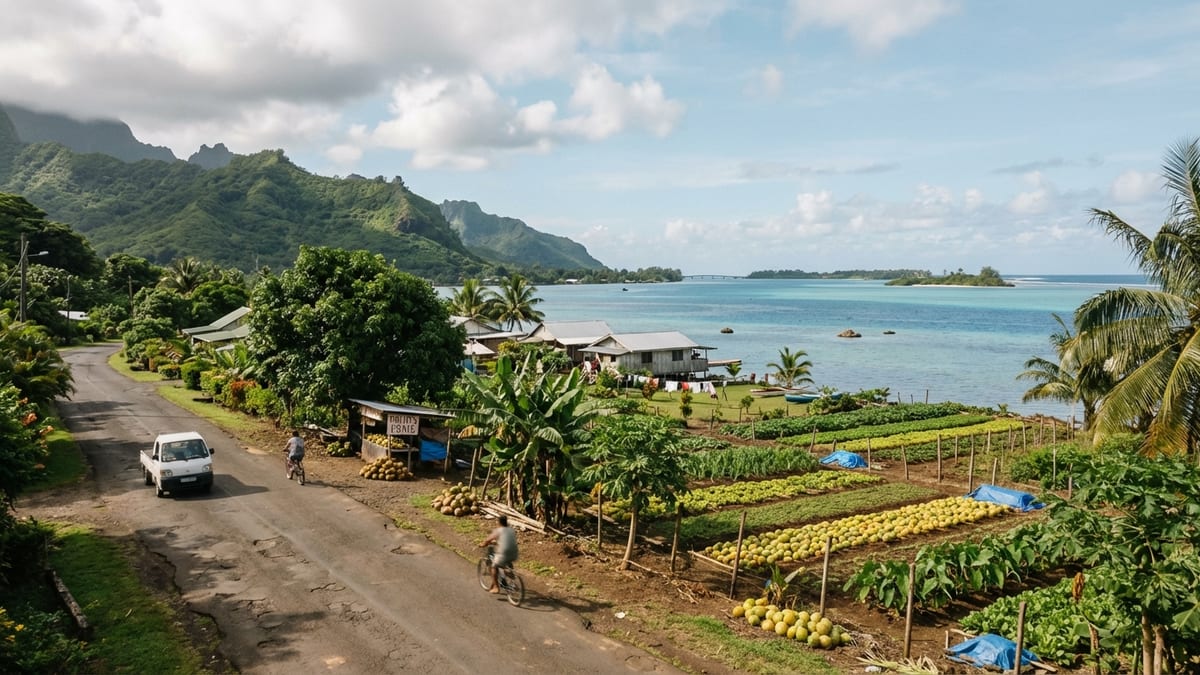
Huahine is one of those rare Pacific islands that still feels deeply, disarmingly wild. Velvety green peaks tumble down to banana groves and breadfruit trees, while turquoise lagoons wrap soft curves of white sand and sleepy villages. Locals call it the “Garden Island” for good reason. Here, lush valleys, family-run vanilla plots and melon fields meet ancient stone temples and quiet bays, weaving together nature, culture and everyday life in a way that feels both timeless and intensely alive.
Where in the World Is Huahine?
Huahine lies in the Leeward Islands of French Polynesia, in the same archipelago as Bora Bora, Raiatea and Taha’a. It is a 40 minute domestic flight from Tahiti’s Faa’a International Airport, yet it feels worlds away from the resort polish of some of its famous neighbors. In practical terms, Huahine is actually two islands, Huahine Nui and Huahine Iti, separated by a narrow channel and linked by a road bridge. The main village, Fare, hugs the northwestern coast and serves as the island’s port, market and social hub.
With a population of only a few thousand, Huahine remains low-key and sparsely developed. There are no high rise hotels, no sprawling marinas, and no traffic lights. Instead, a narrow coastal road encircles the island, branching off to small bays, farmsteads and beachside pensions. The rhythm of life is deliberate and unhurried. Fishing boats drift back to the quay at sunrise, children cycle home from school in the afternoon heat, and the sounds of roosters, church choirs and trade winds through the palms form the island’s informal soundtrack.
Geologically, Huahine is an ancient volcanic island, its central peaks eroded into dramatic, jagged ridges. Deep, fertile valleys radiate out to brackish lakes and to the wide lagoon that nearly encircles the island. Coral reefs fringe much of the coastline, creating calm inner waters punctuated by sandy motu islets. This combination of mountains, freshwater sources and lagoon has made Huahine unusually rich in plant life and ideal for traditional Polynesian agriculture, which is at the heart of its “Garden Island” identity.
Why Huahine Is Called the Garden Island
The nickname “Garden Island” is not a marketing invention but an observation. From the airplane window as you land, Huahine looks like a great tropical greenhouse: steep slopes draped in rain forest, ridges crowned in coconut, valleys stitched with fruit trees and dense undergrowth. Humid trade winds, regular rainfall and mineral rich soils create near perfect growing conditions, and almost everywhere you look some form of cultivation is in progress.
On the coastal plains and lower slopes, small family plots produce taro, yams, cassava, bananas, papayas, breadfruit and citrus. Near the inland lakes, farmers grow watermelons and cantaloupes that have become a point of local pride. Around Fauna Nui lake and the flatlands between Fare and Maeva, the road passes long, well tended melon fields that glow yellow and green in the tropical sun. These crops are not purely for export. They feed the local community and supply market stalls and roadside stands, keeping food miles short and culinary traditions alive.
Tucked among these orchards and food gardens are vanilla exclosures that give Huahine an especially fragrant claim to its nickname. While neighboring Taha’a is often called Vanilla Island for its high volume of production, Huahine’s vanilla cultivation is more intimate. Visitors can walk shaded rows of vines, learn the painstaking hand pollination process and appreciate the patience involved in curing beans over many months. The aroma of vanilla, mingled with that of tiare flowers, frangipani and wet soil after rain, is a defining sensory memory for many travelers.
Beyond cultivated plots lies a more untamed garden. Hillsides are cloaked in hibiscus, wild ginger, pandanus and native hardwoods. Mangrove and hala trees fringe the lagoon. Even in the main village of Fare, breadfruit and mango trees lean over fences and improvised vegetable patches creep between houses. The idea of “garden” here is not a manicured lawn but a living, productive landscape that sustains people physically and spiritually, connecting them to the land and sea.
Nature, Landscape and Lagoon
Huahine’s topography shapes not only its beauty but also its way of life. At the island’s core, peaks such as Mount Turi and Mount Pohue Rahi rise steeply, catching passing clouds and squeezing out frequent showers that feed springs and streams. As this freshwater seeps downslope it nourishes valleys and eventually empties into the lagoon, creating brackish environments that support rich ecosystems and traditional fish traps still visible near Maeva.
The coastline alternates between long, reef protected bays and headlands where cliffs drop to deep water. Parea, on Huahine Iti, is a patchwork of white beaches, casuarina trees and small headlands that offer unobstructed views of the ocean swells breaking on the outer reef. The lagoon here is shallow and intensely turquoise, with sandy bottoms interspersed with coral bommies that shelter reef fish, rays and the occasional reef shark. Snorkelers can drift over coral gardens that remain relatively healthy thanks to light tourism pressure and a strong fishing culture that discourages destructive practices.
The motu that sprinkled Huahine’s outer lagoon are central to its Garden Island character. These sandy islets, often no more than a low line of palms and ironwood trees on the reef’s edge, serve as picnic spots, copra farms and informal conservatories of coastal plants. Boat excursions frequently combine snorkeling with a few lazy hours on a motu, where grills are set up under the shade and tables are arranged in ankle deep water. The impression is of a floating garden ringed by shades of blue.
Even Huahine’s underwater landscapes feel verdant. In shallow areas, seagrass meadows sway in the tides, providing habitat for juvenile fish and foraging grounds for sea turtles. Coral heads form intricate, flower like structures in hues of ocher, teal and lavender. For travelers used to crowded marine parks, the unhurried pace here makes it easier to appreciate the island’s quiet biodiversity and the close relationship between land, lagoon and reef.
People, Culture and Living With the Land
The Garden Island is also a cultural landscape, shaped by centuries of Polynesian settlement and ongoing relationships with the environment. Long before Europeans arrived, Huahine’s inhabitants developed sophisticated systems for managing their garden of land and sea. Stone fish traps near Maeva, built in a V shape in the lagoon, still funnel fish inward with the tide. Inland, taro patches and fruit groves were arranged to optimize water and shade, and trees like breadfruit were planted around family homes as living food security.
Modern Huahine residents continue many of these traditions, even as imported foods have become more common. On Sundays, Fare’s small market buzzes with life. Fishermen bring in lagoon and ocean catches, women sell baskets of bananas and root vegetables from their own plots, and vendors offer jars of homemade jams and bottles of vanilla infused rum. Conversations about the weather are not small talk but a practical measure, as rainfall patterns still dictate planting, harvesting and fishing schedules.
Community ties revolve around church, the sea and shared meals. A traditional ma’a Tahiti feast, often held for special occasions, showcases the bounty of Huahine’s garden. Food is slow cooked in an underground oven, or ahima’a, using hot stones and banana leaves, then layered with breadfruit, taro, plantains, fish, pork and chicken. Coconut milk, lime, local greens and ripe fruit round out the spread. For visitors, taking part in such a meal is a direct, delicious link to the island’s agricultural and maritime heritage.
Language and legends reinforce the sense of place. Tahitian is widely spoken alongside French, and local guides on 4x4 tours or lagoon excursions share stories of gods, warriors and navigators. Sacred sites, or marae, are not treated as museum pieces but as living markers of history. The respect shown to certain animals, such as the blue eyed eels of Faie, reflects a worldview in which the natural world is populated by beings with whom humans share obligations, rather than resources to be exploited.
Key Sites That Bring the Garden Island to Life
One of the best introductions to Huahine’s layered landscape is the archaeological complex around Maeva, a village near the northern shore. Here, low stone platforms and uprights mark ancient marae that once hosted ceremonies, chiefly councils and offerings to Polynesian deities. A small interpretive house, designed in the traditional fare potee style, helps visitors visualize how the area would have looked in earlier centuries, when canoes lined the lagoon shore and tiki carvings guarded the sacred spaces.
From Maeva, a short walk or drive brings you to the remnants of traditional fish traps in the shallow waters of Lake Fauna Nui and the adjacent lagoon. At low tide, the rock walls that form long funnels become visible, a subtle but powerful illustration of how Polynesians farmed the sea. These structures allowed communities to harvest fish sustainably while leaving breeding stock in deeper water. Combined with taro terraces and tree crops inland, they formed an integrated food system that made Huahine an island sized garden.
Further inland, guided 4x4 tours often stop at a hilltop belvedere that delivers sweeping views of both Huahine Nui and Huahine Iti, the lagoon and the encircling reef. From this vantage point, the patchwork of green valleys, melon fields and coconut groves is easy to appreciate. The bridge linking the two islands stands out against the lagoon, a reminder of how closely entwined land and water are in daily life. On clear days, the different shades of the lagoon form bands of turquoise and cobalt that highlight coral shelves and channels.
On Huahine Iti, the coastal stretch near Parea offers another perspective. The road here hugs the lagoon so closely that high tides sometimes lap at its edges. Simple roadside stands sell fresh fruit, homemade cakes and coconuts to passing motorists and cyclists. Hidden between the trees are small marae facing the lagoon, including Anini Marae, where low stone walls and altars sit within sight of surf breaking over the reef. It is an evocative place to consider how Huahine’s people have always balanced reverence for nature with harvesting its gifts.
Experiencing Huahine: How to Explore the Garden Island
Exploring Huahine is less about checking off attractions and more about easing into its rhythms. The most comprehensive overview usually begins with a half day 4x4 island tour, which circles Huahine Nui and Huahine Iti and introduces many of the places that define its Garden Island character. These tours typically visit Fare, the Maeva archaeological zone, a vanilla plantation, the sacred eels of Faie and one or two belvedere lookouts. Along the way, guides point out medicinal plants, fruit trees and historical landmarks, creating a narrative that ties together landscape, culture and everyday life.
To experience the aquatic side of the island’s garden, a lagoon excursion by motorized outrigger canoe is essential. Departing from Fare or Parea, boats glide across the lagoon to coral garden snorkeling spots where fish weave through cabbage coral and staghorn clusters. Many trips include a visit to a small black pearl farm, where you can see how oysters are grafted and pearls harvested, and then continue to a motu for a long, leisurely picnic. Time seems to slow in these settings, with hours spent swimming, listening to live ukulele music and sampling grilled fish, tropical salads and the ever popular poisson cru marinated in coconut milk and lime.
Independent travelers often choose to rent bicycles, scooters or compact cars to tour at their own pace. The coastal road is scenic and, outside of Fare, usually quiet. Cyclists stop to photograph tangles of bougainvillea cascading over stone walls, impromptu soccer games on grassy verges and calves tethered beneath breadfruit trees. Short detours lead to pocket beaches, river mouths and village churches. Between December and March, you may see farmers tending melon patches or loading crates bound for Tahiti, a reminder that this is a working island as much as a dream destination.
For those drawn to water sports, Huahine offers surfing, stand up paddleboarding and kitesurfing in select locations, though conditions vary with the season. Many visitors, however, find their most memorable experiences in quieter pursuits: sunrise swims from the beach, sunset walks along the quay in Fare, or evenings spent listening to island music at a simple seaside bar while the trade winds rustle palm fronds overhead.
Practical Travel Tips for Huahine
Getting to Huahine typically involves a flight from Papeete on Tahiti. Domestic carriers operate several services per day, with flight times of about 40 minutes. From the small airport on Huahine Nui, most accommodations arrange transfers, or you can hire a taxi into Fare and onward. There is no public bus system in the conventional sense, though informal truck taxis and prearranged shuttles serve the main villages and guesthouses.
Accommodation ranges from mid sized lagoon side hotels to pensions and guesthouses. Many properties sit on or near the water, with bungalows scattered among gardens of hibiscus, ti plants and coconut palms. Air conditioning is common but not universal, so those sensitive to heat should confirm room amenities when booking. Reservations are strongly advised in peak months such as July and August, and again in December and early January when domestic holiday travel increases.
The local currency is the CFP franc, pegged to the euro. Credit cards are accepted at many hotels, car rental agencies and some restaurants, but smaller shops, markets and family run excursions may prefer cash. There are ATMs in Fare, and it is wise to withdraw funds there before traveling around the island, as options outside the main village are limited. French is the official language, with Tahitian widely spoken; in tourism settings, English is commonly understood but not guaranteed in more remote family businesses.
Huahine’s climate is tropical and humid, with temperatures generally hovering in the high 70s to mid 80s Fahrenheit throughout the year. The drier season, from roughly May to October, tends to bring slightly cooler nights and less rainfall, while the wetter season from November to April can see heavier showers and an increase in humidity. Even in the wetter months, rain often comes in brief bursts followed by sunshine. Lightweight clothing, reef safe sunscreen, a wide brimmed hat and sturdy sandals or water shoes for reef and river crossings are essential. Mosquito repellent is also advisable, especially in the evenings and near freshwater.
Sustainability and Respecting the Island
Huahine’s allure lies in its relatively untouched feel, and preserving that quality demands care from both residents and visitors. Tourism here is still modest compared with better known islands, and much of the economy remains anchored in small scale agriculture and fishing. When you buy fruit at the market, visit a family run vanilla plantation or join a locally operated lagoon tour, you are supporting livelihoods tied to this garden landscape rather than to distant investors.
Respect for the environment begins with simple choices. Using reef safe sunscreen helps protect coral ecosystems that are already under pressure from climate change. Avoid standing on or touching coral while snorkeling, and give turtles, rays and sharks ample space. When exploring beaches and forest paths, stay on established tracks where possible to reduce erosion and disturbance of plant life. Carrying a reusable water bottle and shopping bag can significantly cut down on single use plastics, which are difficult and expensive to manage on remote islands.
Cultural respect is equally important. Marae and other historical sites should be approached quietly and with modest dress, even if there is no formal posted code. Taking stones, shells or coral from sacred or protected areas is discouraged, and in some cases forbidden. If you wish to photograph people, especially in villages or at church services, asking permission first is both courteous and often rewarded with a smile. Learning a few Tahitian words, such as “Ia ora na” for hello and “Māuruuru” for thank you, goes a long way in building genuine connection.
As climate patterns shift and sea levels rise, islands like Huahine are on the front lines of environmental change. By traveling thoughtfully, choosing lower impact activities and supporting local conservation efforts where available, visitors can help ensure that the Garden Island remains vibrant for future generations. The goal is not to “discover” Huahine in the colonial sense, but to be a respectful guest in a living, breathing garden that has nurtured its people for centuries.
The Takeaway
Huahine’s nickname, the Garden Island, is not only accurate but layered. It speaks to the fertility of its soils and the abundance of its fruit trees, to the hand tended vanilla vines and the shimmering melon fields along its lakes. It encompasses the green mountains and coral gardens, the fish traps and taro patches, the domestic gardens that spill from every yard. Perhaps most importantly, it reflects a way of living in which land, lagoon and community are bound together by reciprocity rather than exploitation.
For travelers willing to trade flashy nightlife and big name resorts for authenticity and intimacy, Huahine offers a rare experience. Here, the greatest luxuries are space, quiet and a sense of belonging to the landscape, if only for a short time. You can watch sunrise from a nearly empty beach, share coffee with a guesthouse host beneath a breadfruit tree, snorkel over unhurried reefs and stand among ancient stones that predate modern borders. In doing so, you glimpse an island that is not a theme park but a home, and a garden whose richness lies as much in its people and stories as in its tropical beauty.
FAQ
Q1: How do I get to Huahine from the United States?
Most travelers fly from major U.S. cities to Tahiti’s Faa’a International Airport, typically via overnight flights. From Tahiti, you connect to a domestic flight to Huahine, which takes about 40 minutes. All flights must currently be routed through Tahiti, as there are no direct international services to Huahine.
Q2: When is the best time of year to visit Huahine?
The most popular period is the drier season from roughly May to October, when humidity is lower and rainfall is generally lighter. The wetter months from November to April can bring heavier showers and warmer temperatures but also fewer visitors and more vibrant greenery. Travel is possible year round, so the best time depends on your tolerance for heat, rain and crowds.
Q3: How long should I plan to stay on Huahine?
A minimum of three nights allows time for a lagoon excursion, a 4x4 island tour and at least one day of unstructured relaxation. Many travelers find four to six nights ideal, especially if Huahine is part of a multi island itinerary. The island’s slow pace rewards longer stays, giving you time to explore villages, lesser known beaches and inland paths without rushing.
Q4: Do I need to rent a car, or can I get around without one?
You can see key highlights through organized tours and transfers, but renting a car or scooter gives you much greater flexibility. The coastal road is easy to navigate and traffic is light. Bicycles are a viable option for fit travelers staying near Fare or Parea, though distances between some sites can be long in the tropical heat. If you prefer not to drive, speak with your accommodation about transfers and local guides.
Q5: Is Huahine suitable for families with children?
Yes. Calm lagoon waters, sandy beaches and a relaxed atmosphere make Huahine appealing for families. Children often enjoy lagoon picnics, snorkeling in shallow coral gardens and watching or feeding the sacred blue eyed eels at Faie under the guidance of a local. Parents should supervise closely around water and reefs, and consider accommodations with family friendly facilities and meal options.
Q6: What kind of accommodations are available on the island?
Huahine offers a mix of mid range hotels, boutique resorts and family run pensions. Many properties feature bungalows set in gardens or along the lagoon, some with overwater units. Luxury is more understated than in Bora Bora, with an emphasis on space, views and local charm rather than opulence. Advanced booking is recommended, especially in peak season and during local festivals or school holidays.
Q7: Are there good options for vegetarian or special diet travelers?
While the traditional diet is rich in fish and meat, most hotels and several restaurants can accommodate vegetarian preferences with advance notice, drawing on abundant local fruits, vegetables and coconut based dishes. Strict vegans or travelers with allergies should communicate their needs clearly when booking and again at check in, as specialty ingredients may need to be sourced from Tahiti and menus can be limited in remote areas.
Q8: How expensive is Huahine compared with other islands in French Polynesia?
Huahine is generally somewhat less costly than Bora Bora or Moorea, particularly for accommodations and some activities, though it is still a remote Pacific island where many goods are imported. Staying in pensions, eating at local snack bars and shopping at markets can help manage costs. Organized excursions, domestic flights and certain imported foods remain relatively expensive compared with mainland destinations.
Q9: Is it safe to swim and snorkel in Huahine’s lagoon?
The lagoon is typically calm and clear, making it suitable for swimming and snorkeling in designated areas. As with any marine environment, basic precautions are important: be aware of currents, avoid touching coral or marine life, wear water shoes where there may be rocks or urchins and follow local advice on safe entry points. Most guided lagoon tours choose protected sites appropriate for a range of swimming abilities.
Q10: What should I bring that might not be obvious?
In addition to light clothing and swimwear, pack reef safe sunscreen, a wide brimmed hat, insect repellent, a reusable water bottle and perhaps a lightweight rash guard for extra sun protection while snorkeling. Basic medications and any personal prescriptions are important, as pharmacies and clinics are limited. A small dry bag for boat trips and waterproof cases for phones or cameras can be useful in an island environment where water is never far away.