

Hudson Bay and the Arctic Ocean both promise icy horizons, northern lights, and encounters with iconic wildlife. Yet the travel experiences they offer are strikingly different. One is a relatively accessible subarctic coastline anchored by small communities such as Churchill, Manitoba. The other is an immense ocean ringed by some of the planet’s most remote archipelagos and expedition-only routes. Understanding how these destinations differ in climate, wildlife, logistics, and ethics will help you choose the high-latitude journey that truly fits your expectations and comfort level.
Geography and Sense of Place: Subarctic Bay vs True Arctic Ocean
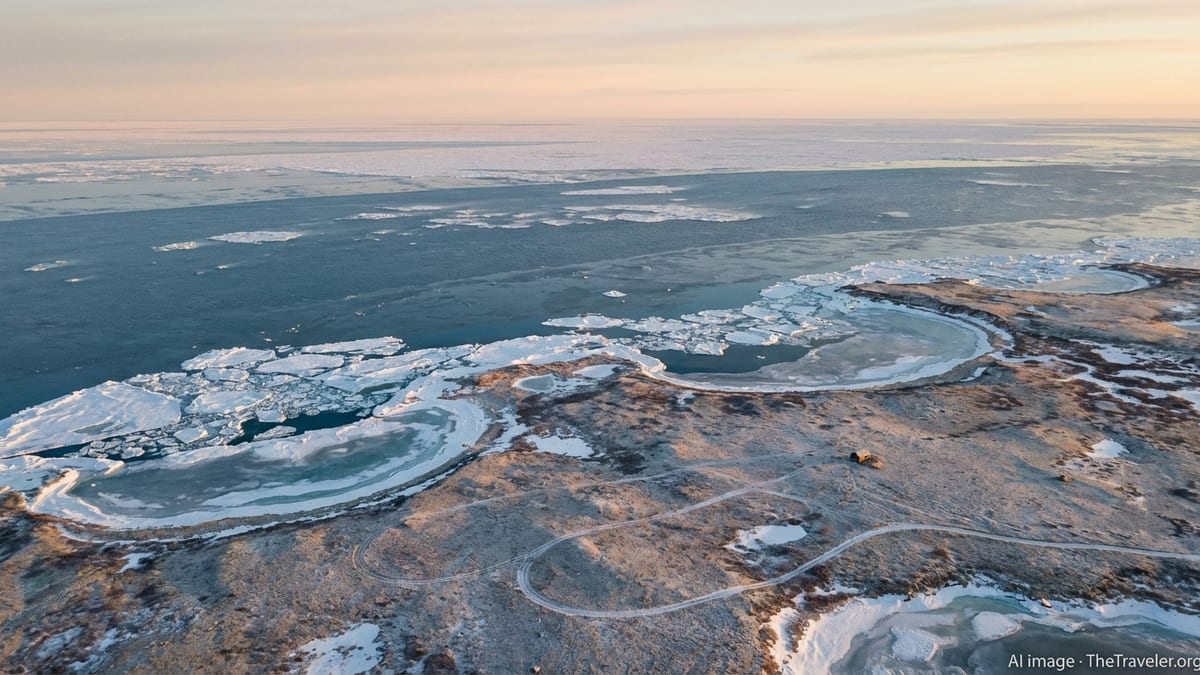
Hudson Bay is an inland sea in northeastern Canada, attached to the Arctic Ocean system but fringed by boreal forest, tundra, and low-lying coastal flats. Destinations such as Churchill sit where three major biomes meet, creating a transition zone between northern forest and open tundra. The bay itself usually freezes in late autumn and remains ice covered through winter, then opens to ship traffic and whale migrations in summer.
The Arctic Ocean, by contrast, is a vast polar sea encircled by Greenland, Canada’s High Arctic islands, Alaska, Russia, and Norway’s Svalbard archipelago. Travelers tend to experience it aboard ice-strengthened expedition ships, small local boats, or from isolated settlements scattered along its fringes. Here, multi‑year sea ice, drifting floes, and towering pack ice still define many itineraries, although the long‑term trend is toward thinner and less extensive ice cover.
These geographic differences shape how each destination feels. Hudson Bay trips often revolve around a single community hub, with daily forays by tundra vehicle, boat, or on foot into surrounding wilderness. Arctic Ocean voyages, on the other hand, feel like extended expeditions. You may cross open water, navigate pack ice, and make landings by small boat in remote fjords or on uninhabited islands before steaming overnight to the next icy horizon.
For travelers, that means Hudson Bay can feel like an intimate window into the North, while the Arctic Ocean delivers a grand, constantly shifting panorama. Both are powerful experiences, but your tolerance for days at sea, remoteness, and changeable conditions should influence which one you choose.
Access, Seasonality, and Trip Length
Reaching Hudson Bay usually involves flying via Winnipeg or another Canadian gateway to Churchill or a coastal lodge. Flights are scheduled and regular during peak seasons, and most itineraries last between four and eight days. This relative ease makes Hudson Bay a practical choice for travelers with limited vacation time or those unsure about committing to a full polar expedition.
Arctic Ocean destinations demand more time and flexibility. Travelers often fly first to gateway cities such as Longyearbyen in Svalbard, Nuuk in Greenland, Reykjavik in Iceland, or northern Canadian communities that serve as embarkation points for expedition ships. Voyages can run from about a week for a Svalbard loop to two weeks or more for Greenland coastlines or Northwest Passage routes, with additional travel days on either side.
Seasonality is also distinct. Around western Hudson Bay, polar bear viewing from tundra vehicles and coastal lodges typically peaks in October and November, when bears gather along the shore waiting for ice to form. Beluga whale watching in the Churchill River estuary and adjacent bay is centered on the short northern summer, with substantial numbers of whales present in July and early August. Northern lights can be seen in both shoulder and winter seasons when nights are dark and skies are clear.
In the broader Arctic Ocean, the main travel window is late spring through early autumn, when sea ice retreats enough to allow navigation. Svalbard cruises usually run from around May into September. Greenland’s coastal communities and fjords are generally accessible in high summer, while complex itineraries that cross extensive ice, such as the Northwest Passage, are commonly attempted from late August into September, depending on conditions. Travelers considering Arctic Ocean routes should plan for a narrower operational window and the possibility of weather or ice‑related adjustments to their itinerary.
Wildlife Encounters: Polar Bears, Whales, and Beyond
Hudson Bay has become synonymous with some of the world’s most accessible polar bear viewing. The western Hudson Bay population congregates along the coast near Churchill in autumn as they wait for the bay to freeze so they can head out to hunt seals. Strictly regulated tundra vehicles, coastal walking safaris based from remote ecolodges, and small‑boat excursions along the shoreline provide opportunities to see bears at close yet managed distances. Tour numbers, vehicle permits, and approach rules are controlled by provincial authorities to reduce stress on the animals and the fragile tundra.
In summer, the focus around Hudson Bay shifts toward marine life. Beluga whales by the thousands move into estuaries and river mouths, including the Churchill River, to feed, calve, and socialize in relatively warm, shallow waters. Travelers may watch them from zodiacs, kayaks, or specialized vessels with underwater viewing systems, and the experience can feel surprisingly intimate as the curious whales approach boats and sometimes vocalize audibly around you.
The Arctic Ocean widens the cast of characters. Polar bears are still a marquee species, especially in regions like Svalbard, the Canadian High Arctic, and coastal Greenland, but they are usually observed from ship decks or zodiacs on ice floes and remote shorelines. Walrus haul‑outs, bearded and ringed seals, and a wide range of seabirds, from puffins and guillemots to ivory gulls, are common features of Arctic Ocean itineraries. Depending on region and timing, travelers might also encounter bowhead, humpback, and minke whales along ice edges and in productive fjords.
Because of the distances involved, Arctic Ocean wildlife experiences are often more opportunistic and varied, with some days spent scanning wide seascapes and others devoted to specific colonies or fjords. Hudson Bay trips tend to concentrate on a smaller geographic area with higher probabilities of seeing a particular species, most notably polar bears in autumn and belugas in summer. Choosing between these destinations often comes down to whether you prefer focused encounters around a single hub or a wider but less predictable spectrum of wildlife along shifting routes.
Landscape, Light, and Photographic Atmosphere
Hudson Bay’s coastal landscapes feel low and expansive. Tundra and coastal marshes stretch to the horizon, punctuated by rocky outcrops, tidal flats, and sparse stands of stunted spruce or willows. In late summer, tundra wildflowers can color the landscape; by autumn, earthy reds and golds dominate before snow gradually takes hold. For photographers, this creates compositions where wildlife, river estuaries, and the subtle curve of the bay are the main visual anchors.
The Arctic Ocean offers a more varied and often more dramatic visual palette. In places like Svalbard and East Greenland, steep mountains, calving glaciers, and deep fjords rise directly from the sea. Blue icebergs, pack ice ridges, and drifting floes provide ever‑changing foregrounds and leading lines. In flatter regions such as sections of the Northwest Passage, the drama can come from broad horizons, low light, and the sense of crossing a minimalist polar seascape.
Light is another key distinction. Around Hudson Bay, the polar day and night cycles are noticeable but less extreme than near the geographic pole. Summer brings long evenings and extended twilight that suit unhurried boat excursions and shoreline walks. By mid‑autumn, darkness arrives earlier, offering opportunities for northern lights when conditions cooperate, though cloud cover can sometimes limit displays. Dedicated winter aurora trips in the broader subarctic often favor colder, clearer months such as February or March.
Closer to the central Arctic Ocean, seasons of continuous daylight or darkness are more pronounced. Early‑season voyages can experience around‑the‑clock sun with long, low angles that bathe ice and mountains in soft gold for hours. Late‑season trips may bring a return to darkness and, in some regions, the first glimpses of aurora over ice‑strewn seas. Photographers drawn to extreme light conditions and graphic landscapes may gravitate toward Arctic Ocean itineraries, while those preferring a gentler, more accessible version of the North may find Hudson Bay’s softer light and simpler horizons easier to work with.
Human Presence, Culture, and Community Encounters
On Hudson Bay, travel commonly revolves around small communities and lodges. Churchill, sometimes called the Polar Bear Capital of the World, is a modest town that has become a global hub for polar bear tourism, subarctic research, and conservation programs. Visitors can spend time learning about local history, the legacy of the Port of Churchill, and the role of research institutions that monitor changing conditions and wildlife along the bay.
Several coastal lodges on the Hudson Bay shoreline combine polar bear viewing with guided hikes and cultural interpretation. Some itineraries incorporate Indigenous perspectives, sharing stories and knowledge from Cree, Dene, Inuit, or Métis people whose traditional territories intersect this coastline. While the tourism infrastructure is limited compared to larger cities, there are inns, small hotels, and community‑run services that give Hudson Bay trips a grounded, place‑based feel.
On the Arctic Ocean, you are more likely to encounter communities as brief waypoints on a longer voyage. Expedition ships may call at settlements in Greenland, northern Canada, or Arctic Norway, where local guides join shore excursions, explain traditional subsistence practices, or offer visits to cultural centers and artists’ workshops. The scale is often small, and the presence of a cruise ship can temporarily double or even triple the local population, which has prompted ongoing conversations about managing visitor numbers and benefits.
Travelers seeking extended time in one northern community, with the chance to return to the same café or shoreline over several days, may find Hudson Bay more satisfying. Those who want to see a cross‑section of Arctic cultures, languages, and settlement patterns in a single trip may prefer an Arctic Ocean itinerary. In both cases, choosing operators that prioritize local partnerships and respectful engagement is essential, as communities across the North continue to navigate the opportunities and pressures that tourism brings.
Climate Change, Sea Ice, and Ethical Travel Choices
Both Hudson Bay and the Arctic Ocean are on the front lines of climate change, and travelers are increasingly aware that their visits intersect with fragile, rapidly changing systems. Around Hudson Bay, the seasonal formation and breakup of sea ice determine when polar bears can hunt on the frozen surface and when they must fast on land. Long‑term research has documented trends toward earlier ice breakup and later freeze‑up in parts of the bay, with implications for polar bear body condition and reproductive success. Travelers arriving in Churchill or coastal lodges are often briefed on these dynamics and the conservation work underway to monitor and mitigate impacts.
Across the broader Arctic Ocean, the thinning and retreat of sea ice have reshaped ecosystems and opened new navigation possibilities, enabling some modern expeditions that were historically difficult or impossible. At the same time, the overall decline in ice has affected species that rely on stable floes for breeding, feeding, or resting. Scientific institutions focused on cryosphere research stress that seasonal variations or temporary slowdowns in melting do not reverse the longer‑term warming trend. For visitors, this context can make Arctic journeys feel both inspiring and sobering.
Ethical travel in these environments involves more than simply choosing a carbon offset at checkout, although reducing and compensating for emissions is part of the picture. On Hudson Bay, look for operators that adhere to strict wildlife viewing guidelines, support ongoing scientific work, and collaborate closely with local communities. In the Arctic Ocean, expedition companies that limit passenger numbers, avoid sensitive haul‑outs at critical times, and follow established polar shipping guidelines help reduce disturbances.
For many travelers, witnessing climate change where it is most visible becomes a catalyst for action at home, whether that means lifestyle adjustments, advocacy, or support for organizations working in northern conservation and community resilience. If you approach your trip as both a privilege and a learning experience, the ethical dimension can become one of the most meaningful parts of the journey.
Comfort, Safety, and Practical Travel Considerations
Hudson Bay typically offers a more bounded, predictable set of logistics than a full Arctic Ocean voyage. Accommodations range from modest guesthouses and family‑run hotels in Churchill to remote wilderness lodges accessible by small aircraft. Many itineraries are all‑inclusive once you arrive in the regional hub, covering local transport, guided excursions, and most meals. Weather can still be challenging, with strong winds, rapidly dropping temperatures in autumn, and winter conditions that demand proper gear, but distances are shorter and evacuation options more straightforward than in the central Arctic.
Arctic Ocean expeditions involve longer stretches far from large medical facilities or alternate transport. Modern expedition vessels generally carry onboard medical staff, safety equipment, and experienced ice navigators, but conditions can change quickly. Rough seas, fog, drifting ice, and hardware issues can cause route changes or delays. Travelers who are prone to seasickness should factor in more ocean time, and comprehensive travel insurance that covers evacuation from remote regions is strongly recommended.
Packing lists for both destinations emphasize layered clothing, waterproof outerwear, insulated boots, and protection against wind and sun. On Hudson Bay, days spent on open tundra vehicles or small boats can feel very cold even in shoulder seasons, while Arctic Ocean zodiacs and ship decks expose you directly to polar maritime air. Good gloves, face protection, and hand warmers can dramatically increase your comfort and ability to stay outside for wildlife viewing or photography.
In terms of health and safety protocols, many northern operators now have clear procedures for wildlife encounters around towns, including staffed patrols where polar bears and people share space. Visitors are generally escorted in known bear zones and briefed on how to move safely. On Arctic Ocean ships, strict rules govern how closely zodiacs can approach animals, how many guests may land at a time, and what to do if wildlife appears unexpectedly. Paying attention to these briefings and following staff guidance is one of the simplest ways to keep both yourself and the animals safe.
Budget, Trip Style, and Choosing the Right Destination
Hudson Bay and Arctic Ocean itineraries are both premium trips compared with many mainstream holiday options, but there are meaningful differences in style and cost. Hudson Bay journeys often cluster around a week in length, with pricing shaped by lodge category, group size, and included activities such as tundra vehicle days or beluga excursions. While not inexpensive, these trips can sometimes be more attainable than multi‑week polar voyages, particularly if you are flexible on exact dates and accommodation level.
Arctic Ocean expeditions typically involve higher baseline costs due to ship operations, fuel, crew expertise, and the distances covered. Cabins on modern expedition vessels range from compact shared options to spacious suites, and itineraries that venture into very remote waters or attempt routes associated with historic exploration often come at a premium. For some travelers, the chance to trace legendary passages or circle remote archipelagos justifies the added expense and time commitment.
Your travel style should be a primary filter. If you prefer to unpack once and settle into a cozy base with day trips into the surrounding wild, Hudson Bay fits that model. If you thrive on the rhythm of ship life, daily briefings, and a new horizon each morning, an Arctic Ocean voyage may be a better match. Families, older travelers, or those unsure about long ocean crossings might appreciate Hudson Bay’s shorter access flights and more contained environment, while expedition veterans and photographers chasing rare species or extreme ice will often prioritize the broader Arctic.
In both regions, reserving well ahead is important. Polar bear seasons on Hudson Bay and limited‑berth Arctic cruises can sell out months or even more than a year in advance. Early planning allows you to choose itineraries with stronger environmental commitments, more inclusive pricing, and cabin or room categories that match your comfort expectations. Speaking candidly with operators about your abilities and priorities helps ensure that the trip you book delivers the experience you imagine when you picture your own high‑latitude adventure.
The Takeaway
Choosing between Hudson Bay and Arctic Ocean destinations is less about finding a universally better option and more about aligning your expectations with each region’s character. Hudson Bay offers a concentrated, community‑anchored encounter with the North, where polar bears and beluga whales headline carefully managed, often shorter trips. It provides a vivid introduction to subarctic life, climate change, and wildlife conservation without committing to weeks at sea.
The Arctic Ocean, in contrast, is an arena of wide horizons and complex routes. It holds remote archipelagos, dramatic fjords, and shifting ice that can transform a single voyage from tranquil to challenging within hours. Here, the narrative is broader: multiple cultures, a wider range of wildlife, and the visceral experience of traversing some of the least accessible waters on Earth. The rewards can be immense for those willing to accept the uncertainties that true expedition travel entails.
Whichever path you choose, going north invites reflection. You enter landscapes where weather, ice, and wildlife still set the terms, and where the effects of a warming climate are visible in real time. Approached thoughtfully, a journey to Hudson Bay or the Arctic Ocean can deepen your understanding of the planet’s extremes and your own place within them, leaving you with memories and insights that last far beyond the chill on your cheeks or the glow of the aurora overhead.
FAQ
Q1. Is Hudson Bay or the Arctic Ocean better for first-time polar travelers?
For most first-time visitors, Hudson Bay is more approachable, with shorter trips, easier access via scheduled flights, and a more contained environment based around one region.
Q2. When is the best time to see polar bears in Hudson Bay?
The peak season around western Hudson Bay is typically from mid October through November, when bears gather along the coast waiting for sea ice to form.
Q3. Can I see polar bears on Arctic Ocean cruises as reliably as in Hudson Bay?
Many Arctic Ocean routes offer good chances to see polar bears, but sightings are more dependent on ice conditions and route choices, so they are generally less predictable than focused Hudson Bay trips.
Q4. What wildlife is unique to Hudson Bay compared with the broader Arctic Ocean?
Hudson Bay is especially known for its accessible western Hudson Bay polar bear population and large seasonal gatherings of beluga whales in river estuaries and nearshore waters.
Q5. How physically demanding are trips to Hudson Bay versus Arctic Ocean expeditions?
Hudson Bay itineraries often involve day excursions with options to stay on vehicles or boats, while Arctic Ocean voyages can require more time in zodiacs, stairs on ships, and occasional uneven landings.
Q6. Will I definitely see northern lights on either trip?
Neither destination can guarantee aurora, but both lie within or near the auroral zone; success depends on timing, darkness, clear skies, and solar activity rather than location alone.
Q7. Are Arctic Ocean cruises safe given the presence of sea ice?
Modern expedition ships are designed for polar conditions and follow established safety protocols, but ice and weather can still alter plans, so flexibility and listening to crew guidance are essential.
Q8. How should I dress for a Hudson Bay polar bear trip?
Plan for layered clothing, windproof and waterproof outerwear, insulated boots, warm hats and gloves, and face protection for extended time on open tundra vehicles or boats.
Q9. Is one destination more sustainable or ethical than the other?
The impact depends largely on specific operators; look for small group sizes, strong community partnerships, strict wildlife guidelines, and transparent environmental practices in either region.
Q10. How far in advance should I book a Hudson Bay or Arctic Ocean trip?
Prime polar bear seasons and popular Arctic Ocean voyages often fill many months or even a year ahead, so early planning greatly improves your choice of dates and itineraries.