

More news on this day
Couples seeking a dramatic backdrop for their wedding day are increasingly looking to the Hudson River, where a growing number of cruise operators now offer ceremonies and receptions set against New York’s skyline, bridges, and storied riverfront landscapes.
Get the latest news straight to your inbox!
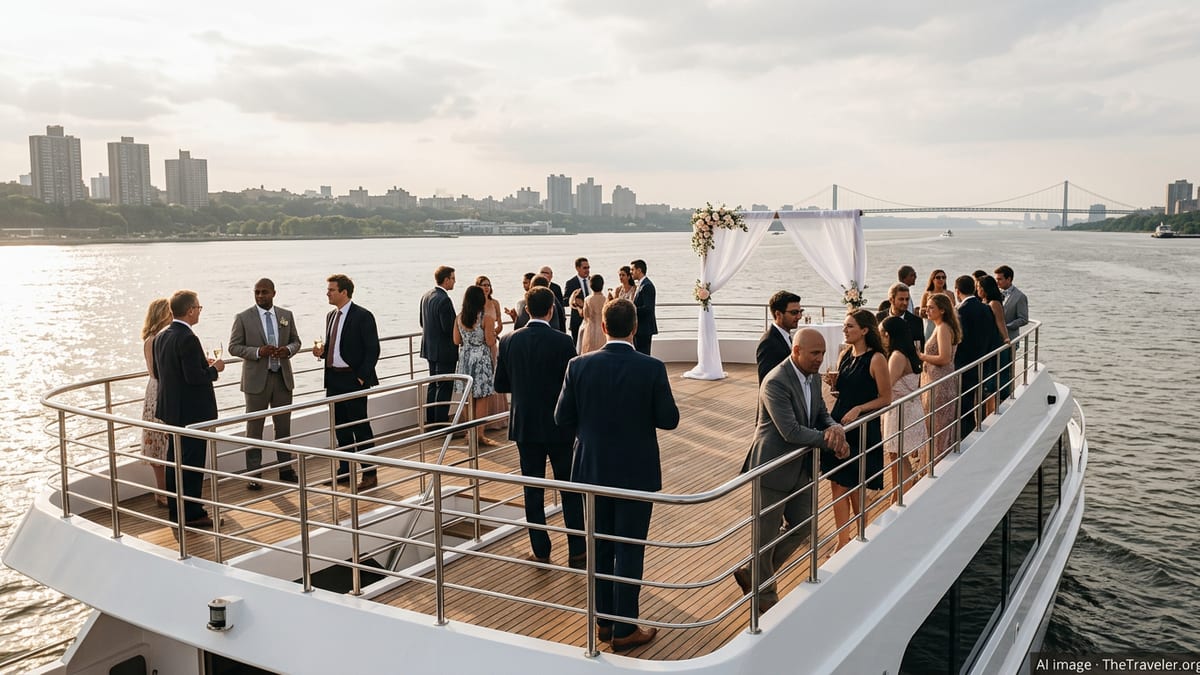
A Growing Niche in the New York Wedding Market
Industry observers note that on‑the‑water weddings, once a niche option, are becoming more visible across New York Harbor and the Hudson Valley. Cruise and yacht operators have expanded private charter offerings, with websites now highlighting full wedding packages alongside corporate and sightseeing products. Publicly available information shows that vessels sailing from Manhattan, New Jersey, and upriver ports are marketing themselves as turnkey venues that combine transportation, views, and event space in a single booking.
City Cruises, which runs a large fleet from New York, promotes dedicated wedding sailings on the Hudson and East Rivers, positioning its boats as floating venues with skyline views, climate‑controlled interiors, and open‑air decks for ceremonies and photos. Its New York operation reports capacity ranges that can host events from around 120 guests to close to 1,000, indicating that river weddings are no longer limited to small groups or elopements but can accommodate large receptions as well.
Smaller, boutique operators are also active on the Hudson. Classic Harbor Line, for example, emphasizes yacht weddings aboard turn‑of‑the‑century‑style boats, describing options for micro‑weddings, elopements, rehearsal dinners, and foliage‑season cruises north along the river. In the mid‑Hudson region, Hudson River Cruises in Kingston highlights weddings aboard its Rip Van Winkle II vessel, while R.M.S. Cruises advertises private charters with wedding planning services departing from Peekskill, New York City, and New Jersey, linking the Upper Hudson Valley with the metropolitan market.
Reports from wedding planning forums and regional media coverage suggest that interest in non‑traditional venues, including boats, has been reinforced by competition for prime dates at land‑based sites across the Hudson Valley and New York City. Couples who find popular barns, estates, and lofts fully booked for high‑demand months are looking at river cruises as a way to secure strong views and a memorable setting without entering multi‑year waitlists.
From Intimate Yachts to High‑Capacity Party Boats
The current Hudson River wedding cruise landscape spans a wide spectrum of vessel sizes and styles. At the intimate end, classic yachts and smaller tour boats are marketed for gatherings such as elopements, ceremonies with a handful of witnesses, or 40‑ to 80‑guest receptions. Classic Harbor Line’s fleet, for instance, includes sleek motor yachts and sailing vessels that can host compact events with seated dining and deck‑side vows against the Manhattan skyline or Palisades cliffs.
At the other extreme, newly introduced mega‑vessels are targeting large, high‑budget celebrations. NYC Water Cruises promotes its Eternity yacht, launched in 2024, and the Grande Mariner, launched in 2025, as multi‑deck event spaces with thousands of square feet of interior and exterior areas. Company materials describe capacities in the several hundreds of guests, with multiple bars, lounges, and dance floors designed to handle full‑scale weddings with separate zones for cocktails, dinner, and late‑night entertainment.
Between these poles, a range of mid‑sized ships and riverboats serve couples who want a more traditional reception feel with the added benefit of water views. Operators such as American Princess Cruises, which lists wedding and engagement cruises among its private charter options, and Hudson River Cruises in Kingston promote buffet dinners, dance floors, and DJ‑friendly layouts that resemble a conventional banquet hall transplanted onto the river. In New York City, yachts such as the Atlantis, chartered by New York Cruises, offer three‑deck layouts, including enclosed salons and open decks, positioning themselves as luxury alternatives to hotel ballrooms.
This diversity allows couples to match vessel types not only to guest count but also to aesthetic preferences. Some boats lean into a nautical, informal party atmosphere, while others highlight white‑tablecloth dining rooms, carpets, chandeliers, and bridal suites. For destination‑wedding travelers, particularly those hosting guests unfamiliar with New York, cruise operators promote the experience element as a key selling point, presenting the sail as both a venue and a moving tour of major landmarks.
Costs, Logistics, and Booking Trends
Pricing information published by cruise companies and regional boat operators indicates that costs for Hudson River wedding charters vary widely, with factors such as vessel size, season, day of the week, and included services shaping final budgets. Some brochures and rate sheets for riverboat weddings in the broader Northeast show four‑hour private wedding cruises starting in the mid‑thousands of dollars for smaller vessels, with prices increasing for peak dates and larger guest capacities. Luxury yachts and high‑capacity New York Harbor ships typically position themselves at higher price points, often bundling catering, bar service, and staffing into per‑person packages.
Reports from wedding forums suggest that couples considering boat weddings often compare cruise packages against restaurant buyouts and urban loft venues in New York City and the Hudson Valley. While per‑guest costs can be similar, proponents point out that a cruise charter consolidates venue, transportation along the river, and sightseeing into a single line item. However, observers also note that additional expenses such as docking surcharges, extended sailing time, and upgrades to premium bar or menu tiers can add quickly to final totals.
Logistics remain a defining feature of river weddings. Publicly available planning guides from New York cruise operators emphasize fixed boarding and departure times, security or manifest requirements, and the importance of clear communication to guests about punctual arrival. Once a boat leaves the pier, latecomers cannot be accommodated, so many planning resources recommend boarding windows with cocktails and light refreshments before sailing. Weather is another consideration: although most event vessels on the Hudson offer enclosed decks, couples are advised to plan for rain or wind on outdoor decks and to be flexible about where ceremonies and photo sessions take place on board.
Booking timelines appear to mirror those of land‑based venues. Online discussions and venue calendars indicate that peak months, particularly late spring and early fall, can book out more than a year in advance for desirable evening sailings. Shoulder‑season dates, weekday events, and daytime brunch cruises are cited as more attainable options for couples seeking lower prices or shorter lead times.
Scenic Routes From Harbor to Highlands
Route selection is another point of differentiation for Hudson River wedding cruises. Boats departing from Manhattan or nearby New Jersey piers commonly trace circuits that showcase major New York City landmarks, circling the southern tip of Manhattan with views of the Statue of Liberty, Lower Manhattan, and the Brooklyn Bridge before proceeding up portions of the Hudson. Promotional materials from City Cruises and other operators highlight opportunities for skyline photography at sunset and after dark, when building lights and bridge illuminations frame outdoor decks.
Farther north, vessels based in the Hudson Valley focus on the river’s natural and historic scenery. Hudson River Cruises in Kingston, for instance, markets sailings that take in the Catskill Mountains, riverside estates, and historic lighthouses. Classic Harbor Line encourages fall wedding clients to consider routes north along the Hudson to view the Palisades and autumn foliage, turning ceremonies and receptions into moving foliage tours.
Private charter providers such as R.M.S. Cruises promote flexible itineraries that can emphasize either the Upper Hudson Valley’s cliffs and small towns or the dramatic approach to Manhattan’s skyline, depending on where couples and guests board. These varied routes allow planners to tailor the visual narrative of the event, from quiet, landscape‑focused sails to highly urban circuits centered on skyscrapers, bridges, and harbor traffic.
For destination guests, the journey itself can function as both entertainment and orientation, especially for those unfamiliar with the region. Combined with on‑board narration, music, or curated playlists, the changing views of river, shoreline, and cityscape are promoted as a way to keep guests engaged during sailing periods that replace traditional cocktail hours or between‑course downtime.
Experience‑Driven Weddings and Future Prospects
The rise of Hudson River wedding cruises aligns with broader trends toward experience‑focused celebrations, where couples prioritize memorable settings and shared activities over strictly formal traditions. Published coverage of wedding planning trends notes growing interest in venues that offer a sense of movement, novelty, or adventure, from mountain lodges and industrial rooftops to boats and barges. River cruises fit squarely within this shift, providing what operators frame as an inherently social environment built around shared views and limited distractions.
River weddings also intersect with sustainability and local‑travel conversations. Some couples based in the New York region appear to be using river cruises as an alternative to long‑haul destination weddings, offering out‑of‑town guests a concentrated, scenic experience within a shorter travel radius. At the same time, the environmental impact of marine fuel use and waterfront development remains part of the larger discussion around tourism on the Hudson, although most wedding‑specific marketing currently focuses on guest experience rather than emissions data.
Looking ahead, the launch of new event yachts and ongoing investment in waterfront infrastructure suggest that the segment will continue to expand. Recent introductions of large, amenities‑rich vessels such as the Eternity and Grande Mariner, together with smaller boutique yachts and established regional tour boats, indicate a competitive market in which operators differentiate through design, service level, and route selection. As couples keep searching for distinctive backdrops within reach of New York City and the Hudson Valley, observers expect that floating ceremonies and receptions will remain a visible part of the regional wedding landscape.