

More news on this day
Hundreds of passengers were left stranded across Japan today as poor weather and operational disruptions triggered 27 cancellations and 398 delays at airports in Tokyo, Osaka, Tottori and Hachijojima, affecting services by All Nippon Airways, Japan Airlines, ANA Wings, Ibex Airlines, Jetstar Japan and other domestic and regional carriers.
Get the latest news straight to your inbox!
Storm Systems Sweep Japan’s Main Travel Corridors
Publicly available aviation data and domestic media coverage indicate that a strong low-pressure system and associated rain and wind bands moved across central and western Japan, disrupting tightly scheduled domestic routes. The combination of reduced visibility, crosswinds and airfield congestion at key hubs such as Tokyo’s Haneda and Narita airports and Osaka’s Kansai and Itami facilities prompted airlines to thin out schedules and implement rolling delays.
At regional gateways including Tottori and the remote island airport of Hachijojima, conditions were particularly challenging for smaller aircraft and shorter runways. As weather deteriorated around peak travel windows, carriers increasingly resorted to ground holds and flight time revisions, which in turn created knock-on congestion for aircraft and crews trying to reposition around the country’s dense domestic network.
Japan’s aviation system is highly interconnected, and disruption at one hub often reverberates through other cities. Today’s cancellations and delays illustrate how rapidly a localized band of bad weather can ripple outward, turning routine short-haul hops into extended ordeals for travelers with onward rail and air connections.
Tokyo and Osaka Hubs Bear the Brunt
Tokyo’s dual-airport system and the Osaka metropolitan area recorded the largest share of delayed flights as airlines struggled to maintain punctuality while preserving safety margins. Published tracking information shows that Haneda and Narita together handled the majority of affected operations, with aircraft arriving late from regional points and departing behind schedule as ground crews worked through backlogs.
In Osaka, both Kansai International Airport, built on an offshore artificial island, and Itami Airport, the main domestic gateway, experienced similar patterns. Passengers arriving into the Kansai region encountered long queues at service counters as departure times moved outward, while some short intra-Japan hops between Tokyo and Osaka saw schedule integrity erode over the course of the day.
Operationally, hub airports face particular strain when weather coincides with busy periods. Turnaround times lengthen as deplaning, refueling and boarding must be carefully sequenced between showers and gusty conditions, and arriving aircraft may be held in airborne stacks or diverted, further tightening available slots for departures.
Regional Airports Tottori and Hachijojima See Disproportionate Impact
While the largest numbers of disrupted passengers were concentrated in Tokyo and Osaka, the impact at smaller facilities such as Tottori and Hachijojima was more acute in relative terms. With limited daily frequencies and fewer alternative routes, even a handful of cancellations or extended delays can effectively isolate communities for much of the day.
In Tottori, on the Sea of Japan coast, weather-sensitive turboprop and regional jet operations faced particular scrutiny. Publicly accessible flight status boards reflected gaps in service as carriers opted to cancel flights outright rather than risk repeated rolling delays. Travelers bound for Tokyo or other major cities were forced to seek last-minute seats on later departures or consider overland alternatives.
On Hachijojima, an island south of Tokyo in the Philippine Sea, cancellations and protracted delays had an outsized effect. With only a small number of daily departures, disruptions quickly translated into full-day postponements for residents, tourists and workers. For island communities, air links are not only a tourism lifeline but also a critical connection for medical travel, business and essential supplies.
Major Carriers Juggle Cancellations, Crews and Connections
The disruption cut across much of Japan’s domestic airline ecosystem. All Nippon Airways and Japan Airlines, which operate extensive networks from Tokyo and Osaka, were among the hardest hit, with multiple delayed rotations and selected cancellations across trunk and regional routes. Subsidiaries such as ANA Wings, together with regional specialists including Ibex Airlines, also saw their schedules compressed and reshuffled.
Low cost carrier Jetstar Japan and other budget operators were similarly affected, particularly on popular leisure routes linking major cities to resort destinations and regional airports. For airlines that run tight aircraft utilization patterns, a single delayed rotation can cascade through the day’s timetable, limiting options to re-accommodate passengers on later flights.
Publicly available information shows that carriers deployed standard disruption measures, including rolling rebooking options, flexible change policies on affected sectors and, in many cases, refunds when flights were cancelled outright. However, with 398 services running late to varying degrees, passengers seeking specific onward connections often faced difficult choices between waiting at the airport or reworking itineraries entirely.
Travellers Face Missed Connections and Crowded Terminals
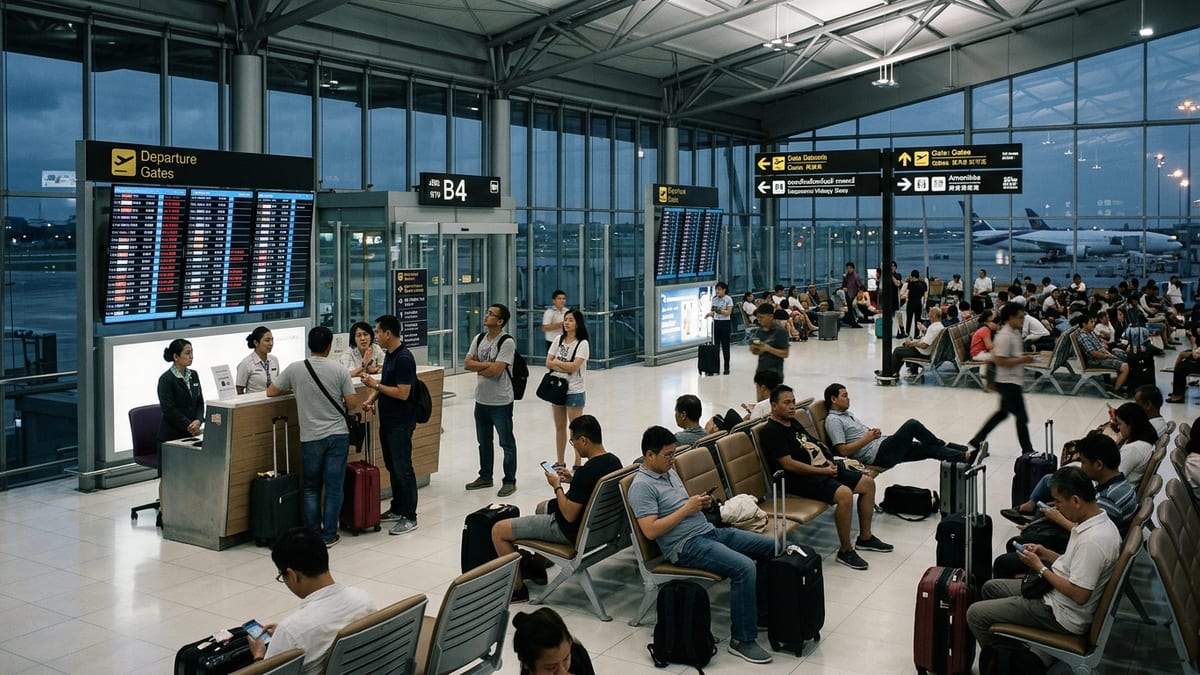
For passengers, today’s figures translated into long lines, repeated gate announcements and crowded waiting areas at some of Japan’s busiest airports. Domestic travelers with same-day rail or international connections were particularly vulnerable, as even modest delays on short flights between cities such as Tokyo and Osaka can leave little margin for transfers to Shinkansen departures or long-haul services.
Reports from travel forums and social media posts described travelers racing between terminals, negotiating with customer service staff and, in some cases, opting to switch from air to rail on core domestic corridors once it became clear that original flight times were no longer viable. Others chose to remain overnight near airports rather than attempt complicated rebookings late in the day.
Japan is known for its generally high level of punctuality in air and rail transport, which can heighten the sense of disruption when storms or operational issues intervene. Today’s wave of 27 cancellations and nearly 400 delayed services serves as a reminder that even one of the world’s most reliable aviation markets remains vulnerable when weather and tight scheduling collide.