

More news on this day
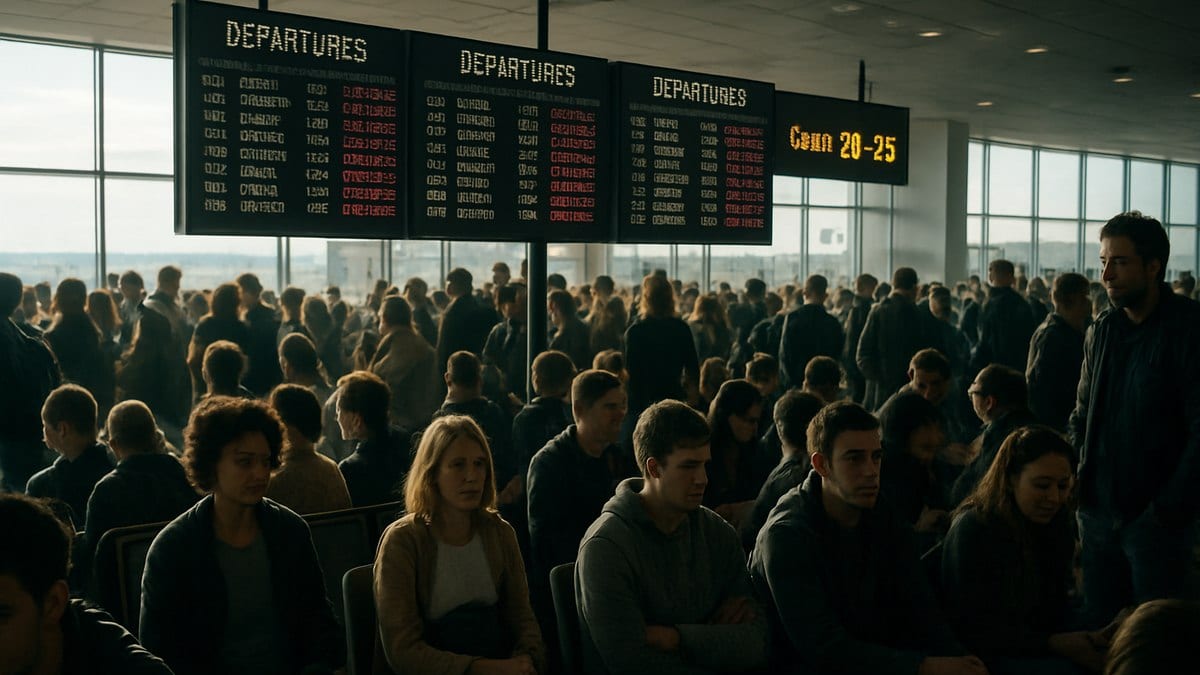
Passengers across Asia and the Gulf face continuing travel turmoil in April 2026 as a mix of regional conflict, airspace closures and fuel supply pressures forces airlines to cancel or delay hundreds of flights across key hubs.
Get the latest news straight to your inbox!
Regional Conflict Ripples Through Gulf Aviation Hubs
Publicly available data on airspace restrictions linked to the 2026 Iran conflict shows that large sections of Gulf airspace remain constrained, sharply curbing normal traffic flows through Dubai, Doha, Abu Dhabi and neighboring hubs. Airlines that traditionally rely on these airports as high-volume transfer points between Europe, Asia and Africa have had to pare back schedules and reroute long-haul operations onto longer, less direct paths.
Industry and government statements compiled in recent weeks indicate that Iranian strikes and subsequent closures or restrictions over parts of the United Arab Emirates, Qatar, Bahrain and surrounding states have triggered thousands of cancellations since late February. Dubai International Airport, typically ranked among the world’s busiest international gateways, has operated below its usual capacity after airspace shutdowns and phased reopenings limited the number of arrivals and departures that can be handled on a given day.
Analysts tracking global aviation networks describe a sharp drop in available seats through Gulf hubs, with leading carriers in the region operating significantly reduced schedules. While some repatriation and limited commercial flights have resumed, particularly through Dubai and Doha, timetable data and airline advisories suggest that many routes remain suspended or heavily curtailed well into April, with waivers and flexible rebooking policies extended for travel through at least the end of the month in numerous cases.
The Gulf’s role as a bridge between continents means these disruptions have effects far beyond the region. Flight tracking visualizations show long-haul services between Europe and Asia bunching along narrower corridors to avoid restricted airspace, increasing congestion on remaining routes and complicating efforts to restore reliable connections for transit passengers.
Asia’s Major Hubs Strain Under Waves of Delays and Cancellations
Across East, South and Southeast Asia, operational data compiled by aviation trackers and travel-industry publications points to repeated days of heavy disruption in early April. One widely cited breakdown for a recent 24-hour period showed more than 3,000 delayed flights and over 150 cancellations across a cluster of major airports, including Tokyo Haneda and Narita, Seoul Incheon, Hong Kong, Guangzhou, Shenzhen, Beijing Capital and Daxing, Manila and Singapore Changi.
Separate regional tallies highlight similar pressure on Chinese and Southeast Asian gateways, with large numbers of delays recorded at Guangzhou Baiyun, Shanghai Pudong, Hangzhou Xiaoshan and Chengdu Shuangliu, alongside spikes at Bangkok Suvarnabhumi, Kolkata, Jakarta Soekarno Hatta and Fukuoka. Reports describe a pattern of delay-heavy disruption in which relatively few outright cancellations coexist with thousands of late departures and arrivals, creating rolling knock-on effects for connections.
Operational accounts emphasize how fragile schedules remain. When a high-volume hub handling hundreds of daily movements begins a day with a backlog, tight slot systems and limited spare aircraft make it difficult for airlines to recover. As a result, localized problems, such as weather, runway constraints or late-arriving inbound flights, can quickly cascade across regional route maps, leaving passengers stranded overnight or arriving hours behind schedule.
Some Asian carriers have also trimmed frequencies on selected routes as they contend with the combined impact of conflict-related diversions, higher operating costs and softer demand from travelers who are postponing long-haul trips. Public schedule data for April shows reductions on certain links to the Gulf and adjustments to timings on services that now require longer flight paths to avoid closed or restricted airspace.
Fuel Supply Squeeze and Longer Routes Add Cost and Complexity
Airlines in Asia are also confronting a jet fuel shock tied to the broader energy market impact of the Middle East conflict. Industry coverage indicates that carriers across the region are paying sharply higher fuel prices and, in some cases, facing constrained supplies at particular airports. Some airlines have responded by loading extra fuel at home bases or introducing refuelling stops on routes that previously operated nonstop, adding time and complexity to journeys.
Reports from aviation and energy specialists describe how the partial closure of traditional Gulf corridors and uncertainty around shipments from the region have tightened supplies in several Asian markets. Past experience suggests that such shortages often lead to rationing rather than full outages, but even relatively small constraints can force schedule changes when fleets are already stretched and turnarounds are finely tuned.
Longer routing to skirt conflict zones amplifies the impact of high fuel prices. Flights that once transited directly over the Gulf, Iraq or Iran now often detour along more northerly or southerly tracks, increasing block times and fuel burn. For airlines operating under thin margins, those additional costs can make lower-yield frequencies unsustainable, encouraging cancellations or the consolidation of multiple daily services into a single flight.
These pressures are particularly acute for carriers that specialize in connecting traffic between Asia and Europe or North America, and for smaller regional airlines that purchase fuel on the spot market. Some operators have already signaled that further cuts could be required if prices remain elevated or if supply constraints deepen as the conflict drags on.
Rerouted Traffic Elevates Alternative Hubs and Corridors
With the Gulf’s traditional mega-hubs restricted, traffic data and official statements from several states show that alternative corridors are absorbing a larger share of long-haul flows between Europe, Africa and Asia. Egypt’s airspace, for example, has emerged as a critical transit route in recent weeks, with Cairo International Airport handling increased volumes of diverted and transiting flights as operators seek stable pathways that avoid conflict-affected areas.
European and Asian carriers have also increased their reliance on hubs such as Istanbul, Singapore and Hong Kong as they rework schedules. Publicly available network announcements indicate added frequencies on some Europe to Southeast Asia routes, as well as capacity boosts on select Asia to Australia and Asia to North America services, partly offsetting the loss of direct links through Dubai, Doha and neighboring Gulf cities.
These shifts are reshaping traditional passenger itineraries. Travelers who previously connected through the Gulf on popular one-stop itineraries between Europe and South Asia, or between Australia and Europe, are now more likely to route through Southeast Asian or European hubs. Travel agents and online search data show increased interest in itineraries via Singapore, Kuala Lumpur, Bangkok, Istanbul and select European capitals, even if connections are longer or involve backtracking.
However, the redistribution of traffic also risks pushing congestion and delay problems into newly favored hubs. As more flights are funneled through a smaller number of reliable corridors, airports that were already busy before the latest crisis are being tested by surges in transfer passengers, higher baggage loads and tighter connection windows.
Passenger Impact and Outlook for the Remainder of April
For passengers, the most visible effects of the disruption are missed connections, overnight stays in transit, and last-minute schedule changes stretching into April. Travel advisories from governments and airlines encourage flyers to monitor their bookings closely, arrive early at airports and be prepared for rerouting at short notice, particularly on journeys touching the Gulf or transiting busy Asian hubs.
Publicly available disruption tallies suggest that, on some peak days in late March and early April, tens of thousands of travelers across Asia and the Middle East experienced significant delays or cancellations. Even when alternative flights are available, reduced capacity on key corridors has led to higher fares, especially in premium cabins and on routes where business travel demand remains resilient despite the conflict.
Industry commentary points to considerable uncertainty over how long the current pattern will persist. While some carriers have tentatively reinstated limited services through the Gulf and are selling tickets for travel in late April and beyond, broader schedules continue to reflect caution. Several airlines have extended suspension periods for flights to cities such as Dubai, Doha and Tel Aviv into late April and, in some cases, into May and July.
For now, available evidence indicates that rolling disruptions across Asia and Gulf hubs are likely to continue at least through the rest of April 2026. The pace of recovery will depend on the security situation in and around the Gulf, the stability of jet fuel supplies, and the ability of airlines to rebuild schedules without overextending already stretched fleets and crews.