

More news on this day
Hundreds of flights across major English airports faced disruption on April 11, as delay and cancellation data pointed to another difficult day for air travel in an already turbulent April for European passengers.
Get the latest news straight to your inbox!
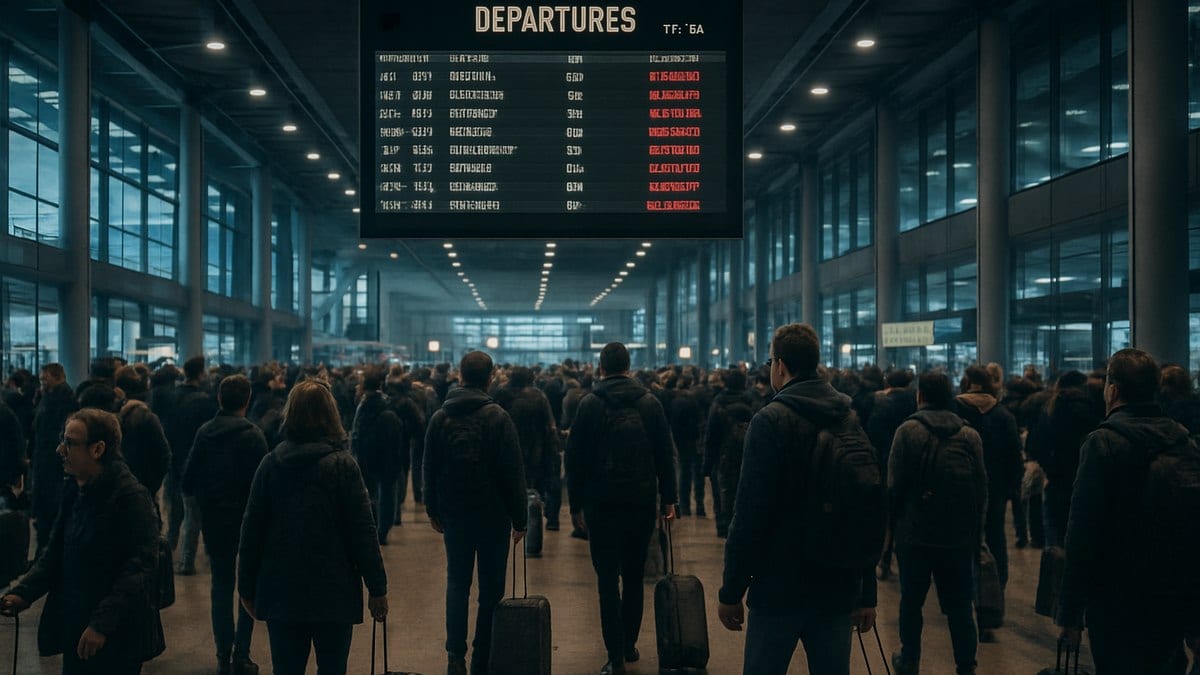
Major English Hubs Log High Volumes of Delays
Publicly available aviation tracking data for April 11 indicates that London area airports, together with Manchester, Liverpool and Newcastle, experienced a heavy concentration of delayed flights, with far more late departures and arrivals than outright cancellations. London’s large hubs again featured among Europe’s most disrupted airports, continuing a pattern seen in early April where Heathrow and Gatwick ranked near the top of the continent’s delay tables.
Reporting compiled by specialist travel outlets shows that hundreds of services scheduled to operate to and from English airports either left significantly behind schedule or were still being held at gates well into the evening peak. In many cases, the official status remained “delayed” rather than “cancelled,” creating extended uncertainty for passengers already at the airport and for those attempting to make tight onward connections.
Manchester and Liverpool recorded particularly busy afternoon and evening periods as late-running inbound aircraft forced knock-on schedule changes. Operational commentators note that high traffic density at these hubs means that even modest timetable disruptions can ripple quickly through the rest of the day, especially when aircraft and crews are tightly rostered.
Newcastle, though smaller than London or Manchester, also showed an elevated number of delayed departures and arrivals on April 11, further underlining that the impact was spread across multiple English regions and not confined to a single airport or airline.
Delays Outnumber Cancellations but Passenger Impact Is Significant
Data snapshots from April 11 suggest a “high-delay, low-cancellation” profile across English airports, where the majority of affected flights eventually operated, but often after lengthy waits at the gate or on the tarmac. Travel industry analysis notes that on such days passengers may technically complete their journeys, but often at the cost of missed onward flights, disrupted rail or hotel plans, and compressed holiday or business schedules.
In London, Heathrow again emerged as the busiest focal point, with dozens of departures and arrivals operating behind schedule. Gatwick and other London-area airports reported a similar pattern, adding pressure to already congested terminals during school holiday and spring getaway traffic. Aviation analysts point out that high-load, long-haul operations at Heathrow in particular leave little slack when earlier rotations run late, as aircraft and crews must remain within strict duty-time and maintenance parameters.
Across England as a whole, cancellations on April 11 remained comparatively limited when set against the scale of operations, but the raw number of passengers touched by disruption ran into the many thousands. Travel data aggregators highlight that each delayed flight can affect several hundred people, especially on larger aircraft serving transatlantic and key European routes, magnifying the human impact beyond simple flight-count statistics.
Observers also note that delayed rather than cancelled flights can be more challenging to manage on the ground. With services still expected to operate, passengers often remain clustered around departure gates for extended periods, straining airport seating, food outlets and customer service desks as schedules slip further into the evening.
European Context: A Week of Widespread Air Travel Turbulence
The disruptions in England on April 11 took place against a broader European backdrop in which airports across the continent have logged elevated levels of delays and cancellations throughout the week. Earlier in April, travel rights platforms highlighted more than 1,600 delayed flights across Europe in a single 24-hour period, with Heathrow and Gatwick among those recording some of the highest numbers.
Separate reporting from European travel news outlets also pointed to large-scale disruption centered on German hubs, including Frankfurt and Munich, where industrial action and staffing disputes have led to hundreds of cancellations and tens of thousands of affected passengers. Those knock-on effects have continued to filter through to the wider network, including routes that connect via English airports.
At the same time, aviation and consumer organizations have flagged the cumulative effect of weather-related congestion, air traffic capacity constraints and rolling industrial actions in several countries. When combined with already dense spring schedules, these pressures have contributed to a fragile operating environment in which localised problems in one state can quickly translate into missed slots and downstream delays in another.
For English airports, this European context means disruption on April 11 cannot be seen in isolation. Airlines operating to and from London, Manchester, Liverpool and Newcastle have been juggling late-arriving aircraft from continental hubs, re-routed flight plans and continuing pressure on crews and ground handling resources as April progresses.
Airlines and Airports Work to Clear Backlogs
Publicly available updates from airlines and airport information feeds on April 11 showed carriers adjusting departure times, swapping aircraft types and, in some cases, consolidating lightly booked services in an effort to clear backlogs and reset schedules. Operational specialists describe these measures as standard tools used to recover regularity on days when delays begin to cascade.
In London, high-frequency short-haul services to major European cities provided some flexibility, enabling airlines to re-accommodate a portion of disrupted passengers on later flights. However, heavily booked long-haul services to North America, the Middle East and Asia presented a more complex challenge, as limited spare capacity reduced options for same-day rebooking.
Regional airports such as Liverpool and Newcastle also faced pressure on their smaller networks. When a handful of key flights were delayed, it narrowed options for passengers seeking alternative departures, particularly late in the day. Aviation commentators note that these airports typically rely on a thinner slate of daily services, which magnifies the impact of even a single disrupted rotation.
Despite the difficult operating conditions, most flights affected on April 11 were expected to depart by the end of the day, albeit in some cases many hours behind schedule. Industry reports suggest that full timetable normalization may take more than a single operating day, as aircraft and crews return to their intended positions and overnight maintenance windows are rebalanced.
What Travelers Are Advised to Do Next
Consumer travel advocates and passenger rights organizations recommend that anyone scheduled to travel through English airports in the coming days closely monitor their flight status via airline apps and airport departure boards, as residual delays from April 11 may still affect early rotations. Where possible, travelers are encouraged to build in additional time for connections and to keep essential items in hand luggage in case of extended waits.
Experts in European air passenger rights underline that travelers affected by long delays or cancellations may be eligible for assistance such as meals, refreshments and hotel accommodation, subject to the specific circumstances of each disruption. Compensation eligibility is more complex and often depends on whether the root causes are considered within an airline’s control under prevailing regulations.
With English airports facing sustained pressure during a busy spring season, analysts suggest that April 11 could serve as an indicator of how vulnerable the system remains to peaks in demand or further external shocks. For now, the blend of widespread delays and relatively few cancellations highlights an industry striving to keep aircraft moving, even as passengers endure another day of extended queues and uncertain departure times.