

More news on this day
Travelers across the West Coast faced cascading disruptions on Friday as 355 flight delays and 95 cancellations at Seattle-Tacoma International Airport rippled through Portland, San Francisco, Los Angeles and other major U.S. cities, affecting operations for major carriers including Delta Air Lines, Alaska Airlines and Southwest Airlines.
Get the latest news straight to your inbox!
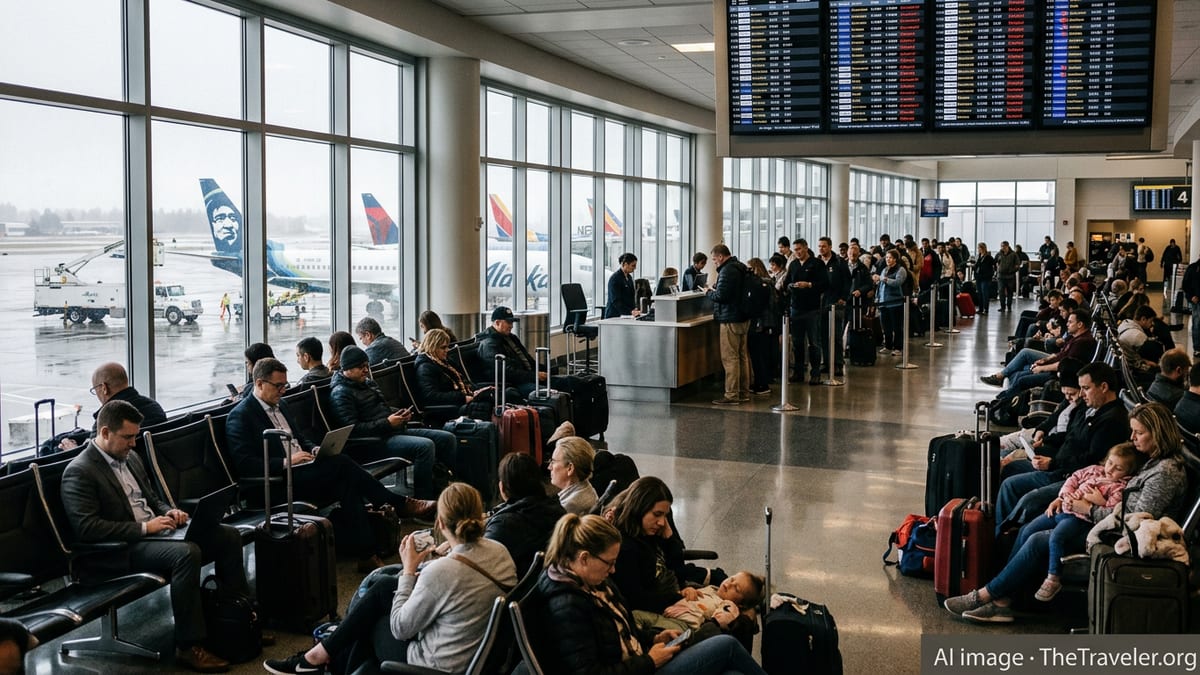
Sea-Tac Operations Snarled as Weather and Ground Constraints Collide
Seattle-Tacoma International Airport, one of the nation’s busiest West Coast hubs, struggled to keep aircraft and passengers moving after early-morning operational challenges quickly escalated into a full-day disruption. While conditions varied by hour, a combination of low ceilings, intermittent snow and rain, and tight runway and gate capacity left controllers and ground crews with little margin to recover once delays began stacking up.
By mid-morning, a ground delay program was in effect for arriving flights into Seattle, forcing aircraft to hold at departure airports across the country while slots were metered into the region. With many aircraft arriving late, turn times stretched on the ramp and gates became congested, fueling further knock-on delays. Passengers reported extended waits on taxiways, crowded gate areas and frequent last-minute changes to departure times as airlines and airport staff attempted to keep some traffic flowing.
Airport officials described the situation as a difficult convergence of factors at one of the tightest airfields in the country, where a high volume of flights competes for limited pavement and gate space. Even modest weather deterioration or unexpected operational constraints can quickly translate to system-wide delays when schedules are already running near capacity.
Major Airlines Hit Hard as Delta, Alaska and Southwest Rework Schedules
The disruption proved especially punishing for airlines with a strong presence at Seattle-Tacoma. Alaska Airlines, which uses Sea-Tac as its primary hub, saw scores of departures pushed back or scrubbed as inbound aircraft and crews were delayed or displaced. Passengers reported cancellations on both short-haul regional routes and long-haul services, with rebooking options often limited as planes filled quickly.
Delta Air Lines, which has built Seattle into a key transcontinental and transpacific gateway, also faced extensive schedule adjustments. Delays on early bank departures to hubs in the Midwest and on the East Coast reverberated throughout the day, complicating onward connections for travelers heading to Europe, Asia and the southern United States. In some cases, travelers had to be rerouted through secondary hubs, adding hours to already lengthy itineraries.
Southwest Airlines, operating a robust network of point-to-point flights from Seattle to cities across the West, was forced to cancel and consolidate flights as aircraft and crews fell out of position. With the carrier’s tight turn times and high aircraft utilization, even short holds and minor ground restrictions at Sea-Tac translated into significant schedule disruptions, particularly on popular business and leisure routes to California, Nevada and Arizona.
Regional Ripple Effects in Portland, San Francisco and Los Angeles
As the morning’s Sea-Tac delays intensified, airports tied closely to Seattle through shuttle-style service began to feel the impact. Portland International Airport saw multiple departures to and from Seattle delayed or canceled, leaving travelers with missed connections and limited alternatives. Airline agents advised some passengers to consider ground transportation to Seattle to salvage international or cross-country itineraries, though highway traffic and weather made even that option uncertain.
In California, San Francisco International Airport and Los Angeles International Airport experienced delays on flights linked to Seattle and onward destinations. Aircraft that normally cycle quickly between West Coast cities arrived late from the Pacific Northwest, compressing turnaround windows and shifting departure banks. Some carriers opted to prioritize long-haul operations, reallocating scarce aircraft from shorter West Coast hops, which intensified disruption on those shorter segments.
Other major U.S. hubs with strong ties to Seattle, including Denver, Salt Lake City, Phoenix and Chicago, also reported schedule changes as airlines adjusted aircraft routing to work around the bottleneck in the Pacific Northwest. The result was a patchwork of rolling delays, with departure boards across multiple states reflecting the knock-on effects of the initial slowdown in Seattle.
Passengers Face Long Lines, Missed Connections and Limited Options
Inside Seattle-Tacoma International Airport, passengers encountered long check-in queues, crowded security lanes during peak periods and limited seating in gate areas as flights slipped further from their scheduled times. Families with young children, international travelers with fixed visa or tour arrangements and business travelers on tight schedules were among those hardest hit by the uncertainty.
Missed connections mounted as incoming flights arrived well past their allotted transfer windows. Some travelers reported being rebooked on next-day departures or routed through multiple additional cities to reach their destinations. Airport hotels near Sea-Tac and along the nearby highway corridors began to fill by afternoon as stranded passengers sought beds for the night and a chance to regroup before attempting to travel again.
Airlines encouraged affected customers to use mobile apps and websites to rebook or adjust their itineraries, in some cases waiving change fees and fare differences for those willing to travel on alternate dates or via different airports. However, with limited spare capacity system-wide, particularly on popular Friday routes, many travelers found that practical alternatives were scarce.
Recovery Efforts and What Travelers Should Expect Next
By late afternoon, air traffic managers and airline operations centers were working to gradually unwind the backlog of delayed flights, prioritizing routes with heavy connection banks and last departures of the day. Additional staffing was deployed to gates and customer-service counters, and some carriers repositioned aircraft from less affected airports to help restore balance to their Seattle schedules.
Industry analysts noted that while the majority of weather-related and operational disruptions clear within 24 hours, the scale of Friday’s delays at Sea-Tac means residual impacts are likely to persist into the weekend. Early-morning departures on Saturday were expected to operate closer to schedule, but aircraft and crews still out of position could result in scattered cancellations and longer-than-usual connection times across several networks.
Travelers with upcoming flights touching Seattle, Portland, San Francisco, Los Angeles or other major hubs are being urged to monitor their flight status frequently, arrive at airports earlier than usual, and pack essential medications and chargers in carry-on bags in case of extended waits. While airlines and airport authorities work to restore normal operations, Friday’s events underscore the vulnerability of tightly scheduled, highly interconnected air networks when a single major node such as Seattle-Tacoma International Airport experiences significant disruption.