

More news on this day
Air travel across England was heavily disrupted on April 11, with hundreds of flights cancelled or delayed at major airports including Heathrow, Gatwick, Manchester, Stansted, Newcastle and others, stranding large numbers of passengers and putting renewed focus on the fragility of the region’s aviation network.
Get the latest news straight to your inbox!
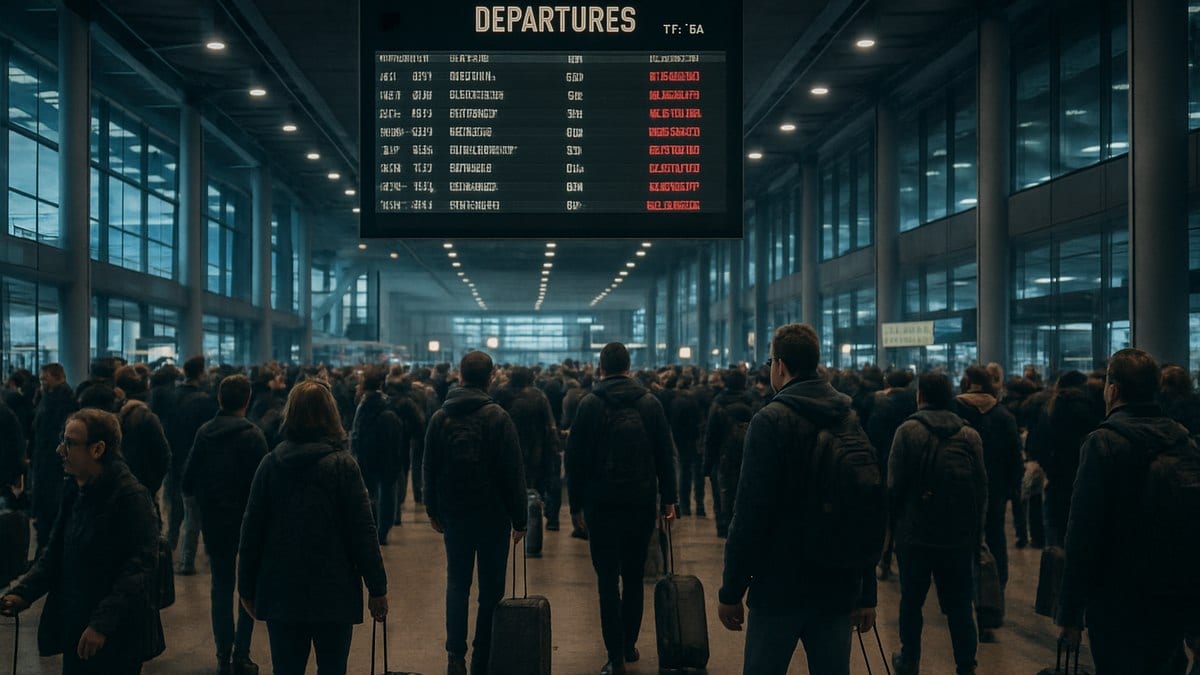
Major Hubs Across England Hit by Widespread Delays
Publicly available tracking data and industry reports indicate that disruption was concentrated at London’s main hubs and key regional airports. Combined figures for April 11 point to scores of cancellations and several hundred delays across English and Scottish airports, with London Heathrow recording the highest volume of affected services, followed by Gatwick, Stansted and Manchester.
Coverage from travel industry outlets describes a pattern of rolling delays, with aircraft arriving late from earlier sectors and missing departure slots, leading to further schedule slippage throughout the day. At Heathrow, data for April 11 show dozens of cancellations and well over one hundred delayed flights, while Gatwick, Stansted and Manchester each reported significant backlogs as congestion built up in peak periods.
Newcastle and other secondary airports saw smaller but still disruptive numbers of cancellations and late departures, illustrating how issues at one or two large hubs can quickly spill across a wider network. Passengers reported extended waits in terminals as airlines rebooked itineraries and repositioned aircraft and crews to restore some level of regularity.
By late evening on April 11, some services were still operating with substantial delays, and airlines were working through a sizable queue of disrupted flights, indicating that the impact would likely carry into early services on April 12.
Knock-on Effects from Earlier Weather and Capacity Strains
While April 11 did not coincide with a single catastrophic failure such as a system outage or complete airspace closure, the disruption followed a period of unsettled weather and sustained capacity strain across parts of the European network. Travel trade coverage in recent days has highlighted how spring storms and low-visibility conditions earlier in the month constrained runway throughput at London-area airports, creating a backlog that carriers have struggled to clear.
Industry commentary also points to tighter airline scheduling, with minimal turnaround buffers, as a key factor behind the scale of delays. When aircraft and crews are rostered close to maximum utilization, even modest holds for congestion or weather can quickly propagate, causing successive flights to miss their assigned slots and placing further pressure on already crowded terminals and air traffic flows.
Observers note that English hubs are operating close to their physical and regulatory capacity on busy days, leaving limited room to absorb unexpected events. Once early-morning rotations are disrupted, the remainder of the schedule has little resilience, particularly for carriers that rely on complex wave patterns of arrivals and departures to feed connecting passengers through London.
The April 11 disruption therefore reflects a combination of lingering operational stress from earlier days, localized weather and air traffic control flow measures, and structural capacity constraints that are increasingly visible whenever conditions deviate from normal.
Passengers Face Long Queues and Rebooking Challenges
For passengers, the operational picture translated into long queues at check-in, security and customer service desks across affected English airports. Social media posts and consumer travel forums on April 11 described crowded departure halls at Heathrow and Gatwick in particular, with some travellers facing multi-hour waits to secure alternative flights or arrange overnight accommodation.
Reports from passenger advocacy groups and travel law firms stress that stranded travellers often encounter conflicting information about their rights, especially when delays are attributed to a mix of weather, air traffic flow controls and crew or aircraft availability. Under European and UK regimes, eligibility for compensation can depend on whether a disruption is considered within the airline’s control, leading to case-by-case assessments.
Consumer-facing travel sites have advised passengers affected on April 11 to keep boarding passes, written notifications and receipts for meals and hotels, and to document the length and cause of delays where possible. They also recommend using airline apps and online tools as early as possible to rebook, where seats remain available, rather than waiting solely in physical queues at airport service counters.
With school holidays and spring city-break traffic adding to demand, some travellers reported difficulty finding same-day or even next-day alternatives on popular domestic and European routes, underlining how tight capacity has become on peak April weekends.
Airlines and Airports Work to Recover Schedules
Operational statements and timetable updates published on April 11 show airlines trimming frequencies, combining lightly booked services and adjusting aircraft assignments in an effort to stabilize their networks. At London Heathrow and Gatwick, several carriers moved to preemptive cancellations of selected flights to create recovery space, rather than attempting to operate every scheduled departure with compounding delays.
Airport operations teams across English hubs implemented flow-management measures such as revised runway configurations, holding patterns and ground-handling prioritization for long-haul arrivals, according to aviation data platforms and specialist media coverage. These steps are intended to ensure that safety margins remain intact even when terminals and aprons are under intense pressure.
Some airlines flagged that crews and aircraft remained out of position by the end of the day on April 11, particularly on short-haul European rotations that had suffered multiple knock-on delays. That imbalance typically requires further tactical cancellations or equipment swaps in subsequent days, meaning that passengers booked for April 12 and 13 may still experience timetable adjustments linked to the earlier disruption.
Operational analysts suggest that full normalization could take several days where airlines have large numbers of aircraft tied into complex networks through London and regional English bases. They note that the timing of April 11, at the start of a busy weekend, makes recovery more challenging than a disruption during quieter midweek periods.
Renewed Scrutiny of System Resilience and Passenger Rights
The events of April 11 have renewed discussion among aviation commentators and passenger groups about the resilience of the UK’s air transport system. Recent years have seen multiple high-profile disruptions at British airports triggered by weather, technical issues and air traffic control constraints, each affecting hundreds of flights and large numbers of travellers.
Analysts highlight several recurring vulnerabilities: aging infrastructure at some airports, limited spare capacity in both terminals and runways, chronic staffing pressures in ground handling and air traffic management, and airline business models that rely on very tight schedules to maximize utilization. When these factors converge during a busy travel period, the threshold for large-scale disruption can be relatively low.
Passenger advocates argue that clearer, more consistent communication about causes, likely duration of disruption and available options would help reduce confusion during events like those seen on April 11. They also call for greater transparency in how airlines apply compensation rules and prioritize rebooking, so that travellers can make informed decisions about whether to wait, reroute via alternative airports or seek refunds.
Aviation policy specialists, meanwhile, point to ongoing regulatory and industry discussions over capacity expansion, smarter air traffic flow management and digital modernization of airport processes. The widespread delays at English airports on April 11 are likely to feed into those debates as stakeholders look for ways to make the system more robust ahead of the peak summer travel season.