

More news on this day
Air travel across the eastern United States faced fresh disruption on March 26 as widespread schedule problems at New York’s LaGuardia Airport led to the cancellation of 338 flights and delays to a further 245, affecting services operated by Republic, American, Southwest, Spirit and other carriers and unsettling links to Washington, Cleveland, Pittsburgh and several additional cities.
Get the latest news straight to your inbox!
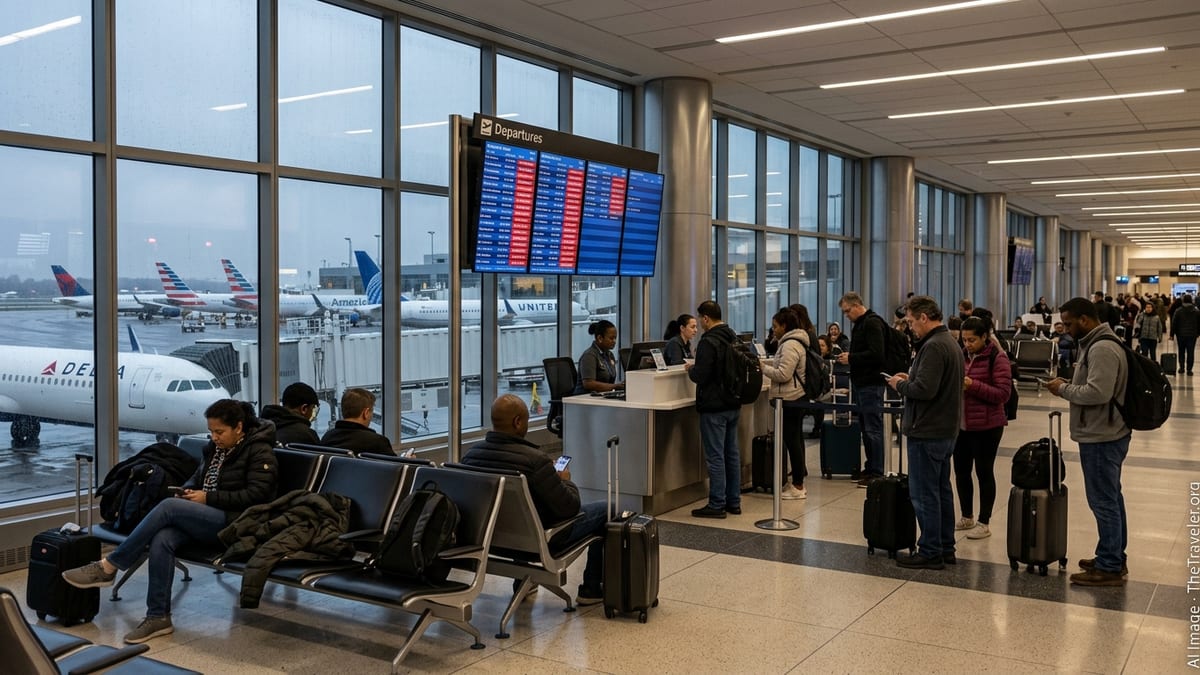
Operational Strain At LaGuardia Triggers Wave of Cancellations
Newly compiled flight-tracking data for March 26 indicates that LaGuardia recorded one of the highest disruption totals in the country, with 338 departures and arrivals canceled and 245 delayed by mid‑evening. The figures place the airport among the most affected hubs in the United States for the day, outpacing many larger facilities in terms of percentage impact on its schedule.
Publicly available information shows that the cancellations were spread across a range of carriers, with regional operator Republic Airways and major airlines including American, Southwest and Spirit among those trimming schedules. The disruption affected both mainline and regional jets, amplifying the impact on passengers who often rely on short‑haul services to connect through New York to the rest of the country.
Reports from airline customer channels and airport information boards pointed to a combination of lingering operational constraints in New York airspace and knock‑on effects from earlier weather and infrastructure issues this week. While conditions at LaGuardia improved at times during the day, recovery proved slow as airlines worked through tight aircraft rotations and crew‑duty limitations.
Observers noted that LaGuardia’s compact footprint and constrained runway capacity can amplify the effect of any disruption. Even modest schedule reductions or temporary slowdowns can quickly cascade into wholesale cancellations, particularly during peak travel periods and on days when multiple airlines are operating near their operational limits.
Ripple Effects Hit Washington, Cleveland, Pittsburgh and Other Cities
The problems in New York quickly spread outward along LaGuardia’s dense network of regional routes, creating disruptions in Washington, Cleveland, Pittsburgh and several additional markets that depend heavily on high‑frequency shuttle‑style services. Travelers in these cities reported abrupt cancellations, missed connections and extended delays as aircraft and crews failed to arrive from New York.
According to published coverage and publicly available airport schedules, numerous flights on core business routes such as LaGuardia to Washington and LaGuardia to Cleveland were either canceled outright or subject to multi‑hour holds. In Pittsburgh, travelers reported last‑minute schedule changes on services that feed into LaGuardia, forcing some to rebook via alternative hubs or postpone trips entirely.
The knock‑on disruption also affected airports beyond the immediate corridor. When LaGuardia flights are removed from the schedule, aircraft and crews are sometimes redeployed, which can alter timings on routes with no direct connection to New York. On March 26 this resulted in scattered delays as far afield as the Midwest and Southeast, underscoring how dependent many U.S. domestic itineraries remain on New York’s air‑traffic flows.
Travelers attempting to depart smaller regional airports were particularly vulnerable, as many rely on a single LaGuardia‑bound flight to connect to the wider network. With that service canceled, rerouting options were limited and often involved significant detours or overnight stays while airlines worked through backlogs.
Republic, American, Southwest and Spirit Face Tough Recovery Day
The day proved especially challenging for Republic Airways, which operates regional flights on behalf of several major carriers and serves as a backbone provider on short‑haul routes into LaGuardia. When multiple Republic‑operated flights were canceled, schedules at partner brands were affected, complicating rebooking efforts as airlines attempted to find spare seats on already‑busy services.
American Airlines, one of the largest operators at LaGuardia, also scrapped and delayed a substantial number of flights. Publicly available operational data and prior schedule‑adjustment advisories show that the carrier had already been contending with a tight winter and early spring period characterized by intermittent weather and air‑traffic constraints, leaving limited flexibility when new disruptions emerged.
Southwest and Spirit, both of which maintain important point‑to‑point services in and out of New York, were likewise forced to pare back operations. Travelers on ultra‑low‑cost routes reported multiple cancellations and rebookings over the course of the day, with some passengers being moved to flights from alternative airports such as Newark or Philadelphia when options from LaGuardia ran out.
The recovery was further complicated by federal duty‑time rules and crew‑positioning challenges. Once delays crossed certain thresholds, airlines had to pull crews from duty or reposition them to other cities, creating further gaps in the LaGuardia schedule that could not be filled quickly even after weather or airspace conditions improved.
Recent Weather and Infrastructure Issues Add to Pressure
The latest round of cancellations comes against a backdrop of an already difficult late‑winter and early‑spring travel season for the northeastern United States. In recent weeks, a series of major winter storms and strong frontal systems have affected large portions of the region, causing earlier spikes in cancellations and delays at multiple airports.
In the New York area, recent weather events and associated infrastructure strain have left schedules fragile. Several airlines issued travel waivers around earlier storms and, more recently, around temporary runway and emergency‑response constraints at LaGuardia, which limited capacity and required preemptive reductions in flights. While conditions have eased since the height of those events, airlines entered March 26 with little slack remaining in their networks.
Operational data from federal transportation reports underscores how quickly weather and system constraints can translate into cancellations. Even in more typical months, carriers such as Southwest and Spirit record measurable percentages of flights canceled or heavily delayed due to factors categorized as extreme weather or national aviation system issues, and those baseline vulnerabilities become more pronounced during active storm seasons.
Analysts note that when a major hub like LaGuardia operates near its infrastructure limits, any combination of low clouds, visibility restrictions, runway constraints or staffing bottlenecks can sharply reduce arrival and departure rates. Airlines then cancel flights strategically to avoid gridlock, concentrating the impact into certain times of day but inevitably sending shockwaves through connected airports.
Travelers Confront Long Lines, Rebookings and Limited Alternatives
Passengers caught in the March 26 disruption faced a familiar set of challenges, from long customer‑service queues in terminals to congested online and phone support channels. With multiple airlines affected simultaneously, options for same‑day rebooking were limited, particularly for travelers heading to or from smaller cities that depend heavily on LaGuardia links.
Public reports from traveler‑focused forums describe some passengers being advised to consider departures from nearby airports, including Newark and Westchester County, when LaGuardia alternatives were exhausted. Others opted to switch to rail services along the Northeast Corridor, especially for journeys between New York and Washington, where train travel can sometimes provide a more reliable backup during extended airline disruptions.
Industry observers note that events such as the March 26 cancellations highlight the importance for travelers of monitoring flight‑status tools closely and building additional buffer time into itineraries during unsettled seasons. With airlines running leaner schedules and aircraft utilization high, the scope for absorbing sudden disruptions has narrowed, making widespread cancellations like those seen at LaGuardia more difficult to recover from within a single travel day.
While airlines continue to adjust schedules and offer fee‑waived changes or refunds in line with their policies, the day’s events underline how quickly operational strains at a single constrained airport can spread through the national network, affecting cities far beyond New York and leaving thousands of travelers scrambling to salvage their plans.