

More news on this day
Thousands of air travellers across Canada faced mounting frustration today as at least 54 flights were cancelled and 449 delayed, disrupting services on Air Canada, Air Borealis, Jazz Aviation, WestJet, PAL Airlines and other carriers at major hubs in Toronto, Montreal and Vancouver, as well as remote northern communities such as Nain.
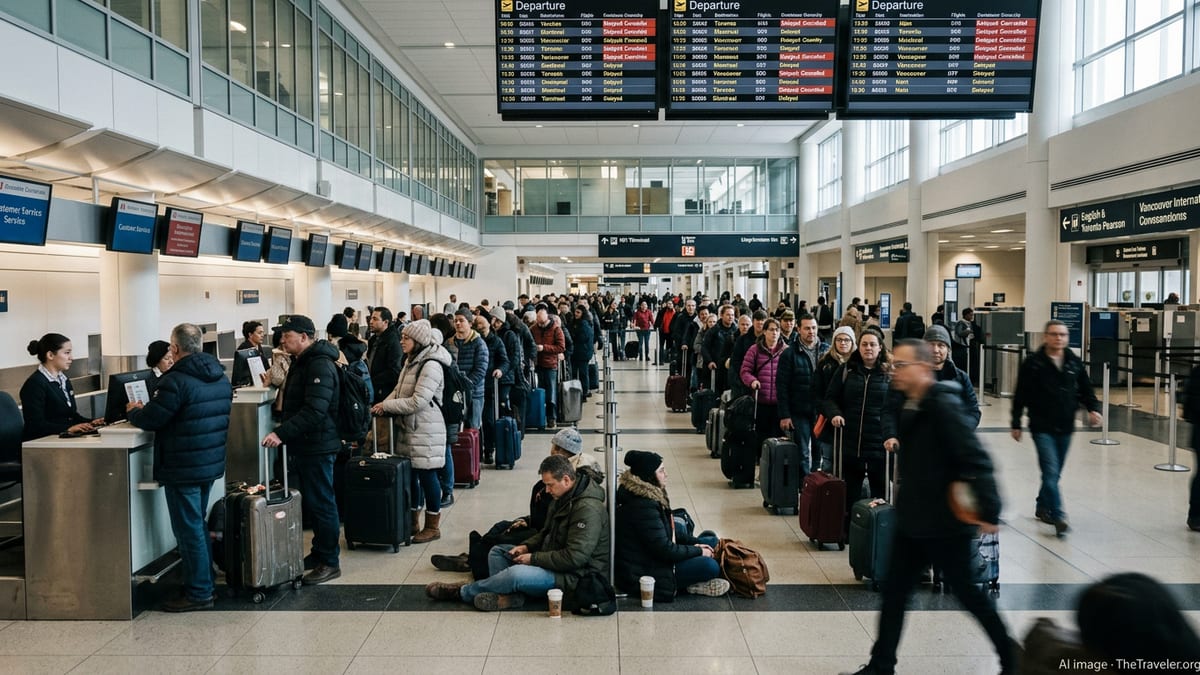
Major Hubs Buckle Under Heavy Disruption
At Toronto Pearson International Airport, the country’s busiest hub, travellers encountered long queues, crowded departure halls and a constant stream of delay announcements as operations struggled to keep pace. Earlier data showed more than 200 delays and over a dozen cancellations at Pearson alone, with knock on effects spreading to domestic and international routes.
In Montreal, services at Montréal–Trudeau International Airport were also heavily affected. Delayed departures to western Canada and the Atlantic region, combined with a cluster of cancellations on regional connectors, left passengers rebooking itineraries or waiting out extended holds at the gates.
Vancouver International Airport, a critical transpacific gateway, reported waves of delayed arrivals and departures as aircraft and crew fell out of position. Travellers heading to and from Vancouver reported missed connections and same day rebookings, with some being rerouted through Calgary, Edmonton or American hubs in an attempt to keep journeys moving.
The cumulative impact at the three major airports translated into hours of added travel time for many passengers and an operational challenge for airlines already operating near capacity during the late winter travel period.
Regional Carriers Hit Hard in Canada’s North
Beyond the big-city hubs, the disruption was acutely felt in Canada’s remote and northern communities, where air travel often serves as the only year round lifeline. Air Borealis and PAL Airlines, which operate vital regional routes linking smaller centres to larger airports, reported a disproportionate share of today’s cancellations as weather and operational constraints compounded each other.
In Labrador and Nunatsiavut, flights serving communities such as Nain were among those grounded, cutting off same day access to medical appointments, essential supplies and onward connections. With limited alternative transport options and infrequent schedules, a single cancelled flight can mean delays of days rather than hours for residents.
Airline representatives pointed to challenging late-season conditions in northern airfields, where icy runways, blowing snow and visibility issues can quickly force operators to scale back flying for safety reasons. Smaller turboprop aircraft, common on these routes, are particularly vulnerable to changing weather and strict performance limits on short gravel runways.
Passengers in these regions often face fewer rebooking options than their counterparts in major cities, and some were advised to remain on standby while carriers assessed whether later flights could safely operate.
Airlines Struggle With Weather, Crewing and Knock On Effects
Industry analysts noted that today’s 54 cancellations and 449 delays were driven by a combination of factors rather than a single trigger. Persistent winter weather across parts of the country, including low visibility and runway contamination, required additional de icing and more conservative scheduling buffers, slowing airport throughput at peak periods.
Those weather related slowdowns quickly cascaded through airline networks. Aircraft arriving late into major hubs like Toronto, Montreal and Vancouver were unable to depart on time for subsequent legs, leading to rolling delays. In some cases airlines opted to cancel individual flights outright to prevent even larger schedule disruptions later in the day.
Carriers also continued to wrestle with tight crew availability. Regulations limiting how long pilots and cabin staff can remain on duty meant that flights already pushed back by weather or air traffic control constraints sometimes had to be cancelled when crews approached their maximum working hours. That dynamic was especially visible on regional and night time services.
Larger airlines, including Air Canada and WestJet, were forced to manage aircraft and crew repositioning across multiple provinces, while regional partners such as Jazz Aviation, PAL Airlines and Air Borealis dealt with their own localized operational challenges on shorter routes.
Passengers Face Long Lines and Uncertain Timelines
For travellers, the numbers translated into a day marked by uncertainty, as departure boards in Toronto, Montreal and Vancouver filled with delayed statuses. Some passengers described arriving at the airport to find their flight already significantly pushed back, with revised departure times slipping further into the afternoon or evening.
Families and business travellers alike queued at customer service desks in search of alternatives, while call centres and airline apps experienced heavy demand. In several cases, passengers reported being rebooked on multi stop itineraries through secondary hubs, extending journeys that would normally take a few hours into all day odysseys.
At smaller airports and in northern communities, options were even more limited. In places like Nain, where daily service can already be sparse, a single cancellation left some travellers waiting for the next available seat on later flights. With accommodation and food options constrained, local authorities and airlines worked together to provide basic support where possible.
Despite the frustrations, frontline airport and airline staff urged passengers to arrive early, stay in close contact through official apps and email alerts, and be prepared for schedule changes on short notice as operations gradually recovered through the evening.
What Today’s Disruptions Mean for Upcoming Travel
While today’s totals of 54 cancellations and 449 delays were concentrated over several hours, experts warned that the ripple effects could extend into the weekend as aircraft and crew are gradually returned to their planned rotations. Connections involving tight layovers at major hubs were flagged as particularly vulnerable for the next 24 to 48 hours.
Frequent flyers noted that Canada’s late winter period has become increasingly prone to disruption, as volatile weather patterns intersect with busy travel demand and networks operating close to capacity. When a disruption wave hits multiple hubs at once, recovery can take longer, especially for regional routes that depend on a small number of aircraft.
Travellers with flexibility were advised to monitor their bookings closely and consider adjusting departure times or dates if significant delays persist. Those heading to or from remote communities, including northern Labrador, were encouraged to build extra time into their plans and stay in contact with regional carriers for the latest local updates.
Airlines, for their part, signalled that they were working to stabilize schedules and clear backlogs, but acknowledged that a full return to normal operations would depend on improving weather conditions and the successful repositioning of both aircraft and crews across the country.