

More news on this day
Hundreds of Israelis trying to leave Jordan via Aqaba International Airport have been left stranded after regional security turbulence prompted Jordanian authorities and airlines to suspend most flights serving the Red Sea city.
Get the latest news straight to your inbox!
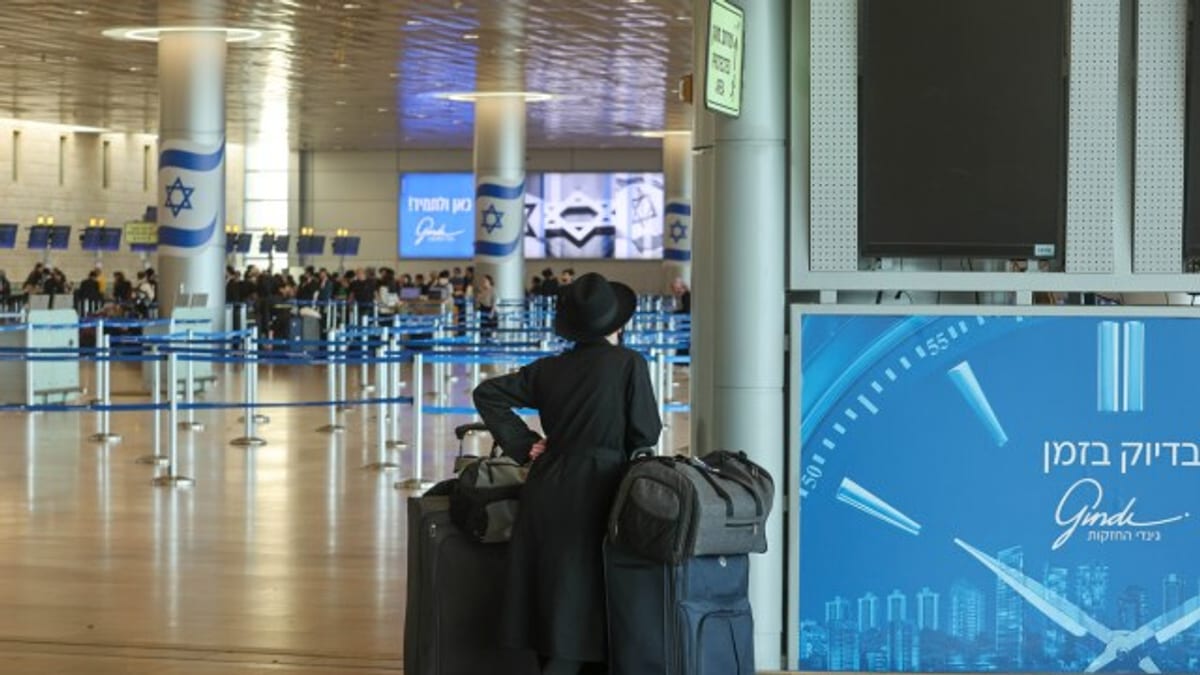
Image by Middle East Monitor
Regional Tensions Disrupt Red Sea Air Travel
Published coverage indicates that the disruption at Aqaba is directly linked to a wider wave of flight suspensions and airspace adjustments across the Middle East following a sharp escalation between Israel, Iran and allied groups. In recent weeks, multiple countries have temporarily restricted airspace or rerouted traffic, creating a ripple effect that has stranded travelers at key regional gateways.
Aqaba, located at the northern tip of the Red Sea opposite Israel’s Eilat, has been used by Israeli travelers as an alternative exit point while Israel’s own airspace and main international gateway at Ben Gurion have faced intermittent closures and highly reduced schedules. Reports indicate that, as regional tensions spiked, Jordan moved to curtail flight activity through the southern airport as a precaution, effectively cutting off one of the few remaining air corridors for Israelis seeking to return home or continue long-haul journeys.
Aviation tracking data and regional media accounts describe a pattern of widespread cancellations affecting not only Jordan but also major hubs in the Gulf and the Levant. Airlines have repeatedly adjusted schedules with little notice, leaving passengers to navigate a patchwork of land crossings, rebooked flights and improvised itineraries across several countries.
Against this backdrop, Israelis who had already reached Aqaba on earlier flights or via overland routes from Israel and Egypt now find themselves stuck in limbo as departures are halted or pushed back indefinitely.
Charter Operations Halted and Recovery Plans Stalled
According to regional news reports, the suspension at Aqaba has hit charter services particularly hard. A series of charter flights that had been operating between European cities, Israel and the Jordanian resort city were canceled in rapid succession, leaving planeloads of passengers without clear onward options. Some of those charters had been marketed to Israelis as a reliable way to bypass uncertainty at Israel’s own airports.
Travel industry analyses note that Israeli carriers and allied operators had been exploring contingency plans that involved routing special recovery flights through nearby Red Sea airports such as Aqaba and Egypt’s Taba, subject to regulatory approval and local security assessments. Publicly available planning documents referenced Aqaba as a possible gateway for future rescue operations aimed at bringing Israelis home once conditions allowed.
Those plans have now been complicated by Jordan’s decision to suspend flights from the southern airport. With scheduled and charter operations curtailed, recovery scenarios that depended on Aqaba as a staging point have effectively been put on hold. Airlines are instead being pushed to focus on larger hubs, including Amman, or on more distant European and Gulf airports where airspace has remained partially open.
For stranded passengers, the result is a prolonged wait in Aqaba’s terminal and nearby hotels as they monitor updates from airlines and travel agents, hoping for a narrow window when outbound flights might resume.
Passengers Weigh Land Routes and Alternative Gateways
With flights suspended, many Israelis in Aqaba are now looking at overland travel options across multiple borders. Travel forums and social media posts show discussions about crossing from Jordan to Egypt by ferry from Aqaba to Nuweiba, then continuing onward by road to Sharm el Sheikh or Cairo in search of available flights to Europe, North America or back toward Israel’s immediate neighborhood.
Others are considering the long drive north to Amman, where Queen Alia International Airport has maintained a more limited but still functioning schedule compared with the heavily disrupted Red Sea routes. Public guidance from Jordanian aviation and tourism bodies encourages travelers to verify each departure directly with airlines and airport information desks, as schedules remain fluid and subject to rapid change.
At the same time, not all alternative gateways are accessible to Israeli citizens. Some regional carriers have restricted boarding for Israeli passport holders, while various land crossings operate under specific political and security arrangements. These constraints leave many Israelis in Aqaba with fewer options than other foreign travelers, intensifying the sense of uncertainty about when and how they will be able to leave.
Logistical challenges are also mounting. Hotel capacity in Aqaba has been stretched by an influx of travelers waiting out the disruption, and last-minute ground transport between the city, the nearby border posts and northern Jordan has become more difficult to book and more expensive than usual, according to traveler accounts shared publicly.
Airlines and Governments Under Pressure to Respond
The situation at Aqaba Airport has added to the broader pressure on airlines and regional authorities to coordinate response measures for stranded passengers. In Israel, government ministries have been working on larger repatriation frameworks to bring home tens of thousands of citizens stuck abroad due to the closure or severe limitation of Israeli airspace. Publicly available planning material describes multi-stage operations that would rely on both air and sea routes, involving national carriers and private operators.
However, such operations depend heavily on predictable access to neighboring countries’ airports and airspace. Jordan’s suspension of flights at Aqaba effectively removes one of the closest and most convenient nodes in that network, forcing planners to reorient toward alternative hubs. Aviation experts cited in regional media note that even when partial reopening occurs, it could take days for airlines to reposition aircraft and crews and to clear backlogs of passengers.
Meanwhile, Jordan must balance the commercial and humanitarian need to keep people moving with domestic security considerations and regional diplomatic dynamics. Aqaba is a key tourism and trade asset for the kingdom, and any prolonged shutdown at its airport carries economic costs for local businesses as well as for the broader Red Sea tourism circuit that links Jordan, Egypt, Saudi Arabia and Israel.
For now, publicly reported guidance emphasizes safety and caution, leaving travelers to wait for more stable conditions in the skies before large-scale evacuations and regular tourism flows through Aqaba can resume.
Uncertain Outlook for Red Sea Tourism and Cross-Border Travel
The grounding of flights at Aqaba comes at a sensitive moment for Red Sea tourism. In recent years, the city has marketed itself as a convenient, relatively low-cost base for exploring Petra, Wadi Rum and the wider region, with growing interest from Israeli visitors who could reach the city quickly via the land border with Eilat. The current suspension undermines that positioning and reinforces perceptions of volatility in regional travel.
Tour operators are already signaling likely changes to future itineraries, with some packages being reoriented toward overland circuits that rely less on short-haul regional flights and more on buses, private transfers and ferries. Industry commentators note that while demand for Jordan’s key attractions remains strong, confidence in the reliability of regional air links has taken a hit, especially among travelers who must transit multiple borders.
For stranded Israelis at Aqaba Airport, the immediate focus is simply on securing a way out. Yet their predicament highlights a larger vulnerability in Middle Eastern travel: when regional tensions flare, even secondary airports and niche charter routes can be disrupted with little warning, leaving ordinary passengers at the mercy of fast-changing security calculations.
How quickly Aqaba’s departures board fills up again will depend on both the security trajectory in the wider region and the ability of airlines and governments to restore predictable, coordinated schedules. Until then, hundreds of Israelis and other travelers remain in an uneasy holding pattern on Jordan’s Red Sea shore.