

More news on this day
Travelers moving through Orlando International Airport on February 17 are facing another day of disruption, with 227 flights delayed and 15 canceled as weather, staffing pressures and knock-on problems across the national air network ripple through one of the United States’ busiest tourism gateways.
Ripple Effects Felt Across Orlando’s Crowded Hubs
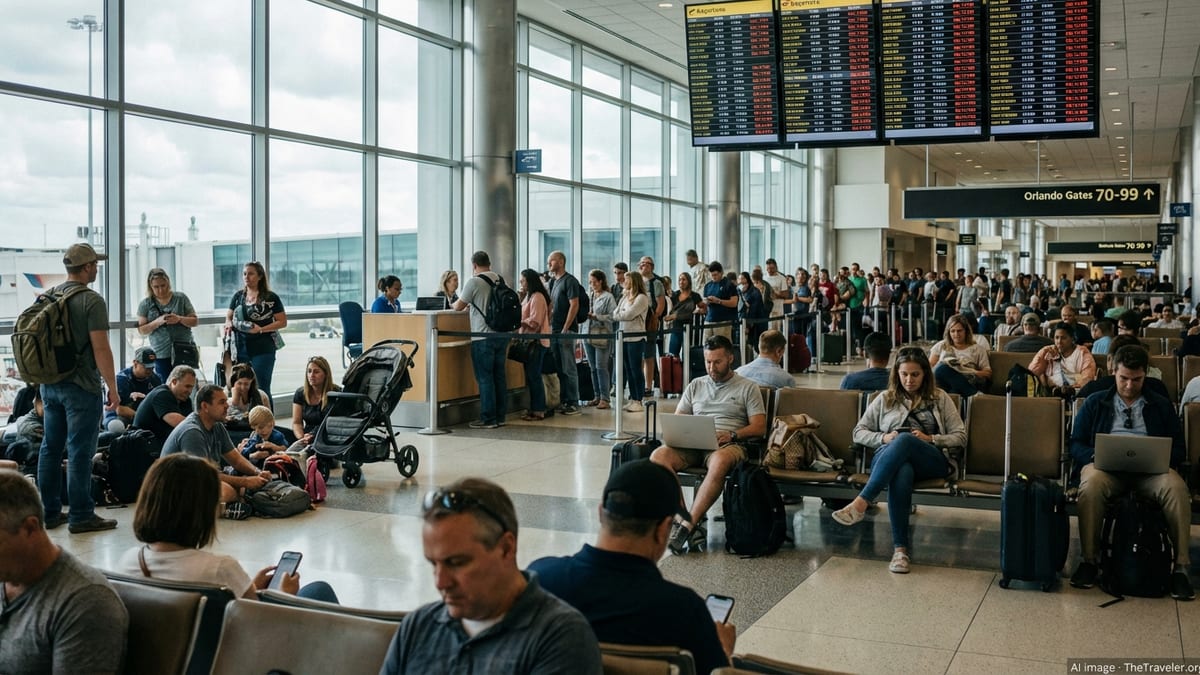
Orlando International Airport, the primary air gateway for Central Florida’s theme parks and cruise traffic, is again under strain as operational snags translate into long lines at security, crowded gate areas and rolling departure boards full of orange and red delay markers. While the airport itself is reporting mostly favorable local weather conditions, carriers are grappling with system-wide challenges that are manifesting in significant schedule disruptions at Orlando.
By midafternoon, 227 flights in and out of Orlando had been delayed and 15 canceled, according to flight-tracking data compiled from multiple industry dashboards. The figures place Orlando among the country’s hardest-hit major airports on February 17, although they fall short of the worst single-day disruption the airport experienced in late January, when hundreds of flights were canceled outright amid a powerful winter storm affecting the eastern United States.
For passengers, the numbers translate into hours of uncertainty as they queue for rebooking assistance, scramble to adjust hotel reservations and race to secure scarce seats on later departures. Families returning from Walt Disney World and other area attractions, business travelers connecting through Orlando to other hubs and international visitors transiting to Latin America all reported extended waits and shifting departure times.
Airport officials said operations at the airfield, including runways and taxiways, remained open and functional, but acknowledged that airlines were contending with aircraft and crew imbalances tied to earlier storms, as well as ongoing staffing constraints that have affected parts of the aviation system since late January.
Major U.S. Airlines Struggle to Keep Orlando Schedules Intact
The disruption at Orlando is spread across several major U.S. airlines, underscoring how closely interconnected their nationwide networks have become. Spirit Airlines, one of the largest carriers at Orlando and a key low-cost option for leisure travelers, has reported multiple delayed departures on routes linking Central Florida to Newark, Boston, Charlotte and Nashville. Many of those flights are turning around late aircraft arriving from other storm-affected or congestion-prone cities.
Southwest Airlines, which maintains a substantial presence in Orlando, is also contending with schedule pressure. Delays on heavily trafficked Orlando-to-Nashville and Orlando-to-Baltimore/Washington routes have cascaded into knock-on issues for connecting passengers bound for Midwestern and Western destinations. With Southwest’s point-to-point model, even a single early delay can reverberate through an entire day’s flying, particularly when spare aircraft and crews are already stretched thin.
JetBlue’s Orlando operations, which include key links to Boston, New York and other Northeastern cities, have likewise been affected. While many of JetBlue’s flights are still departing, a significant share has been pushed back by an hour or more as the airline works to rotate aircraft through its core transcontinental and East Coast markets that have been buffeted by waves of winter weather over recent weeks.
Legacy network carriers Delta Air Lines and United Airlines are also recording Orlando delays, especially on flights to and from major hubs such as Atlanta, Newark and Charlotte via codeshare and connecting partners. With those hubs playing a central role in transferring passengers across the country, even modest schedule slippage can leave travelers in Orlando facing missed connections and unexpected overnight stays.
Nationwide Weather and Winter Storm Aftershocks
Though Orlando’s skies on February 17 have been mostly cloudy with mild temperatures, recent weeks have seen a succession of severe winter weather events and a broad cold wave that repeatedly snarled air traffic in large swaths of the United States. A January bomb cyclone and subsequent storms in the Southeast and Mid-Atlantic forced airlines to cancel thousands of flights, leaving aircraft and crews out of position and straining recovery plans across their networks.
Federal aviation officials have warned for weeks that ground delay programs, reroutes and even short-term ground stops would be necessary as airports work through the backlog created by earlier storms. Those tools help keep skies safe and prevent runways and taxiways from becoming overloaded, but they also tighten the margin of error for carriers already operating close to capacity during a peak winter travel period for Florida.
Cold-weather impacts have also hit Northern and Midwestern hubs that feed traffic into Orlando, including Newark, Boston and Chicago, where deicing operations, snow removal and limited runway availability have slowed departure rates. Flights to and from Orlando that rely on those connections are now shouldering the aftereffects of earlier cancellations and rolling delay programs, even as skies above Central Florida remain comparatively calm.
Industry analysts note that the combination of severe weather, a partial government shutdown earlier in the winter travel season and persistent staffing gaps among some air traffic control facilities has tested the resilience of airline operations. While February is typically less busy than spring break or the winter holiday peak, pent-up demand for Florida vacations has kept load factors high, leaving airlines with fewer empty seats to re-accommodate disrupted passengers.
Pressure on Newark, Charlotte, Boston and Nashville Corridors
The latest Orlando disruptions are particularly acute on routes connecting Central Florida with key eastern and central U.S. markets. Newark Liberty International Airport, a critical gateway for both United Airlines and multiple low-cost carriers, has experienced intermittent congestion and weather-related delays in recent weeks. Flights between Newark and Orlando are seeing extended block times and slower turns, as crews and aircraft juggle constraints on both ends of the route.
Charlotte Douglas International Airport, a crucial hub for flights funneling into the Southeast, has also been affected by residual winter weather and air traffic control initiatives. Travelers connecting between Orlando and Charlotte reported delays that compounded as banks of connecting flights departed without them, forcing rebookings onto later services or, in some cases, alternate airports within driving distance.
In Boston, where recent storms and strong coastal systems have brought bouts of snow and gusty winds, airport operations have largely recovered, but not without lingering effects on airline schedules. JetBlue and other carriers operating Boston to Orlando flights have adjusted departure times, frequently shifting passengers to later flights as they work to rebuild buffers into their daily rotations.
Nashville, which has emerged as a fast-growing leisure and business destination, is also part of the disruption map. Southwest and other carriers linking Nashville to Orlando have dealt with both weather-related holds and constrained airspace along some routes. The result has been later-than-planned arrivals into Orlando, which in turn delay subsequent departures as crews bump up against duty time limits designed to ensure safety.
Passengers Confront Long Lines, Tight Connections and Tough Choices
For passengers inside Orlando International Airport’s sprawling terminals, the day’s statistics are visible in a more personal way: in snaking lines outside airline service desks, crowded food courts and families camped out on the floor near charging stations while they wait for updates. Many travelers arrived at the airport to find their flights already delayed by several hours, while others learned mid-check-in that their return home had been canceled entirely.
Parents with school-age children returning from theme park vacations have expressed concern about missing work and classes as they navigate the complicated process of rebooking, often competing with hundreds of other travelers for the same handful of open seats later in the day. Business travelers connecting through Orlando to reach smaller regional airports have reported missed meetings and, in some cases, the need to cancel trips altogether when no same-day alternatives were available.
Some passengers have turned to alternative modes of transport, particularly on shorter routes within the Southeast. Travel agents in Florida say they have seen increased interest in one-way car rentals and, in a few cases, overnight bus or train options for those heading to cities such as Atlanta, Charlotte or even as far as the Mid-Atlantic when air connections fell through. Others have opted to extend hotel stays and wait for seats to open as the airlines’ operations stabilize over the next 24 to 48 hours.
Despite their frustrations, many travelers acknowledged that frontline airport staff and airline agents were doing what they could within tight constraints. Industry observers and consumer advocates continue to encourage passengers to remain patient with gate agents and call center staff, emphasizing that those employees often have limited control over the underlying weather and airspace issues driving the disruption.
Airlines Deploy Recovery Playbooks and Flexible Policies
Airlines serving Orlando have activated their standard disruption playbooks, which include issuing travel waivers on selected routes, proactively canceling some flights to protect the broader schedule and repositioning aircraft where possible to reduce future bottlenecks. These measures, while adding to the short-term pain, are intended to help carriers avoid more severe, system-wide breakdowns similar to those seen during past holiday meltdowns.
Several major airlines have relaxed change-fee and fare-difference policies on affected city pairs, allowing passengers to move their travel to later in the week or reroute through alternate hubs without additional cost, subject to seat availability. For travelers connecting through particularly congested nodes such as Newark or Charlotte, these waivers can provide a lifeline, enabling them to bypass problem airports when another option exists.
Operationally, airlines are also shuffling aircraft assignments to align with updated weather forecasts and air traffic control programs. Larger aircraft are being deployed on some high-demand Orlando routes to absorb stranded passengers, while lightly booked flights on less time-sensitive routes are being consolidated. At the same time, crew schedulers are working to ensure pilots and flight attendants remain within federally mandated duty limits, a challenge when rolling delays stretch late into the evening.
Analysts say that while the industry is far better prepared for winter disruptions than it was a decade ago, today’s events highlight the limited slack in U.S. air travel infrastructure. With fleets and workforces still rebuilding from pandemic-era downsizing and ongoing hiring challenges, there is less backup capacity available when extreme weather or staffing shortages flare up.
How Travelers Can Minimize the Impact of Orlando Delays
As disruptions continue, travel experts urge passengers heading to or from Orlando to take proactive steps to reduce the chance of being stranded. Checking flight status frequently in the 24 hours before departure and again before leaving for the airport remains critical, as delays and cancellations are often loaded into airline systems in batches as operational decisions are made.
Passengers are also advised to download their airline’s mobile app and enable notifications, which can sometimes provide faster updates and rebooking options than waiting in line at a gate or service counter. In some cases, travelers can confirm seats on alternative flights directly in the app within minutes of a cancellation, bypassing long queues in the terminal.
For those with tight connections through hubs such as Newark, Charlotte or Boston, industry advisors recommend building in additional buffer time or, when possible, booking nonstop flights to and from Orlando to reduce the number of potential failure points in an itinerary. Early-morning departures can be less vulnerable to cascading delays, although they may still be affected by aircraft arriving late the previous evening.
Travel planners also suggest carrying essential items, medications and a change of clothes in a carry-on, in case checked bags are separated from passengers during rebooking. Keeping receipts for meals and hotels may prove useful later if travelers seek reimbursement or goodwill vouchers from airlines when policies permit.
Outlook for Orlando and the National Air Network
Looking ahead, airline operations experts expect that Orlando’s disruption may gradually ease over the coming days, assuming no new major weather systems develop over key hubs. With the most recent cold wave and storms now largely past, carriers are focused on returning aircraft and crews to their scheduled positions, a process that can take several days even after skies clear.
However, the situation remains fluid. The Federal Aviation Administration continues to signal that it will use ground delay programs and traffic management initiatives whenever necessary to maintain safety, particularly during peak travel periods and in congested airspace along the East Coast. Any renewed bout of winter weather or localized staffing problem at a major hub could again reverberate into Orlando’s flight schedule.
For Central Florida’s tourism industry, which depends heavily on predictable and affordable air access, the latest wave of delays is another reminder of the vulnerabilities inherent in a complex, interdependent national air system. Hotels and theme parks in the region have grown accustomed to adjusting check-in expectations and guest services when large numbers of visitors arrive late or depart days behind schedule.
As the winter travel season edges toward the busy spring break period, both airlines and travelers will be watching Orlando’s departure boards closely. The performance of carriers over the next several weeks will offer a preview of how well the system can absorb future shocks, whether from weather, staffing or other unforeseen challenges.