

More news on this day
More than 460 flight cancellations and some 5,500 delays across the United States on April 4 are straining airline operations at major hubs including Chicago, Atlanta, New York, Omaha and San Francisco, according to publicly available tracking data and recent media coverage, with disruption rippling across large network carriers and regional operators alike.
Get the latest news straight to your inbox!
Major Hubs Struggle Under Heavy Disruption
Data compiled from nationwide flight-status trackers for early April show a fresh wave of disruption building on several already difficult days for U.S. aviation. On April 3, publicly available figures cited in recent coverage showed 339 cancellations and more than 3,500 delays nationwide. Reports indicate that the latest 24 hour period has pushed those tallies higher, to more than 460 cancellations and around 5,500 delayed flights as storms, airspace constraints and scheduling pressures converge.
Chicago, Atlanta and New York are again among the most affected metropolitan areas. Chicago O’Hare and Midway, Hartsfield Jackson Atlanta and New York’s LaGuardia and Newark have all seen elevated disruption this week, with some hubs already dealing with weather related challenges and lingering knock on effects from a historic late winter storm pattern earlier in the year. Aviation analysts note that when multiple large hubs experience pressure at the same time, delays can quickly cascade across the national network.
Secondary and mid sized markets are also feeling the strain. Omaha, which connects into several large airline hub systems, has been cited in tracking summaries as seeing a disproportionate number of delayed departures relative to its normal schedule, reflecting how missed inbound connections and late arriving aircraft from coastal cities can translate into long waits far from the worst of the weather.
On the West Coast, San Francisco International has emerged as a particular pinch point. A runway project and a recently implemented Federal Aviation Administration rule change have reduced the allowable arrival rate at the airport by roughly one third, limiting the number of planes that can land each hour. That structural constraint has combined with unsettled spring weather to generate rolling delays for carriers that rely heavily on San Francisco for transcontinental and regional services.
United, Delta, American and Southwest Face Network Pressure
Large U.S. airlines appear prominently in the latest disruption tallies. Recent reporting on early April operations indicates that United Airlines has been contending with hundreds of delays and dozens of cancellations centered around its big hub airports, including Chicago, Denver, Houston, Newark and Washington. With a network built around tight banked schedules at these hubs, late arriving aircraft can quickly erode on time performance throughout the day.
Delta Air Lines and American Airlines are also navigating difficult conditions across their systems. Atlanta’s heavy delay totals feed directly into Delta’s extensive domestic and international network, while American’s exposure at Dallas Fort Worth, Charlotte, Miami and New York means storms or ground constraints at any one of those locations can reverberate to dozens of spoke cities. Publicly available summary data for the spring travel period describe repeated days when each of the big three legacy carriers has logged several hundred delayed flights.
Southwest Airlines, which concentrates a large share of its operation at airports such as Chicago Midway, Denver, Phoenix and Las Vegas, has been singled out in some recent analyses as one of the hardest hit carriers in the 2026 disruption wave. Coverage of the peak April 3 disruption event attributes nearly 1,000 Southwest delays and more than a dozen cancellations to a mix of weather and network strain, with many of those issues continuing into April 4 in the form of residual late departures and equipment shortages.
Regional operators that fly under the flags of the major brands are also affected. Carriers such as PSA Airlines, Endeavor Air and Republic Airways play a critical role in shuttling passengers between small and midsize communities and the mainline hubs. When storms, ground delay programs or reduced arrival rates constrict capacity at those hubs, regional flights are often among the first to be cut or rescheduled, adding to cancellation counts even when the weather appears calm at the origin or destination.
Weather, Runway Work and Airspace Constraints Combine
The disruption comes against a backdrop of challenging weather and infrastructure conditions across the continental United States. A series of winter storms and severe weather outbreaks in late winter and early spring produced thousands of delays and cancellations over several weeks, including a January system that generated more than 10,000 flight cancellations nationwide over a five day span. While those headline storms have moved on, their operational aftereffects continue to be felt in aircraft routing, crew availability and maintenance backlogs.
In California, runway construction and safety driven changes to air traffic procedures at San Francisco International are exerting a more persistent drag on capacity. Publicly available Federal Aviation Administration information and news coverage show that arrival rates into San Francisco have been reduced from about 54 to 36 aircraft per hour, a cut of roughly one third. That change means that even routine low clouds or minor holding patterns can more easily tip the airport into delay status for many airlines.
Elsewhere, airspace congestion over busy corridors in Texas and the Southeast has been highlighted in consumer advocacy reports as another pressure point. An analysis of recent delays at airports in Dallas, Houston and San Antonio cited a blend of storm systems, saturated traffic flows and scheduling pressure as reasons why even moderate weather can translate into several hundred disruptions on a single day. Similar dynamics apply to the Chicago and Atlanta regions, where multiple high volume airports share crowded skies.
Academic work examining long term trends in U.S. delay propagation suggests that changes in security screening sensitivity, staffing levels and post pandemic travel patterns have altered how disruption spreads through the network. The research indicates that certain high volume nodes now pass on delay more readily than they did a decade ago, which can help explain why even localized bottlenecks seem to produce widespread effects on busy travel days.
Travelers Confront Long Lines and Tight Connections
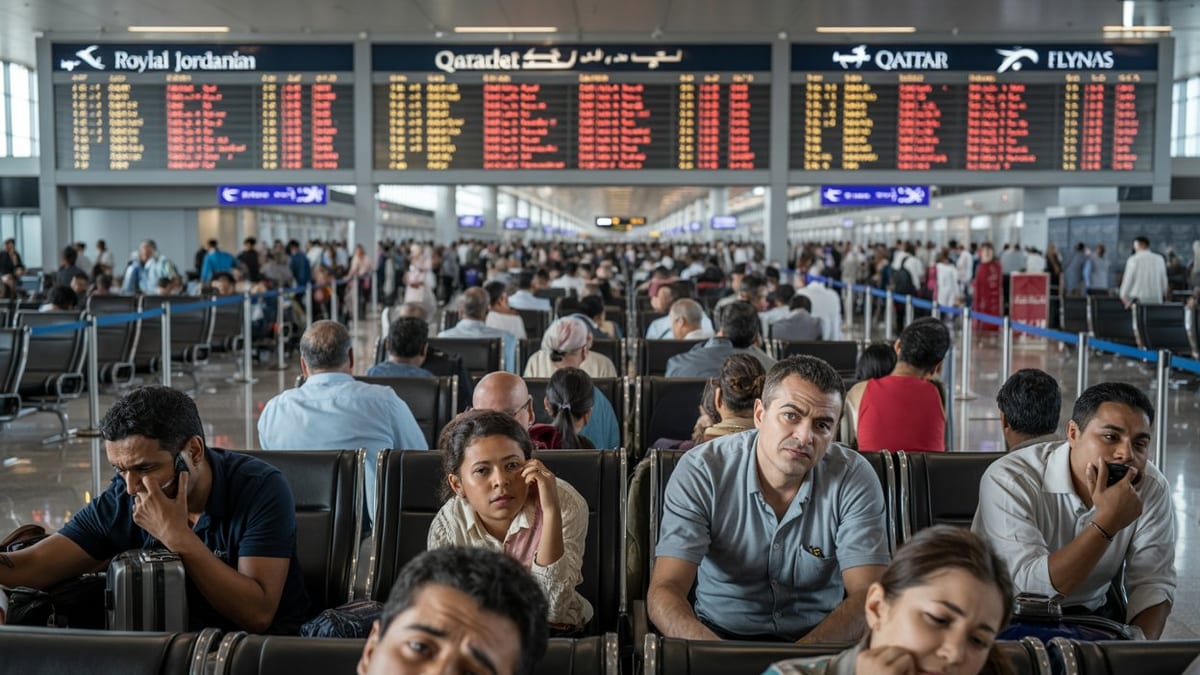
For passengers on the ground, the statistics translate into familiar scenes of crowded concourses, long customer service queues and departure boards filled with red and orange status indicators. At the worst affected airports, travelers have reported extended waits at security checkpoints, even as some airlines roll out tools that allow customers to see estimated screening times inside their mobile apps. These digital additions may help some passengers plan arrival times more effectively, but they cannot fully offset the impact of an overloaded schedule.
When hundreds of flights run late in the morning and early afternoon, missed connections become inevitable. Industry analyses of past disruption events show that once aircraft and crew fall out of their planned rotations, recovery can take a full day or longer, especially for airlines that operate complex hub and spoke systems. Passengers who miss final evening departures out of hubs like Chicago, Atlanta or New York often face overnight stays and rebookings onto already crowded flights the following day.
The pressure on airport infrastructure is also significant. Terminal seating, concessions and ground transportation systems are all designed around expected peaks, and large delay totals can stretch those assumptions. Reports from earlier disruption episodes in 2026 describe passengers lining hallways, waiting for access to power outlets and struggling to find available hotel rooms near major hubs, scenarios that risk reappearing when nationwide delay totals swell past several thousand in a single day.
Consumer advocates are reminding travelers that federal rules require airlines to provide cash refunds when a flight is canceled or significantly changed, even on nonrefundable tickets. However, those protections do not guarantee compensation for delays or incidental expenses such as hotels and meals, which often depend on whether the disruption is classified as within the airline’s control or primarily caused by weather or air traffic constraints.
What the Disruptions Signal for Spring and Summer Travel
The current wave of cancellations and delays is fueling concern about how the U.S. aviation system will perform as the peak summer season approaches. Government data for recent years show that roughly one quarter of flights arrive behind schedule in a typical year, with a smaller share canceled outright, and recent shutdown related flight reductions and staffing challenges at air traffic control facilities have added new complexity to the outlook.
Industry commentary suggests that airlines have been working to rebuild staffing, secure additional aircraft and streamline schedules to reduce systemic risk, yet they remain vulnerable to clusters of severe weather, infrastructure projects and regulatory capacity limits. Production backlogs at major aircraft manufacturers and extended maintenance timelines mean that many carriers have little spare capacity to absorb day after day of disruption without resorting to cancellations.
For travelers planning trips in the coming weeks, recent events underline the importance of building flexibility into itineraries. Travel experts commonly recommend allowing longer connection windows at key hubs, booking earlier flights in the day when possible, and monitoring flight status through both airline apps and independent tracking tools. While such strategies cannot prevent storms or runway work, they can modestly increase the chances of reaching a destination on schedule when the system is under strain.
With more unsettled spring weather expected and structural capacity reductions in place at some major airports, the elevated disruption levels seen in early April may not be a one off event. Unless conditions improve markedly, the combination of strong demand, tight schedules and infrastructure constraints could continue to produce days with hundreds of cancellations and thousands of delays across the United States travel network.