

More news on this day
Air travel across the United States entered another turbulent stretch on April 3 as flight-tracking data showed 339 cancellations and 3,577 delays nationwide, disrupting operations at major hubs from Austin and Dallas to Boston, Chicago, Orlando, Las Vegas, and Philadelphia.
Get the latest news straight to your inbox!
Major Hubs Struggle Under Nationwide Disruption
Publicly available information from flight-status dashboards indicates that the April 3 disruption was not confined to a single region, with delays and cancellations scattered across the country’s busiest corridors. Austin Bergstrom International, Dallas Fort Worth International, Chicago O’Hare and Midway, Boston Logan, Orlando International, Las Vegas Harry Reid, and Philadelphia International all reported significant operational slowdowns as the day progressed.
Analysis of the data shows that the combined total of 339 canceled flights is relatively modest compared with historic peak disruption events, but the 3,577 delays created a cascading effect across the national network. Late-arriving aircraft and crews rippled through schedules, turning what began as isolated issues into systemwide congestion that affected both mainline and regional operators.
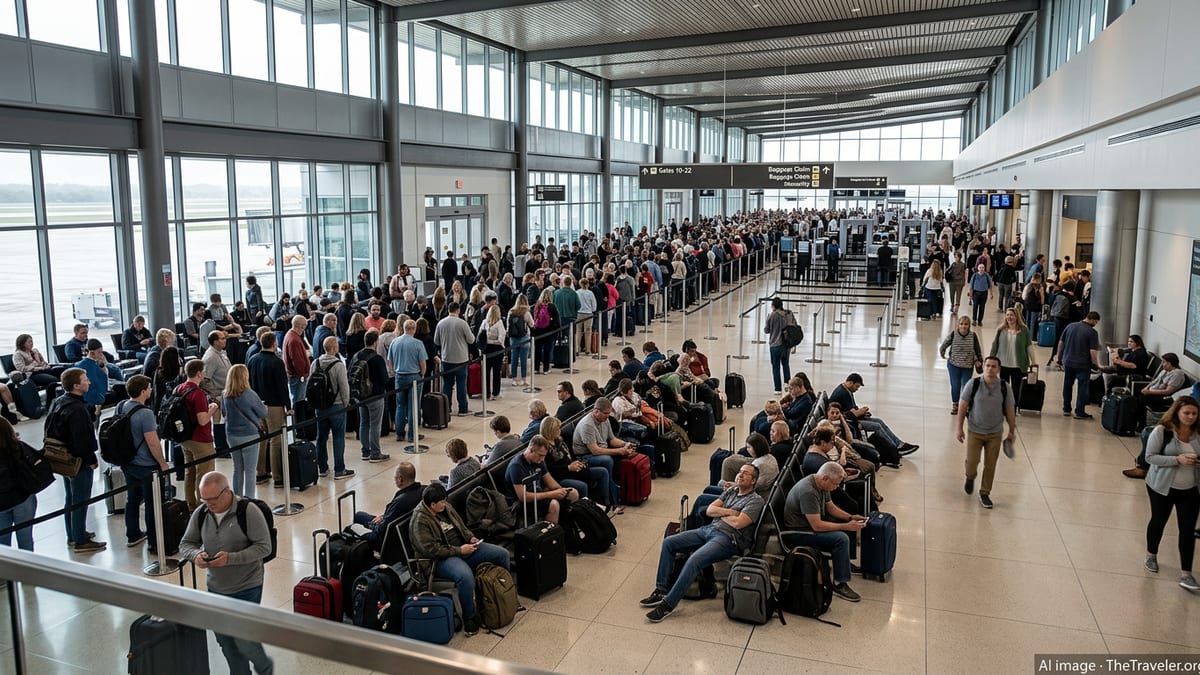
Reports from aviation-focused outlets describe terminal crowds building through the afternoon as departure boards filled with yellow and red status updates. Even airports that avoided large numbers of outright cancellations saw substantial delays, stretching gate capacity and complicating turnaround times for aircraft already operating near full utilization.
Delta, American, United and Low-Cost Carriers Feel the Strain
The disruption cut across nearly every segment of the U.S. airline industry. Legacy carriers such as Delta Air Lines, American Airlines, and United Airlines, along with major regional operator SkyWest, all appeared prominently in cancellation and delay tallies. Low-cost and ultra-low-cost carriers, including Southwest, Spirit, and Frontier, also faced mounting delays at their key bases and focus cities.
Recent performance overviews published by consumer and industry outlets have highlighted how quickly a handful of early disruptions can escalate for large network airlines. When an initial wave of delays affects aircraft and crew rotations at hub airports, subsequent flights often depart out of sequence or with tighter connection windows, making later cancellations more likely once the system reaches a breaking point.
For carriers such as Southwest, which rely heavily on point-to-point flying through busy bases like Chicago Midway and Las Vegas, delays at just a few airports can spill across dozens of city pairs in a matter of hours. Similarly, reports focusing on United’s hub operations have documented how congestion at Chicago O’Hare or other core hubs can reverberate across the broader network when schedules are already packed.
Weather, Congested Airspace and Operational Limits
Coverage of the April 3 disruption points to a familiar blend of contributing factors, including unsettled weather patterns along key corridors, airspace congestion near major hubs, and the operational limits of airlines working to match high spring demand. Even when severe storms are localized, reroutes and ground stops can lead to stacking of arrivals and departures at airports hundreds of miles away.
Industry analyses frequently note that the line between a manageable operational day and a highly disrupted one can be thin. Once aircraft and crews slip out of position, recovery depends on spare capacity that many airlines no longer hold in reserve at previous levels. Tight schedules, high load factors, and lingering staffing constraints leave little room to absorb shocks, whether from thunderstorms, technical issues, or short-term air traffic control restrictions.
Historical data from transportation agencies show that airports such as Dallas Fort Worth, Boston Logan, Las Vegas Harry Reid, Orlando International, Chicago’s airports, and Philadelphia have long ranked among the nation’s more delay-prone facilities during periods of strong demand or adverse weather. The April 3 figures fit that pattern, with these hubs again featuring prominently in national disruption tallies.
What Travelers Experienced on the Ground
Travelers passing through affected airports on April 3 encountered familiar scenes of long lines at check-in counters and service desks, crowded gate areas, and overhead announcements advising passengers to monitor flight status closely. With delays far outnumbering cancellations, many customers remained in limbo as departure times repeatedly slid back in small increments.
Travel-focused publications note that this pattern can be especially challenging for passengers with tight connections or complex itineraries. A relatively minor delay out of Austin, for example, can quickly translate into a missed onward flight in Dallas or Chicago if gate assignments and connection times shift amid heavy congestion. Families and leisure travelers heading to Orlando or Las Vegas during peak spring travel periods are particularly vulnerable when alternative flights fill quickly.
Observers also point out that extended delays place additional pressure on airport amenities, from food and beverage outlets to seating and restroom capacity. When thousands of passengers remain in terminals longer than planned, crowding can intensify, making it more difficult for travelers to find quiet spaces, power outlets, or even available rebooking assistance.
Passenger Rights and Strategies Amid Ongoing Volatility
The latest disruption has renewed attention on what options passengers have when flights are canceled or heavily delayed. Public guidance from transportation regulators in the United States generally states that when an airline cancels a flight and a traveler chooses not to fly, the customer is typically entitled to a refund of the unused portion of the ticket, regardless of the reason for the cancellation.
Compensation or amenities for delays, by contrast, remain largely dependent on individual airline policies, which can vary by carrier and circumstance. Consumer advocates quoted in recent coverage recommend that travelers review their airline’s customer service commitments in advance, paying particular attention to how rebooking, meal vouchers, or hotel accommodations are handled when disruptions are caused by factors within the airline’s control.
Travel experts also emphasize the value of proactive planning when systemwide delays begin to mount. Checking flight status frequently through airline apps, enabling notifications, and considering alternate routings via less congested hubs can sometimes help travelers avoid the worst bottlenecks. With cancellations and delays continuing to flare up periodically across the United States, flexibility in timing and routing remains one of the most effective tools for passengers hoping to navigate a volatile air travel landscape.