

More news on this day
Thousands of air travelers across the United States are facing long lines, missed connections, and overnight airport stays today as a new wave of flight disruptions ripples through major hubs in California, New York, Texas, and Florida, with hundreds of cancellations and delays affecting services on Delta Air Lines, United Airlines, American Airlines and other major carriers.
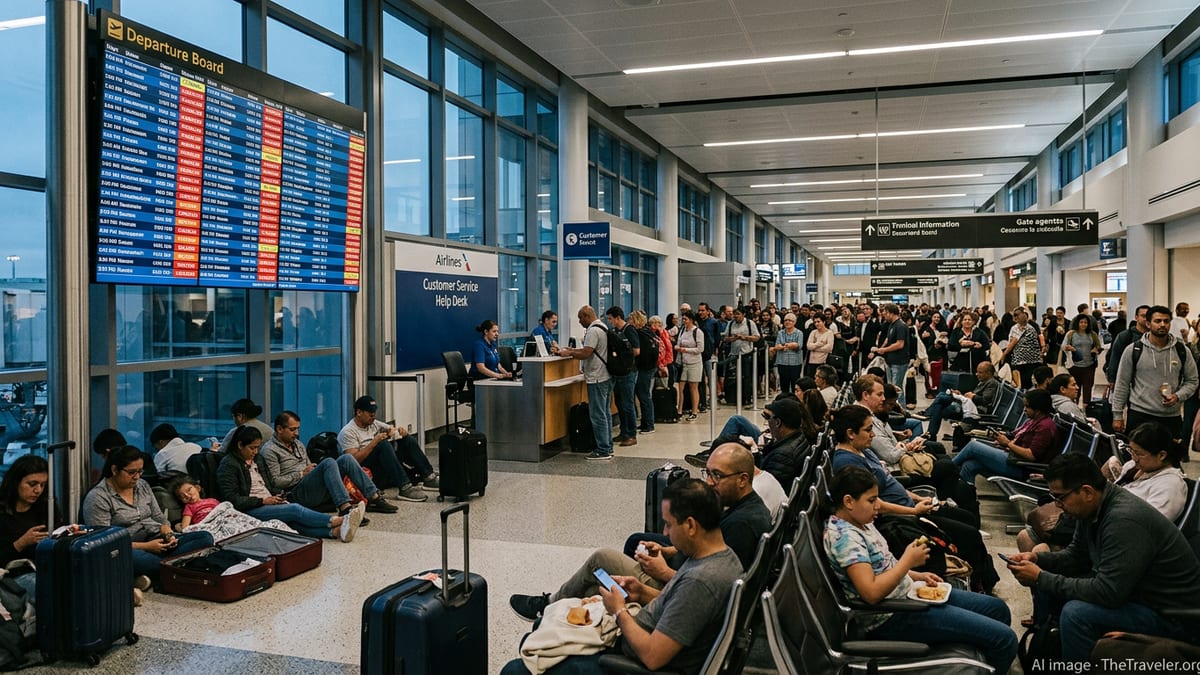
Widespread Disruptions Across Key US Hubs
The latest day of air travel turmoil has left passengers stranded from coast to coast, with 569 flights canceled and at least 842 delayed nationwide, according to live departure boards and aviation data providers. The impact is being felt most acutely at major coastal and Sun Belt gateways that serve as critical connectors for both domestic and international traffic.
San Francisco International is among the hardest hit on the West Coast, where United Airlines, Southwest, Delta and American have collectively reported more than a hundred delays and several cancellations, disrupting traffic throughout California and onward connections to cities such as Seattle, Chicago and Atlanta. Passengers at Los Angeles International are also reporting rolling delays as airlines work through congested schedules and crew availability issues.
On the East Coast, pressure remains elevated at New York area airports, which are still recovering from a bruising late-winter pattern that has delivered repeated storms and operational challenges in recent weeks. Delays at the region’s airports are rippling outward to Florida, where busy leisure gateways such as Orlando and Miami are seeing late departures and missed inbound connections, particularly on major carriers and their regional partners.
In Texas, Dallas–Fort Worth and Houston remain critical pinch points. Even modest weather or ground disruptions at these mega-hubs can trigger knock-on effects across airline networks, leading to delayed aircraft and crews that cascade into cancellations hours later in other states.
What Is Driving Today’s Cancellations and Delays
While no single cause explains every disruption, today’s problems reflect the fragile balance of modern airline operations. Seasonal weather complications, including lingering winter systems in parts of the Northeast and Midwest, have forced airlines to preemptively thin schedules and occasionally suspend operations on select routes to preserve safety and reduce the risk of extended tarmac delays.
Operational strain is another factor. With aircraft and crews tightly scheduled, even minor issues such as a mechanical inspection or a short ground hold at a busy hub can quickly reverberate through the system. When a jet arrives late into a connecting city like New York, Dallas, or Los Angeles, it often departs late again, causing a chain reaction of rolling delays that can last well into the evening.
Air traffic control flow programs also play a recurring role. On high-volume days, especially when storms or low visibility affect major hubs, controllers may reduce the number of takeoffs and landings allowed per hour. Airlines then must push flights back, re-sequence departures, or, in some cases, cancel them outright to prevent gridlock on taxiways and in the skies.
Airline network design compounds these challenges. Legacy carriers such as Delta, United and American concentrate a large share of their operations at a handful of mega-hubs. When one of those hubs is constrained, aircraft and crews can quickly fall out of position across the country, forcing schedule resets that strand passengers far from the original problem point.
How to Check Your Flight Status Before You Leave Home
With conditions this volatile, aviation and consumer advocates stress that travelers should verify their flight status repeatedly, not just the night before departure. Airline mobile apps and official websites remain the primary sources, often updating faster than airport departure boards when a gate change or delay is posted.
Passengers with connections through vulnerable hubs in California, New York, Texas and Florida should pay particular attention to aircraft routing details. If your incoming aircraft is arriving from a region experiencing heavy delays, the risk of a knock-on disruption to your own flight is higher, even if local weather at your departure airport appears calm and clear.
Experts recommend signing up for proactive alerts via text and email for every segment on your itinerary. This can provide early warning of schedule changes and may allow you to rebook from your phone before long queues build up at airport customer service desks. In many cases, airlines now permit same-day changes through their apps when a significant delay or cancellation appears likely.
Travelers already en route to the airport should watch for real-time updates on terminal information screens but avoid relying solely on them. In fast-moving disruption events, it is not unusual for app notifications to show a cancellation or gate swap several minutes before the change filters through to physical monitors.
Your Rights When Flights Are Canceled or Severely Delayed
US federal rules do not guarantee cash compensation for delays and cancellations in the same way some international regimes do, but passengers still have important protections. If your flight is canceled or significantly changed, airlines are required to offer either a rebooking at no additional cost or a refund of the unused portion of your ticket if you choose not to travel.
Whether you are entitled to hotel vouchers or meal credits depends on the reason for the disruption and each carrier’s policies. When an airline classifies a problem as within its control, such as certain maintenance or crew issues, major carriers including Delta, United and American generally provide hotel accommodation or meal assistance when an overnight stay becomes unavoidable. When the cause is categorized as weather or air traffic control, these benefits are more limited and often not guaranteed.
Travelers should carefully review each airline’s customer service or “bill of rights” commitments, which set out what the carrier will provide in different disruption scenarios. These pledges are typically more generous than the bare minimum required by regulation and can include meal vouchers above a specific delay threshold or ground transportation assistance when irregular operations force passengers to overnight away from home.
If you are denied assistance you believe you are entitled to, it is vital to document the interaction. Save boarding passes, keep screenshots of delay notifications, and note the names or ID numbers of staff you speak with. If a later complaint to the airline is unsuccessful, you can escalate the issue by filing a complaint with the US Department of Transportation, which tracks patterns of service problems and can pressure carriers to resolve systemic issues.
Practical Steps to Minimize Disruption on Your Trip
For travelers yet to start their journeys, strategic planning can significantly reduce the risk of being stranded. Booking earlier departures, particularly on routes prone to afternoon thunderstorms or congestion, improves the chances of being re-accommodated on later flights if your original one is canceled. Nonstop flights, where available, eliminate the vulnerability of missed connections at overstretched hubs.
When disruptions are unfolding, flexibility becomes your most valuable asset. If your route allows, consider accepting rebooking through an alternate hub in a less affected region, even if it adds a short connection. In a day of widespread cancellations and delays, the priority is often simply reaching your destination on the same day, rather than preserving the original routing.
Carry-on-only travel also offers a significant advantage. Passengers without checked bags can move more quickly between gates when a last-minute rebooking is offered and avoid the complications of separated luggage when tight connections or misaligned schedules force sudden changes.
Finally, travel insurance and premium credit card benefits can help offset the financial sting of hotel stays, meals and ground transport during major disruptions. Policies vary, but many plans offer trip delay coverage once a specified time threshold has been reached, reimbursing reasonable expenses when airlines are unable or unwilling to provide full support during extended irregular operations.