

More news on this day
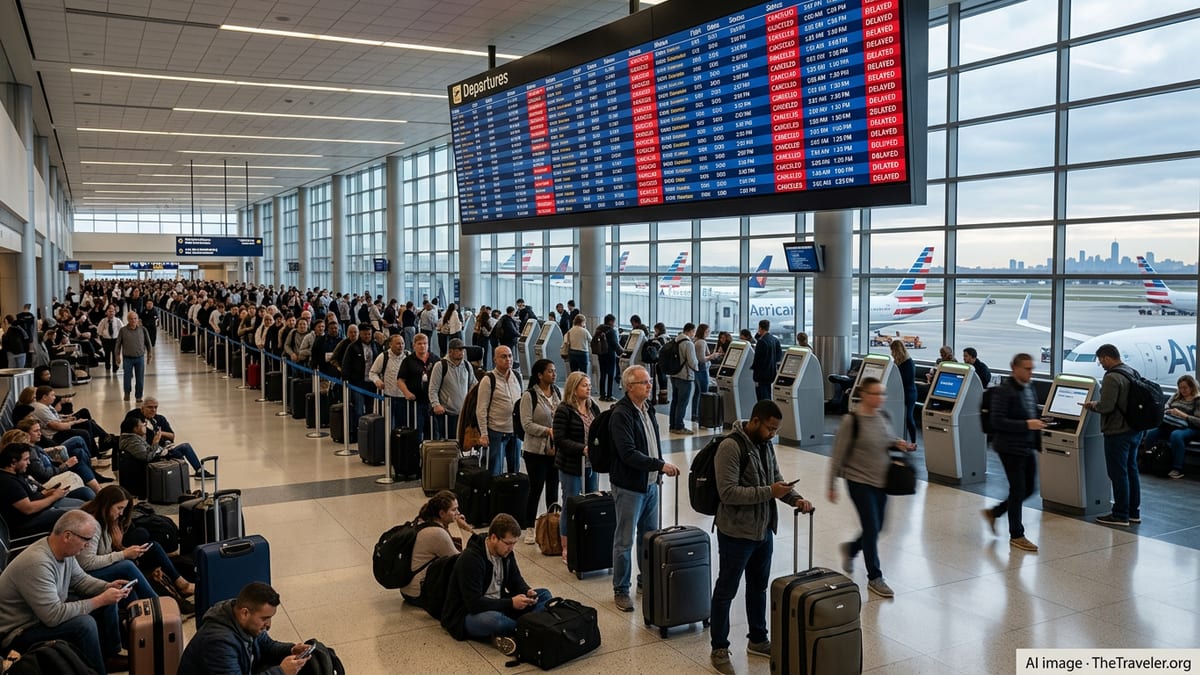
Thousands of airline passengers across the United States faced unexpected disruptions as hundreds of flights were canceled or delayed on Saturday, with published tracking data showing 396 cancellations and 969 delays affecting major hubs in New York, California, and Texas.
Get the latest news straight to your inbox!
Widespread Disruption Hits Coast to Coast
The latest round of travel disruption has rippled across the US network, concentrating in some of the country’s busiest aviation states. New York, California, and Texas, home to major hubs such as New York’s JFK and LaGuardia, Los Angeles International, San Francisco International, Dallas Fort Worth, Houston and others, all reported clusters of cancellations and late departures as airlines struggled to keep schedules on track.
Publicly available data from flight-tracking services indicates that 396 flights were canceled nationwide, while a further 969 were delayed, leaving travelers facing long lines at rebooking counters and crowded gate areas. For many, the disruption has meant missed connections, overnight airport stays, and last-minute scrambles for hotel rooms in already busy urban centers.
Recent weeks have already been turbulent for US aviation, with winter weather systems, airspace restrictions, and operational strains creating a fragile backdrop for day-to-day operations. Industry observers note that when schedules are tight, even localized weather or staffing issues at a few big airports can quickly cascade into national disruption as crews and aircraft end up out of position.
Although the latest wave is smaller in scale than some of the large winter storms and airspace closures seen earlier in 2026, the concentration of cancellations and delays at key coastal and Sun Belt gateways has amplified the impact on both domestic and international travelers.
Airlines and Airports Most Affected
According to published coverage and real-time aviation dashboards, the disruption has been spread across several major US carriers that maintain large operations in the affected states. New York’s airports have experienced a mix of cancellations and rolling delays on both transcontinental and short-haul routes, disrupting itineraries to and from key business and leisure markets.
In California, pressure has been particularly evident on heavily traveled corridors linking Los Angeles and San Francisco with other West Coast and Mountain West cities. Delays at large hubs can force aircraft and crew rotations to be adjusted throughout the day, leading to knock-on effects for flights scheduled later in the evening and on overnight routes.
Texas, with significant hub operations for multiple US airlines, has also seen schedules trimmed or slowed. When disruptions hit Dallas Fort Worth or Houston, flights across the central United States, Latin America connections, and coast-to-coast services are all vulnerable to cascading delays as airlines work to reposition planes and crews.
Analysts note that the mix of cancellations and delays suggests airlines are trying to consolidate capacity where possible, canceling some services outright while running others behind schedule. This can reduce further operational strain but leaves passengers facing tough choices on whether to wait, reroute, or abandon trips altogether.
Why Flights Are Being Canceled and Delayed
The immediate causes of any given cancellation or delay can vary, from adverse weather and air traffic control constraints to aircraft maintenance checks and crew scheduling limits. In the current situation, reports point to a blend of seasonal weather, high demand, and continuing operational tightness following earlier storms and disruptions across North America.
Travel industry commentary highlights that airlines are continuing to recover from a series of winter systems, including severe storms and blizzards that displaced planes and crews in February and early March. When aircraft end up away from their planned bases or crews reach the end of their regulated duty hours, airlines must reshuffle schedules, sometimes opting to cancel entire flights to avoid further knock-on delays.
In parallel, US air traffic control capacity constraints in certain regions can lead to ground stops or flow restrictions, requiring airlines to hold departures, reduce frequencies, or combine services. At large coastal hubs in New York and California, even modest periods of low visibility, high winds, or heavy precipitation can quickly lead to backlogs as arrivals and departures are spaced further apart for safety.
While airlines emphasize safety and regulatory compliance as the top priorities, the net result for travelers is often a greater number of late departures, longer connection times, and a higher risk that carefully planned itineraries will be disrupted at short notice.
What Stranded Travelers Can Do Right Now
For passengers whose flights are canceled, publicly available guidance from the US Department of Transportation and consumer rights organizations makes it clear that travelers are generally entitled to a refund if they choose not to travel, even when a cancellation is linked to weather or operational reasons. This typically applies to the unused portion of a ticket, including any mandatory taxes and fees.
Rebooking options vary by airline, ticket type, and the cause of the disruption. Many carriers publish “travel alerts” and flexible change policies during large-scale disruption, allowing passengers to move their travel to alternative dates or routes without additional change fees, though fare differences may still apply in some cases. Checking an airline’s app or website can often provide faster access to rebooking tools than waiting in line at an airport counter.
When delays stretch into many hours, some airlines provide meal vouchers or hotel accommodation, particularly when the disruption is considered within the carrier’s control, such as maintenance or crew scheduling. When the cause is considered outside the airline’s control, such as severe weather, assistance may be more limited, leaving many travelers to arrange their own overnight stays and seek reimbursement later if covered by travel insurance.
Travel insurance providers note that policies with trip interruption or travel delay benefits can help cover out-of-pocket expenses for hotels, meals, and alternative transportation, provided the delay meets the minimum time threshold in the policy wording. Experts encourage travelers to keep receipts and documentation of all disruptions, including notifications from airlines and any written confirmation of cancellation or delay.
Know Your Rights Before Your Next Flight
Consumer advocates stress that understanding air travel rights in advance can make a significant difference when disruption hits. The US Department of Transportation provides clear public information on when refunds are owed and the limits of what airlines must provide in cases of weather-related problems, air traffic issues, or circumstances beyond the carrier’s control.
Travelers are encouraged to familiarize themselves with each airline’s customer service plan and contract of carriage, which outline the specific commitments carriers make in the event of cancellations, diversions, long tarmac delays, or schedule changes. These documents explain whether an airline pledges hotel or meal support and how it prioritizes rebooking when seats are limited.
Industry reports also highlight the value of building extra buffer time into itineraries, especially when connecting through weather-prone hubs or during peak travel periods. Choosing longer connection windows, early-day departures, and nonstop flights where possible can reduce exposure to cascading delays and missed onward flights.
As cancellations and delays continue to ripple through the network, the latest disruption serves as another reminder that US air travel remains vulnerable to a combination of weather, infrastructure, and operational pressures. For passengers, careful planning, awareness of rights, and flexible backup options are becoming essential tools for navigating an increasingly unpredictable travel landscape.