

More news on this day
Hundreds of travellers have been left stranded across China after a new wave of flight disruptions caused more than 380 delays and dozens of cancellations at key hubs including Shanghai, Chengdu and Chongqing, with Qatar Airways, Sichuan Airlines, China Express, Qingdao Airlines and several Chinese carriers struggling to stabilize operations.
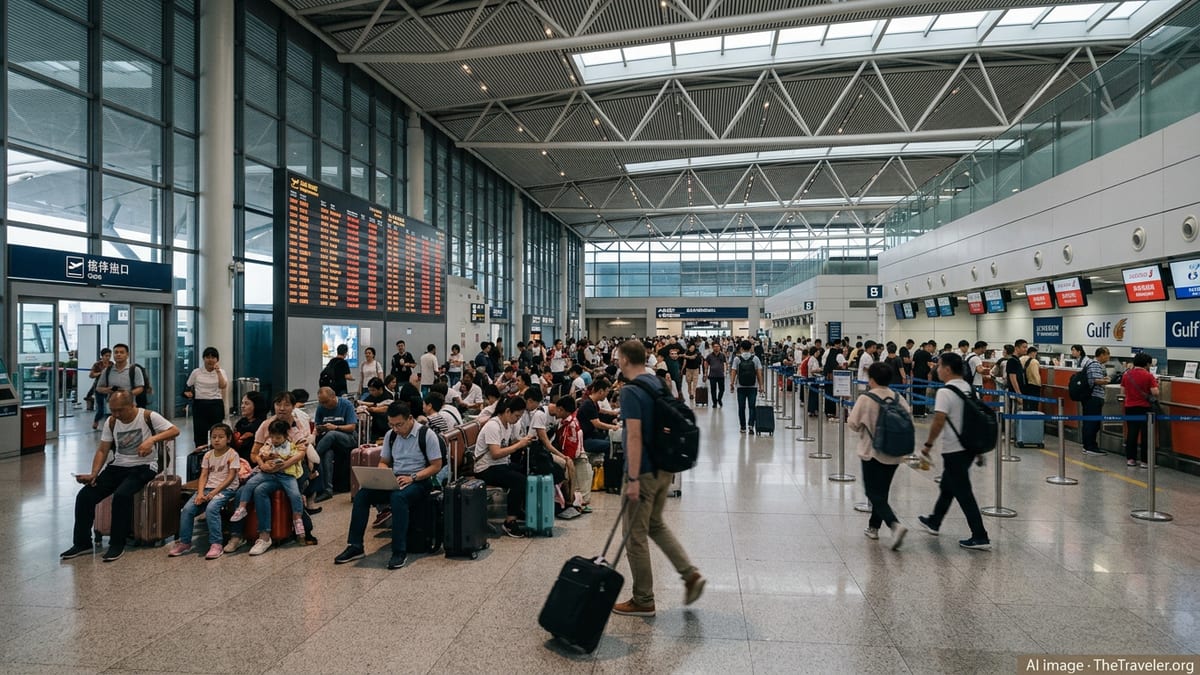
Major Chinese Hubs Log 383 Delays and 36 Cancellations
Fresh disruption swept across China’s aviation network this weekend, with operational data showing 383 delayed departures and 36 outright cancellations affecting a mix of domestic and international routes. Shanghai’s Pudong and Hongqiao airports, along with Chengdu and Chongqing, were among the worst hit, compounding stress on an already stretched system and leaving departure boards dominated by orange and red status alerts.
Though overall figures are smaller than the nationwide chaos recorded on March 7, which saw 1,473 delays and 54 cancellations across Chinese airports, the latest wave has concentrated impact at a handful of key hubs. Travellers reported hours-long queues at check in, rebooking counters and security screening, especially at Shanghai Pudong and Chengdu Shuangliu, where peak afternoon and evening banks were heavily disrupted.
Airline sources and analysts say the problems reflect a fragile recovery from wider regional airspace closures and knock-on effects from Middle East route disruptions that began in late February. With aircraft and crews still out of position, even minor weather or congestion issues can quickly cascade into large numbers of delayed flights.
Passengers, many travelling at the tail end of the Lunar New Year holiday period or connecting to long-haul services, faced missed connections, unexpected overnight stays and uncertainty over when they would reach their destinations.
Qatar Airways and Chinese Carriers Scramble to Recover
Qatar Airways has emerged as one of the most visible foreign carriers affected in China. The Gulf airline has already been grappling with extensive schedule cuts and diversions after airspace closures in the Middle East forced wholesale changes to its global network. Aviation data and industry reports indicate that hundreds of Qatar Airways flights have been cancelled or rerouted worldwide in recent days, with its Doha hub operating at sharply reduced capacity.
In China, those disruptions are now feeding into local bottlenecks. Relief and repositioning flights are operating on a limited basis, but passengers booked on Doha bound services from cities such as Shanghai and Chengdu have seen last minute schedule changes or rolling delays. Some have been offered rebooking through alternative Asian hubs, while others have accepted refunds and attempted to piece together new itineraries via Chinese and regional carriers.
Chinese airlines are also facing mounting strain. China Eastern, Air China and China Southern, which together dominate traffic at Shanghai, Beijing and several inland hubs, have been managing the bulk of domestic rebooking, while regional players such as Sichuan Airlines, China Express and Qingdao Airlines contend with their own punctuality issues. Yesterday’s nationwide disruption left thousands of travellers abandoned across Shanghai, Beijing, Shenzhen, Xi’an and Chengdu, underscoring how quickly local networks can seize up when key aircraft rotations fail to materialize.
For carriers such as Sichuan Airlines and Qingdao Airlines, which run dense domestic schedules linking secondary cities to major hubs, even a small cluster of cancellations can leave passengers with few same day alternatives, especially late in the evening when frequencies drop sharply.
Shanghai, Chengdu and Chongqing Bear the Brunt
Shanghai’s dual airport system has once again been at the core of China’s latest aviation turmoil. Pudong International, a primary long haul gateway, has recorded some of the highest numbers of delays, particularly on flights connecting to Southeast Asia, Europe and the Middle East. Domestic banks funneling traffic from cities like Xi’an, Kunming and Chongqing into international departures have also suffered, driving missed onward connections.
Chengdu, an important western China hub, has seen a mix of domestic and regional services disrupted. Local carriers including Sichuan Airlines and Chengdu based operations of other Chinese airlines have faced rotating knock on delays as aircraft arrive late from earlier sectors. An evening wave of departures to Beijing, Shanghai and coastal cities experienced notable slippage, straining airport amenities as passengers queued for meal vouchers and hotel arrangements.
Chongqing Jiangbei, while reporting fewer cancellations overall, has handled an outsized share of delayed flights. The airport’s role as a key transfer point for traffic heading into central and western China means disruptions there ripple outward quickly. Flights to smaller provincial airports, often with only one or two daily frequencies, have been particularly vulnerable, leaving some travellers marooned without realistic same day alternatives.
Local airport authorities in all three cities have deployed extra staff to manage crowds at information desks and boarding gates, while public address announcements have repeatedly urged passengers to check airline apps and departure boards and to remain in designated waiting areas.
Weather, Congested Airspace and Network Imbalances Blamed
While no single cause has been officially cited for the latest tally of 383 delays and 36 cancellations, a combination of factors appears to be driving the turmoil. Persistent congestion in China’s tightly controlled airspace has long been a constraint, and any temporary restrictions or reroutes can push timetable resilience to its limits, particularly at high volume hubs.
Intermittent weather issues, including reduced visibility and localized storms near key airports, have also contributed, according to airline operations staff. Even brief runway closures or spacing requirements imposed by air traffic control can produce a backlog that takes hours to clear, especially when aircraft are already running late from previous sectors.
The wider international context is adding another layer of complexity. Prolonged disruption on routes linking Asia with the Middle East and Europe has left many airlines juggling aircraft availability, crew duty limits and maintenance windows. Some long haul services to and from China are operating with minimal slack, so any last minute change in routing or refueling needs can cascade into further delays or cancellations later in the day.
Industry analysts note that, after several years of pandemic era volatility and route restructuring, many airline networks are still more brittle than they appear. They caution that travellers may see periodic flare ups of this kind, particularly during busy travel periods and in regions where airspace capacity remains constrained.
Travellers Face Long Queues and Limited Options
For passengers on the ground, the operational explanations offer little comfort. At Shanghai Pudong and Chengdu Shuangliu, travellers described snaking queues at airline service desks and gate podiums as they sought clarity on when or whether their flights would operate. Families with young children, tour groups and business travellers all competed for scarce rebooking options as seats on remaining services quickly sold out.
Some travellers interviewed at Chinese airports in recent days reported waiting more than six hours without firm departure times, choosing to sleep in terminal seating areas rather than risk missing boarding calls. Others said they received meal vouchers or hotel accommodations only after extended negotiations at carrier counters, highlighting inconsistent customer service experiences between airlines.
With hotel prices around major airports rising and alternative rail tickets selling fast, many stranded passengers have turned to social media and messaging groups to share updates on live departure boards, swap information about open seats on later flights and coordinate shared taxi or train journeys. Travel agents and online booking platforms have also reported a spike in calls and chats from customers seeking last minute alternatives.
Consumer advocates are urging travellers to keep all receipts for food, transportation and lodging incurred during the disruption, to request written proof of delay or cancellation from airline staff, and to carefully review the conditions of carriage and any applicable passenger rights regulations. They note that while compensation rules vary widely between domestic and international tickets, detailed documentation can significantly improve the chances of reimbursement once operations stabilize.