

More news on this day
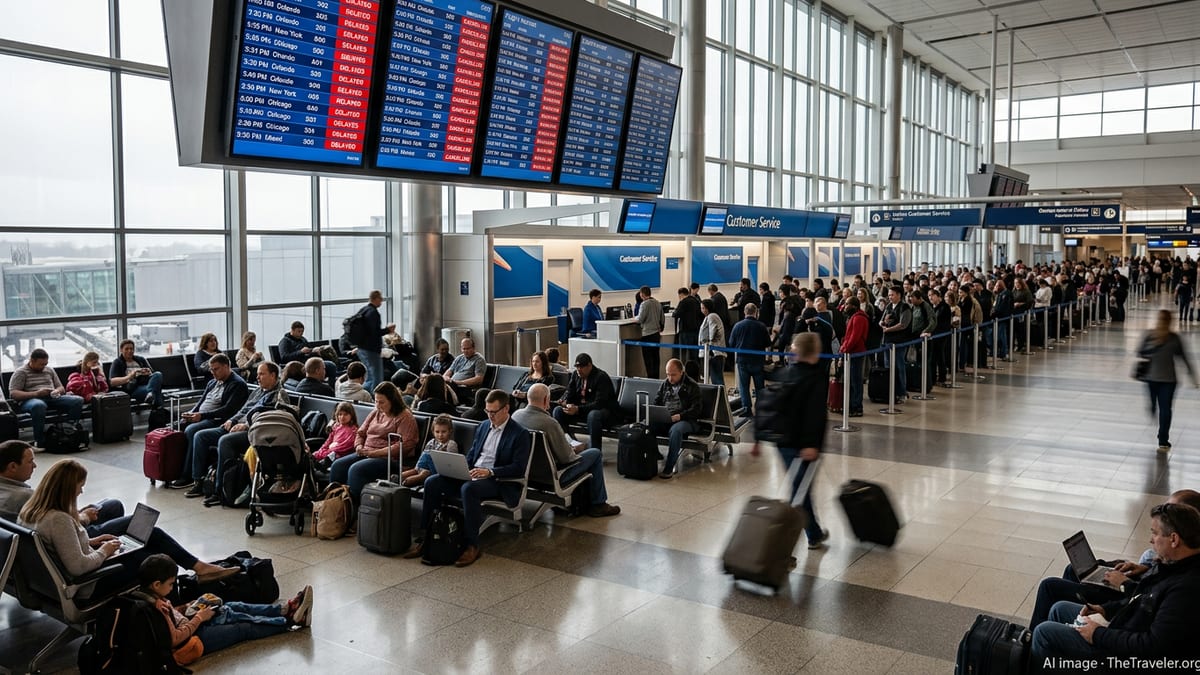
Hundreds of travelers across the United States faced cascading disruptions today as major carriers including Delta Air Lines, Spirit Airlines, Southwest Airlines and American Airlines reported 409 delays and 55 cancellations, snarling traffic through Orlando, New York, Chicago, Miami and other heavily traveled hubs.
Get the latest news straight to your inbox!
Major Carriers Hit by Systemwide Disruptions
Publicly available flight tracking data for Sunday, March 15, 2026, shows widespread operational challenges across several of the country’s largest airlines. Delta Air Lines, Spirit Airlines, Southwest Airlines and American Airlines collectively reported 409 delayed departures and arrivals, alongside 55 outright cancellations, affecting a broad cross-section of domestic routes.
The impact was felt most acutely at high-traffic airports that serve as gateways to business and leisure destinations. Orlando International, New York area airports, Chicago hubs and Miami International all reported clusters of delays that rippled across carrier networks, affecting connections and subsequent legs throughout the day.
While the number of cancellations remained relatively contained compared with major weather or holiday meltdowns, the concentration of late departures in multiple hubs created significant knock-on effects. Travelers encountered rolling schedule changes, gate shifts and tightened connection windows that complicated efforts to reach final destinations on time.
The disruptions followed a period in which airlines had publicly highlighted improvements in on-time performance relative to the most turbulent phases of the post-pandemic recovery. The latest wave of delays underlined how quickly conditions can deteriorate when several pressure points converge on the same travel day.
Weather, Congested Hubs and Tight Crews Combine
Reports from aviation monitoring services and recent federal on-time performance data point to familiar drivers behind the latest operational strain. Seasonal weather systems moving across the country have placed added stress on air traffic management, particularly around the East Coast and Midwest, where low ceilings, strong winds and intermittent storms periodically slow arrival and departure rates.
Airports such as Orlando, New York’s major fields, Chicago and Miami frequently appear among the most delay-prone hubs in consumer and data-driven rankings, reflecting a mix of heavy traffic volumes, complex airspace and susceptibility to fast-changing weather. Even modest slowdowns in these locations can quickly translate into longer taxi times, airborne holding patterns and missed slots.
In parallel, industry observers have continued to flag tight staffing levels in some parts of the system, including flight crews and ground operations. When schedules are densely packed and reserve capacity is thin, relatively small disruptions can become harder to recover from as the day progresses. A delayed inbound aircraft can leave subsequent flights without a full crew, compounding schedule problems into the evening.
Analysts note that the current pattern mirrors broader trends highlighted in recent Air Travel Consumer Reports from the US Department of Transportation, which show that while cancellation rates have generally eased from the peaks of 2022, overall delay minutes at some airports remain elevated compared with pre-pandemic norms.
Orlando, New York, Chicago and Miami Bear the Brunt
The latest figures indicate that Orlando, New York, Chicago and Miami emerged as focal points of today’s disruptions. These cities combine dense schedules, significant leisure demand and key connecting traffic, making them particularly vulnerable when multiple airlines encounter operational headwinds on the same day.
Orlando International Airport, a gateway for theme park visitors and cruise passengers, has drawn increasing attention in recent analyses of delay-prone US airports. High leisure volumes, frequent afternoon thunderstorms in warmer months and tight turnaround schedules for low-cost and legacy carriers alike contribute to a fragile operating environment.
In New York and Chicago, air traffic complexity and constrained runway capacity can intensify the impact of even minor slowdowns. Weather-driven spacing requirements, ground congestion and limited room to reroute traffic mean delays can accumulate quickly across all carriers sharing the same airspace. Miami, a major international and Caribbean hub, faces similar constraints, particularly when weather affects both its local operations and key feeder airports.
Travelers passing through these cities today reported extended waits in departure areas as rolling delay notifications appeared on terminal boards, even when outright cancellations remained comparatively limited. The combination of missed connections and full later flights made same-day rebooking more challenging on heavily traveled routes.
Knock-on Effects for Travelers Across the Network
Although 55 cancellations may appear modest in the context of thousands of daily departures, the clustering of 409 delays across major carriers exerted an outsized influence on travel plans. Each late departure can displace crew schedules, aircraft rotations and passenger connections, leading to a cascade of secondary disruptions that extend beyond the original airports and flight numbers.
Publicly available information and recent case studies of past disruption events show that travelers connecting through large hubs are particularly exposed. When inbound flights arrive late, minimum connection times may no longer be sufficient, forcing passengers onto later departures that are often already close to full. This effect is magnified on evening schedules, when fewer alternative flights remain.
Longer duty days for crews, gate availability constraints and limits on overnight operations at noise-sensitive airports can further restrict recovery options. In some cases, aircraft and crews end up out of position for the following morning’s departures, causing a lingering pattern of delays even after underlying weather or airspace issues have eased.
For travelers with time-sensitive itineraries, including international connections and cruise departures from Florida ports, today’s uneven operations across Delta, Spirit, Southwest and American underscore the continuing importance of contingency planning, travel insurance and schedule buffers when routing through the most congested US hubs.
What the Latest Disruptions Signal for Spring Travel
The current wave of flight issues arrives just as airlines and airports brace for a busy spring and early summer travel season. Industry forecasts point to robust demand, particularly on leisure-heavy domestic routes and popular sun destinations such as Florida, where Orlando and Miami serve as primary entry points.
Recent government data and independent analysis suggest that major carriers have reduced some of the peak schedule densities that contributed to past operational breakdowns, yet delays remain a persistent feature of the air travel landscape. Today’s 409 delays and 55 cancellations highlight how quickly pressure can build when weather, staffing and infrastructure constraints intersect on the same day.
Consumer advocates often recommend that travelers build in additional margin when planning connections through high-risk hubs, opt for earlier departures where possible and monitor their flights closely via airline apps and third-party trackers. Flexible tickets and awareness of carriers’ publicly stated rebooking and compensation policies can also help mitigate the impact of unexpected disruptions.
As airlines continue to refine schedules and invest in technology intended to improve resilience, the experience of travelers stranded or significantly delayed in Orlando, New York, Chicago, Miami and other cities today serves as another reminder that even a relatively moderate level of cancellations can translate into a difficult travel day when delays are widespread across multiple major carriers.