

More news on this day
Hundreds of passengers have been left stranded across France after a fresh wave of schedule disruption involving at least 231 delays and 23 cancellations affected flights operated by SAS, Air Baltic, Lufthansa, Eurowings, KLM and Turkish Airlines, interrupting travel to key hubs including Oslo, Amsterdam, London, Keflavik and Rome.
Get the latest news straight to your inbox!
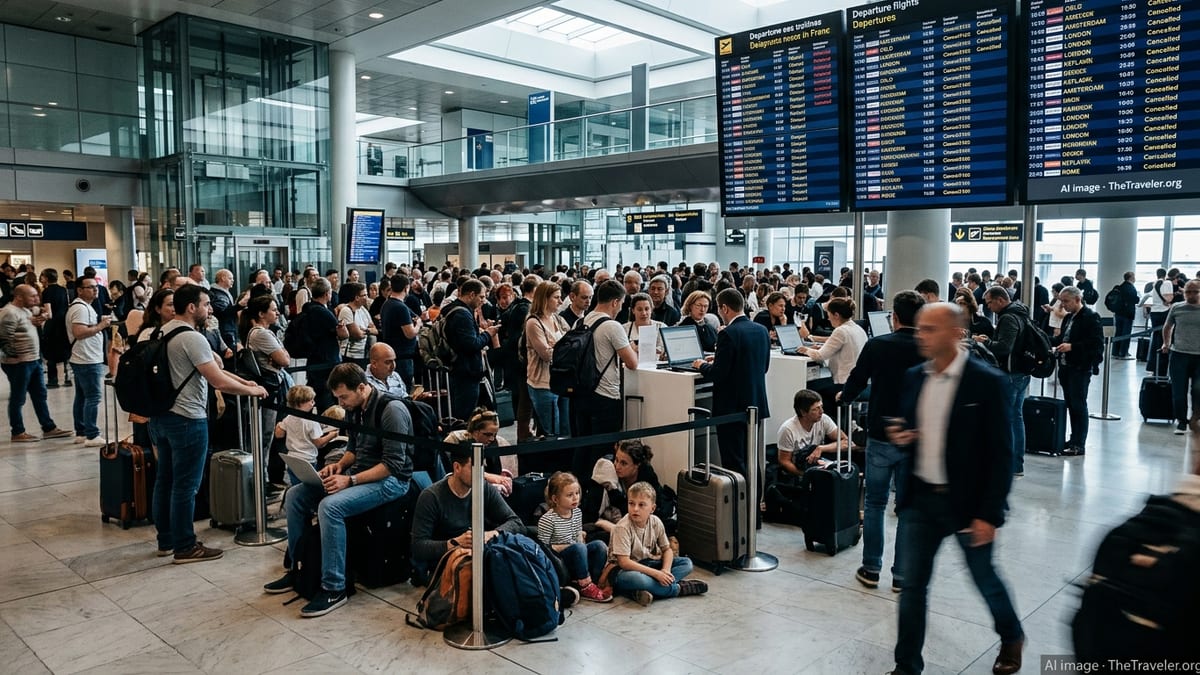
Widespread Operational Disruption Across French Airports
Publicly available flight-tracking data and airport information boards on March 24 indicate that a cluster of delays and cancellations developed through the morning and early afternoon at several French airports, notably Paris Charles de Gaulle, Paris Orly and regional gateways handling European traffic. The pattern shows repeated knock-on delays on short and medium haul services operated by SAS, Air Baltic, Lufthansa, Eurowings, KLM and Turkish Airlines, many of them routed through France en route to Scandinavia, the United Kingdom, the Netherlands, Iceland and Italy.
Schedules show that the majority of affected flights were bound for major connection points such as Oslo Gardermoen, Amsterdam Schiphol and London airports, with additional disruption reported on services heading to Keflavik in Iceland and Rome Fiumicino. The combined total of 231 delayed flights and 23 outright cancellations over the course of the operating day has left aircraft and crews out of position, compounding the impact on later departures.
Reports from stranded travelers on social platforms describe long queues at transfer desks and self-service kiosks, as passengers attempt to secure rebookings or accommodation. Some travelers connecting through France from long haul services have reported missed onward flights to northern Europe after relatively modest initial delays escalated into missed connections once they reached Paris or other French hubs.
While disruption has primarily affected European point to point and feeder services, the concentration of problems at busy transfer airports means that itinerary changes are now rippling into transatlantic and long haul routes as airlines work to consolidate passengers on remaining departures.
Airlines Scramble To Re-Protect Passengers To Oslo, Amsterdam And London
According to information published by the affected airlines, carriers are using a mix of same-day rebooking, rerouting via alternative hubs and, in some cases, overnight accommodation to manage the backlog of passengers. Routes to Oslo, Amsterdam and London appear particularly strained, as these cities function both as final destinations and as onward connection points for many travelers whose journeys originate or pass through France.
For SAS, which relies heavily on flows between France and Scandinavia, the latest disruption adds to a period of operational challenges. Recent Scandinavian media coverage has highlighted instances where SAS has already been trimming schedules and cancelling departures on certain routes in response to fuel costs and capacity constraints, which reduces flexibility when further irregularities occur.
KLM and partner airlines are similarly exposed on routes linking French airports with Amsterdam Schiphol. Earlier in the year, passengers transiting through Oslo and Amsterdam reported being shuffled through multiple rolling delays before facing cancellations, reflecting how quickly limited capacity can be overwhelmed when a busy hub suffers a wave of late-running feeder flights.
London routes, operated by a mix of Lufthansa Group subsidiaries such as Eurowings, along with other European carriers, are seeing knock-on effects as aircraft arriving late into French airports turn around behind schedule. This extends the disruption window well into the evening as lines build at ticket counters and customer service desks across the network.
Knock-On Effects Extend To Keflavik And Rome
Although the bulk of the affected flights are concentrated on core intra-European corridors, services to Keflavik in Iceland and Rome Fiumicino are also experiencing disruption. These routes often operate with less frequent daily service than major hubs, making missed connections particularly disruptive for passengers who may face overnight delays.
Publicly available flight-status data shows that several services feeding into Keflavik from French and continental European airports departed significantly behind schedule, narrowing or eliminating connection windows for transatlantic links that many passengers rely on from Iceland. In Rome, travelers connecting from French airports onto both intra-European and long haul flights have reported having to be rebooked on later departures or different routings.
Airlines serving Keflavik and Rome are attempting to consolidate affected passengers onto remaining services where capacity allows. However, with many late-March flights already heavily booked due to spring travel demand, spare seats are limited. As a result, some passengers are being offered alternative routings via secondary hubs, extending total journey times by many hours.
For travelers already en route, the irregular operations are also affecting checked baggage flows. Reports indicate that bags have been misaligned with passengers on some complex reroutings, increasing the likelihood of short-term baggage delays at final destinations in Iceland and Italy over the coming days.
Weather, Congestion And Tight Schedules Create Fragile Conditions
While a single, clear-cut cause has not been identified for all of the delays and cancellations recorded across France, available information points to a familiar combination of operational pressures. Seasonal weather variability over parts of western and northern Europe, together with busy late-March traffic, has left little margin in schedules to absorb local air traffic control restrictions or ground handling bottlenecks.
Recent coverage of European airline performance has emphasized that major full service carriers and their low cost subsidiaries, including Lufthansa and Eurowings, already face relatively high rates of delay and cancellation on some routes. When additional constraints arise at airports in France, these operators can quickly struggle to maintain punctuality, particularly on short-haul flights that rely on tight turnarounds.
Turkish Airlines and Air Baltic, both of which depend on feeding passengers into their home hubs for onward connections, are also affected when disruptions arise at intermediate airports. Even modest delays departing France can cascade into missed connections in Istanbul or the Baltic region, especially for passengers traveling to secondary cities with limited daily frequencies.
The experience of passengers caught up in similar events earlier this year in Oslo and Amsterdam illustrates how a combination of ground handling capacity issues, aircraft rotation challenges and adverse weather can stretch airline contingency plans. When several of these factors occur together, the system can reach a tipping point that produces precisely the sort of widespread disruption seen in France.
What Stranded Passengers Are Being Told To Do
Guidance published by the affected airlines and European consumer organizations generally advises passengers to confirm their flight status through official airline channels before heading to the airport, and to use airline apps or websites where possible to seek rebooking. In practice, however, travelers caught in sudden disruption across France today are often resorting to queuing at airport desks after digital tools fail to provide workable alternatives.
Some travelers have reported more success securing new itineraries by proactively searching for open seats on alternative routings and then asking airline agents to apply those options to their tickets. Others have opted to purchase separate tickets on competing carriers in order to reach critical connections or events, with the intention of seeking reimbursement later under applicable passenger rights frameworks.
European and national regulations, including EU-level passenger protections, may entitle travelers departing from or arriving in the European Union to assistance such as meals, accommodation and, under certain conditions, financial compensation for long delays or cancellations. The exact remedies depend on factors including the cause of disruption, the length of delay and whether the operating airline falls within the scope of those rules.
For now, passengers moving through French airports are being urged by travel advisers and consumer advocates to keep receipts, monitor official airline communications closely and expect longer than usual processing times at customer service counters as SAS, Air Baltic, Lufthansa, Eurowings, KLM and Turkish Airlines work to clear the backlog created by today’s wave of delays and cancellations.