

More news on this day
Travelers at Charlotte Douglas International Airport in North Carolina faced hours-long disruptions as 231 flights were delayed and 16 canceled on Tuesday, stranding passengers across terminals and stretching airline operations already under pressure from a turbulent winter travel season.
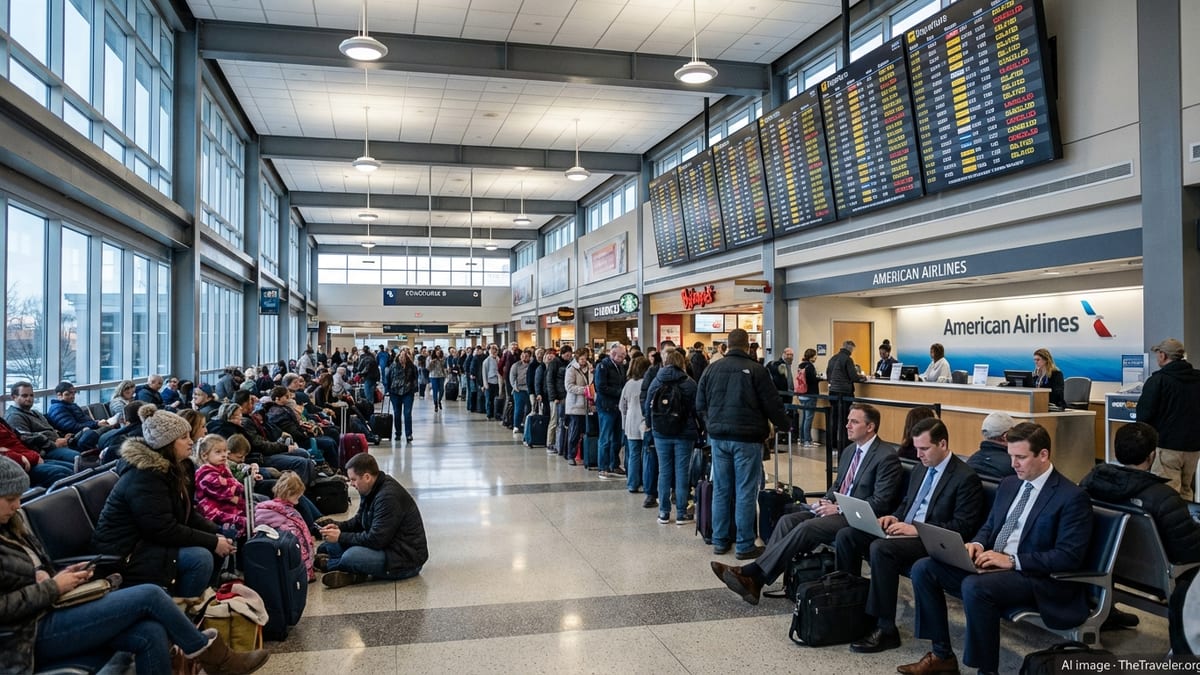
Disruptions Mount at a Key Southeastern Hub
The wave of delays and cancellations at Charlotte Douglas International Airport comes at a time when the hub is still recovering from repeated winter weather blows and operational strains that have rippled through airline networks in recent weeks. Screens across the terminal showed a sea of yellow and red on Tuesday, with departure times pushed back in rolling increments that left travelers uncertain about when they would finally take off.
According to real-time tracking data, 231 flights were delayed and 16 canceled, affecting a broad mix of domestic and regional routes. While the numbers are far smaller than the historic disruptions seen during recent winter storms, they created a fresh bottleneck for thousands of passengers who had expected operations to have normalized by mid-February.
Charlotte Douglas is one of the nation’s busiest airports and a critical connecting point for travelers throughout the Southeast and East Coast. Even a few dozen cancellations and a couple hundred delays can cascade quickly, overwhelming gate space, stressing ground crews and leaving travelers packed into concourses with limited information about what comes next.
For many stranded passengers, the frustration was sharpened by a sense of déjà vu. In late January and early February, Charlotte saw days in which hundreds of flights were scuttled amid heavy snow, ice and extreme cold, with disruptions spilling into subsequent days as airlines worked to reposition aircraft and crews. Tuesday’s troubles served as another reminder of how fragile the system can be when conditions deteriorate or schedules become misaligned.
Multiple Airlines Hit as Delays Ripple Across Networks
The latest disruptions at Charlotte did not spare any major carrier, with American Airlines, Delta Air Lines, United Airlines, Spirit Airlines and Southwest Airlines all seeing delayed departures or arrivals. As Charlotte is a significant hub for American and an important station for several other carriers, irregular operations in the city can ripple across the broader U.S. network.
Passengers on American reported seeing their flights pushed back in stages, sometimes by 30 to 45 minutes at a time, as crews waited on aircraft arriving late from other cities. Delta and United customers described similar issues on connecting flights, particularly those arriving from or bound for other hubs that have faced their own bouts of winter weather or congestion this month.
Low-cost carriers were not spared. Spirit and Southwest travelers faced long lines at customer service counters and crowded gate areas as aircraft turned later than scheduled and gate assignments were shuffled to accommodate the evolving situation. With slim scheduling buffers and high aircraft utilization, any delay on these carriers can quickly affect multiple flights as the day wears on.
Airline representatives on site emphasized that safety remains the top priority and that they were working within the constraints created by aircraft availability, crew duty-time limits and air traffic management. However, those explanations did little to ease the immediate disruption for families, business travelers and international passengers whose itineraries depended on timely connections through Charlotte.
Lingering Impacts from a Punishing Winter Season
The strain at Charlotte Douglas cannot be separated from the broader context of a punishing winter for U.S. air travel. In late January, an ice storm and subsequent winter systems swept across North Carolina and much of the East, prompting ground stops and the cancellation or delay of thousands of flights nationally over several days. Charlotte, along with other major hubs, experienced some of the heaviest disruption.
Airport and airline operations teams have spent much of February working through the lingering effects. Crews and aircraft fell out of their usual rotations during the storms, and rebuilding those schedules has coincided with continuing episodes of adverse weather and operational pinch points in other regions. As a result, even on days when local conditions are relatively calm, minor issues in one part of the network can trigger noticeable problems in Charlotte.
The airport itself has highlighted the scale of the response required to keep operations running during and after the recent storms, including large snow-removal teams, extensive deicing and adjusted ground transportation services. While conditions at the airfield have largely returned to normal, the latest day of 231 delays and 16 cancellations underscores that recovery is not always linear for complex aviation systems.
Travel analysts note that Charlotte has consistently ranked among the U.S. airports with higher percentages of disrupted flights during intense weather and peak travel periods. The combination of heavy hub traffic, densely scheduled banks of arrivals and departures, and its role as a connector for both leisure and business routes means even modest schedule shocks can produce outsized passenger impacts.
Passengers Face Long Waits, Missed Connections and Packed Terminals
Inside Charlotte Douglas on Tuesday, travelers confronted familiar scenes: snaking lines at airline counters, clusters of passengers around gate podiums and seating areas filled beyond capacity. For many, the biggest challenge was uncertainty. With delays often updated in short increments, passengers found it difficult to decide whether to stay at the gate, seek food and rest elsewhere in the terminal, or attempt to rebook through another city.
Families traveling with children juggled snacks, entertainment and nap schedules while watching departure boards that seemed to change by the minute. Business travelers worried about missing critical meetings or losing a workday while sitting on the concourse floor. International travelers, in particular, faced complex rebooking challenges if they missed long-haul connections through other hubs.
Some passengers who had already endured disruptions in previous weeks expressed fatigue and frustration. Several spoke of making backup plans, such as renting cars for long drives when delays stretched toward multiple hours, or splitting up itineraries over multiple days to reach their final destinations. Others tried to remain philosophical, citing winter weather and widespread operational strain as realities of modern travel during peak seasons.
Throughout the terminal, airport volunteers and staff attempted to direct passengers to updated information screens and encourage them to stay in close contact with their airlines through mobile apps and text alerts. Still, in an environment where information flows quickly but circumstances change even faster, many travelers felt they were perpetually one step behind the latest update on their own flights.
Airport and Airlines Work to Stabilize Operations
Behind the scenes, airport operations teams and airline control centers focused on stabilizing the schedule and preventing the current wave of delays from spilling into the next day. That work included coordinating gate usage, prioritizing flights with tight connection banks, and ensuring that aircraft were positioned for early-morning departures that are critical to setting the tone for the rest of the schedule.
Airlines also had to carefully manage flight crews, many of whom are already near duty-time limits after weeks of intensive winter operations. When crews time out because they have reached maximum allowable hours, flights can be delayed further while replacements are located and dispatched. This dynamic is particularly acute at hub airports like Charlotte, where multiple banks of flights converge within narrow time windows.
Charlotte Douglas officials reiterated standard guidance urging travelers to arrive early, monitor flight status frequently and work directly with their airlines on rebooking options. Airport communications have emphasized that, while the facility itself remains open and fully operational, actual flight schedules are largely determined by the airlines and subject to rapid change when network disruptions occur.
By late in the day, some airlines reported modest improvement in on-time departures as they cleared earlier backlogs, though scattered delays continued into the evening. The focus quickly turned to preventing stranded aircraft and curfews from creating a new round of disruptions on early departures the following morning, when another wave of travelers is expected to pass through the airport.
What Travelers Can Do When Delays Stack Up
For passengers caught in Tuesday’s disruptions, the immediate concern was simply getting where they needed to go. Travel advisers say that in situations like those at Charlotte, a few proactive steps can make a significant difference in minimizing stress and delays, even when the broader situation is largely beyond passengers’ control.
The first is to rely on airline mobile apps and text alerts as the primary source of information. These tools often update more quickly than terminal displays or gate announcements and can sometimes offer self-service rebooking options without the need to stand in long lines at customer service counters. For travelers with tight connections, apps can also display alternative routings through other hubs that may still reach the destination on the same day.
Second, travelers are encouraged to anticipate bottlenecks when disruptions are widespread. That means allowing extra time for security screening, food service and restrooms, all of which can see heavier usage when large numbers of passengers are stuck in the terminal for extended periods. Carrying snacks, medications and key personal items in a small bag that stays with the passenger at all times can help if gate changes or sudden boarding calls occur.
Finally, experts stress the value of flexibility in routing and timing. During periods of extensive delays, passengers may find it easier to accept an earlier or later flight through a different connecting city, or even to shift travel to the following day if schedules permit. While not an ideal solution for everyone, this can sometimes lead to a smoother overall journey than waiting out a heavily disrupted bank of flights at a single hub.
Charlotte’s Role in a Volatile Travel Landscape
The latest round of delays and cancellations at Charlotte Douglas International Airport illustrates both the strengths and vulnerabilities of a major U.S. hub. On one hand, the airport’s extensive route network, infrastructure investments and strong airline partnerships allow it to move large numbers of people efficiently on most days. On the other, that same scale can magnify the effects of operational shocks, turning a few dozen troubled flights into a daylong challenge for thousands of travelers.
As winter continues, travelers using Charlotte are likely to see further periods of strain whenever storms, equipment issues or air traffic constraints intersect with already tight schedules. Industry observers expect airlines and the airport to keep refining their response playbooks, including better communication, more resilient crew planning and faster recovery tactics once conditions improve.
For now, the 231 delays and 16 cancellations logged on Tuesday serve as another snapshot of a volatile travel landscape in which even a single day’s statistics represent only part of the story. Behind each delayed or canceled flight are the individual journeys of passengers trying to make it to family events, work obligations, medical appointments or long-planned vacations, all suddenly at the mercy of a complex system under strain.
How quickly Charlotte Douglas and its airline partners can absorb this latest disruption and return to more stable operations will be closely watched by travelers, aviation analysts and local businesses alike. With the airport serving as a vital economic engine for the region, keeping flights moving reliably is about more than convenience; it is central to the city’s role in the broader national and international travel network.