

More news on this day
Hundreds of travelers at Houston’s George Bush Intercontinental Airport (IAH) faced hours-long disruptions today as flight-tracking data showed at least 138 delays and three cancellations, rippling across United Airlines, American Airlines, Delta Air Lines, and several smaller carriers.
Get the latest news straight to your inbox!
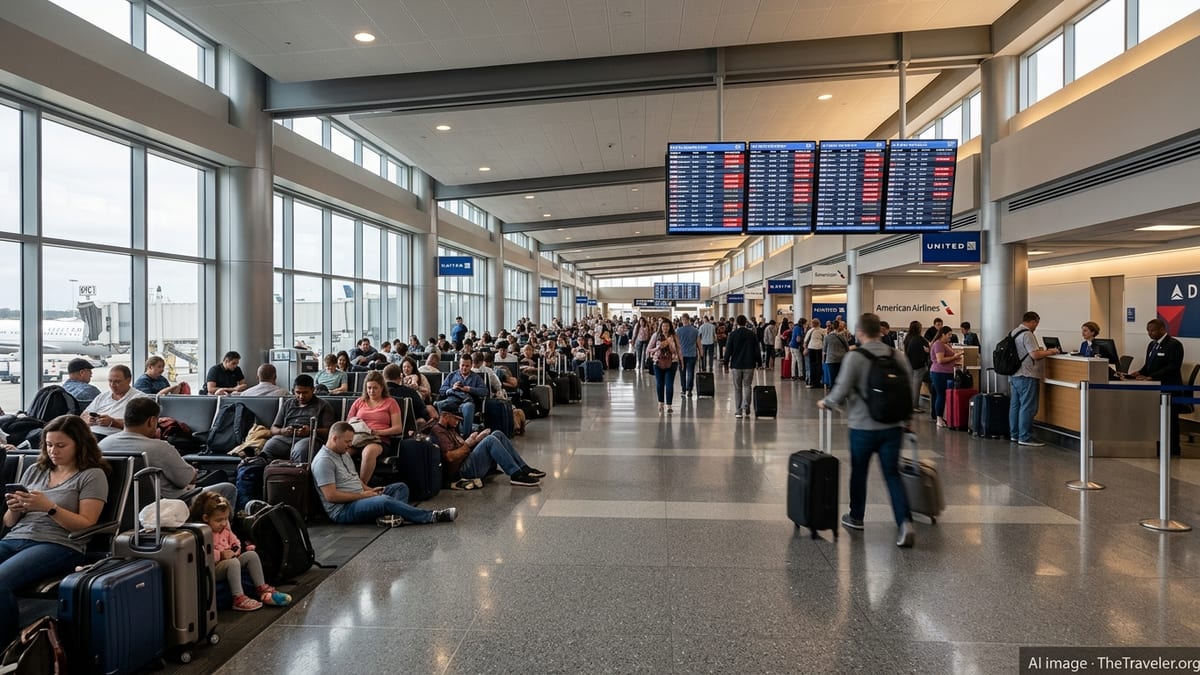
Wide Ripple Effect Across Major U.S. Carriers
Publicly available flight-status boards showed the bulk of delays concentrated among the largest operators at IAH, including hub carrier United Airlines alongside American Airlines and Delta Air Lines. While the number of outright cancellations remained relatively low at three, the volume of schedule changes produced rolling knock-on effects across the domestic network.
The delay tally, surpassing 130 affected departures and arrivals, meant that even flights still operating were frequently pushed back well beyond their original departure times. Passengers connecting through Houston reported missed onward journeys, extended waits in crowded concourses, and rebookings onto later services throughout the day.
Regional partners feeding traffic into the big three carriers were also affected, with smaller jets operating to nearby Texas, Gulf Coast, and Southern hubs experiencing late turns and tight crew scheduling. The result was a patchwork of minor and major disruptions that together left many travelers stranded in terminals or forced to consider overnight stays.
Published aviation data indicated that delays were not limited to a single airline, suggesting a combination of local operational pressures at IAH and broader congestion in the national airspace system. This pattern is consistent with previous disruption days in Houston, where even a modest number of cancellations can mask a much larger volume of delayed operations.
Operational Strain at a Major United Airlines Hub
George Bush Intercontinental serves as one of United Airlines’ key domestic and international hubs, and any disruption at IAH quickly magnifies across the carrier’s network. Reports from recent weeks have highlighted how ground stops and weather-related hold programs at Houston can rapidly escalate from short delays to multi-hour waits and missed connections.
On days when thunderstorms or air traffic control constraints slow operations, departures bound for IAH are sometimes held at origin airports, while arriving flights may be sequenced into extended holding patterns or diverted to alternate fields. That dynamic adds complexity for airline planners who must reposition aircraft and crews while simultaneously managing customer rebookings.
Industry data on delay minutes at major U.S. hubs shows that Houston already carries a high share of unscheduled, day-of-travel disruptions compared with planned or “scheduled” buffer time. This means that once irregular operations begin, airlines have limited slack built into their schedules to recover quickly, and a few hours of disruption can translate into a full day of residual delays.
Travel forums and recent passenger accounts from IAH describe concourses, particularly those focused on regional operations, as frequently congested when irregular operations strike. Full gate areas, crowded customer service lines, and limited seating can amplify stress for travelers facing uncertain departure times.
Passenger Experience: Long Lines and Missed Connections
Travelers caught up in today’s disruptions reported long queues at check-in counters, security checkpoints, and airline service desks. With dozens of flights posting new departure times, many passengers scrambled to secure updated itineraries, hotel vouchers in some cases, or meal arrangements while they waited for new information.
For those with tight connections, even a short initial delay at IAH can result in missed onward flights to destinations across the United States, Latin America, and Europe. With 138 flights reportedly running late, many travelers had little choice but to accept significant schedule changes and, in some cases, unexpected overnight stays away from their final destinations.
Parents traveling with children, international visitors unfamiliar with U.S. hub airports, and passengers with limited mobility often face added strain in such situations. Extended waits at the gate or in customer service lines, combined with uncertainty over new departure times, can create a challenging environment, particularly when disruptions stretch from morning into the evening.
Social media posts and discussion-board reports from previous disruption days in Houston highlight recurring themes: lengthy security lines during peak hours, crowded gate areas with few open seats, and limited access to power outlets for charging devices. Today’s wave of delays appears to have echoed many of those same concerns for passengers moving through IAH.
Weather, Congestion, and Systemic Vulnerabilities
While the exact mix of causes behind today’s disruptions at IAH remains varied, publicly available aviation and weather data frequently point to a combination of thunderstorms, low visibility, and air traffic control restrictions as key triggers in the Houston area. When storms approach from multiple directions, spacing requirements between aircraft increase, lowering airport throughput and creating backlogs on both arrivals and departures.
Once an airport like IAH begins to fall behind its scheduled arrival and departure rate, airlines must make rapid decisions on whether to hold, divert, or cancel select flights to keep operations manageable. Even a small number of cancellations may be used strategically to free up aircraft and crews, allowing the remainder of the schedule to proceed at a reduced, but more predictable pace.
Broader congestion in the national airspace can also play a role. If nearby hubs experience delays, aircraft bound for Houston might depart late, compressing already tight connection windows. Similarly, ground delays implemented for traffic flowing into the Texas region can extend disruptions long after local weather has improved.
Transportation analyses of delay patterns at U.S. airports show that Houston’s heavy dependence on connecting traffic amplifies vulnerability. A delay in one part of the network can cascade through multiple banks of flights at IAH, affecting passengers who never intended to start or end their trip in Houston but rely on the airport as a connecting waypoint.
What Travelers Can Do During Disruption Days at IAH
Passenger advocacy groups recommend that travelers passing through Houston build extra time into their itineraries, particularly during seasons when thunderstorms are common along the Gulf Coast. A longer layover can provide a buffer when banks of flights experience knock-on delays, reducing the risk of missed connections.
Many airlines now encourage customers to monitor real-time flight status through mobile apps and airport displays, which can sometimes show gate changes or new departure times before public address announcements reach the entire terminal. Travelers facing lengthy waits may also find it helpful to track seat availability on alternate flights to their destination, as same-day standby or rebooking options can open up when other passengers adjust their plans.
For those already at the airport when disruption hits, carrying essentials such as medications, chargers, snacks, and a change of clothes in carry-on baggage can make unplanned waits more manageable. In cases where overnight stays become unavoidable, early engagement with airline customer service can improve the chances of securing accommodation or meal support where policies allow.
Today’s wave of delays at Houston Bush Intercontinental serves as another reminder of how quickly conditions at a major hub can change. For frequent travelers and occasional flyers alike, planning ahead for potential interruptions has become an essential part of navigating one of the country’s busiest connecting airports.