

More news on this day
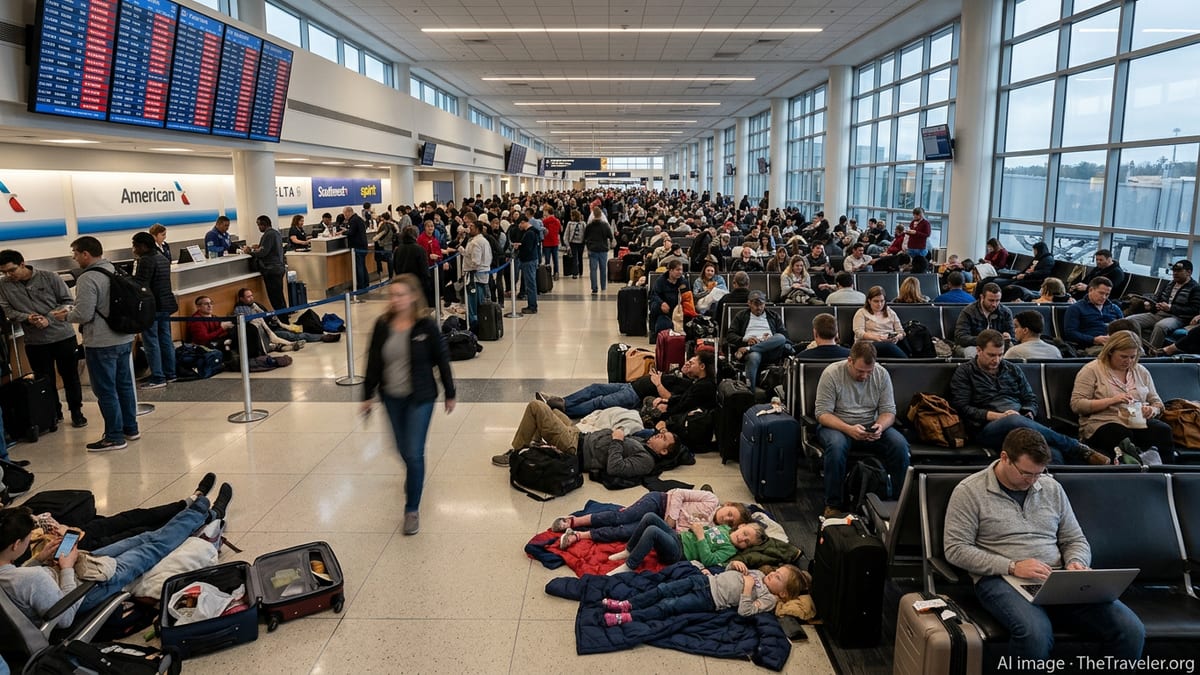
Travelers across the United States faced a difficult start to the week as widespread disruptions at Charlotte Douglas International Airport led to 378 flight cancellations and 372 delays on Monday, snarling connections on American Airlines, Delta Air Lines, Spirit Airlines and other major carriers serving cities such as New York, Los Angeles, Miami and Atlanta.
Get the latest news straight to your inbox!
Severe Weather and System Strains Converge on a Major Hub
Publicly available flight-tracking data for Monday, March 16, indicates that Charlotte Douglas International, one of the nation’s busiest connecting hubs, experienced a sharp spike in cancellations and late departures as storms swept across large parts of the eastern United States. The disruption at Charlotte compounded an already challenging day for domestic air travel, with delays and cancellations building at several large airports.
Reports from national outlets describe a powerful weather system affecting the Midwest and East Coast, with high winds and heavy precipitation contributing to ground stops, reroutes and slower operations at multiple hubs. When a hub airport experiences sustained periods of reduced arrival and departure capacity, cancellations can climb quickly as airlines reshuffle schedules, reposition aircraft and attempt to preserve later banked departures.
Operational data commonly used by the aviation industry suggest that Charlotte’s role as a tightly banked connecting hub increases its sensitivity to such shocks. When one “bank” of arrivals is significantly delayed, the knock-on effect can ripple into subsequent departure waves, leaving passengers with missed connections, longer layovers and in many cases overnight disruptions.
American, Delta, Spirit and Others Grapple With Cascading Disruptions
According to widely used flight-status dashboards, the 378 cancellations and 372 delays at Charlotte on Monday affected aircraft operated by multiple carriers, led by American Airlines, which maintains a major hub at the airport. Delta Air Lines, Spirit Airlines and several regional affiliates also saw schedules at Charlotte disrupted, along with flights by other U.S. carriers routing through the city.
Because Charlotte functions as a central node in American’s domestic network, cancellations on key banked routes can quickly affect passengers whose final destinations are far from North Carolina. A cancelled departure from Charlotte to a smaller regional city may originate as an inbound flight from a large market such as New York or Miami, creating a chain of schedule adjustments as aircraft and crews are reassigned.
Publicly available federal transportation statistics show that even in normal operating conditions, major U.S. airlines experience a measurable percentage of delayed and cancelled flights each year for reasons ranging from weather and air traffic control constraints to maintenance, crew availability and airport congestion. On days when severe weather intersects with high seasonal demand, those baseline vulnerabilities can be magnified, as appears to have happened at Charlotte.
Ripple Effects for New York, Los Angeles, Miami, Atlanta and Beyond
Flight boards at major coastal and Sun Belt airports reflected the knock-on impact of Charlotte’s rough day. Online tracking services showed delayed and cancelled flights on routes linking Charlotte with New York’s major airports, Los Angeles, Miami and Atlanta, among other domestic destinations, as carriers attempted to recover their schedules.
Travelers beginning their journeys in cities like New York and Los Angeles encountered longer-than-expected ground times or rolling departure estimates on flights bound for Charlotte, sometimes missing onward connections as a result. Passengers attempting to reach Florida and Gulf Coast destinations also reported disruptions as aircraft arriving late from Charlotte failed to make their scheduled turn times.
The timing of the disruptions has added pressure to an already busy travel period, with spring break trips and early March leisure travel boosting passenger volumes across the country. Publicly available coverage notes that this seasonal surge has coincided with broader strains in the aviation system, including staffing challenges in some parts of the air traffic control and airport security workforce.
Inside the Passenger Experience at Charlotte Douglas
Firsthand accounts shared on social platforms and travel forums on Monday described crowded concourses, long customer-service lines and uncertainty over rebooking options at Charlotte Douglas International. Several travelers reported missed connections by small margins, followed by rebookings that pushed their arrival into the following day as remaining seats on later flights quickly filled.
Other posts detailed families and solo travelers who spent much of the day in the terminal while waiting for updates on repeatedly delayed departures. Some described receiving intermittent schedule changes in 30-minute increments before flights were ultimately cancelled overnight, a pattern that frustrated passengers trying to decide whether to seek hotel rooms, request vouchers or attempt alternative routings.
Airport layout and hub structure can amplify the stress of such disruptions. Charlotte’s design as a large, linear concourse complex requires some passengers to cover long distances between far-flung gates, particularly when tight connection windows are compressed further by delays. When multiple banked departures are rescheduled at once, circulation areas can become congested as hundreds of passengers converge on new gates simultaneously.
What Travelers Can Do When a Key Hub Stalls
Consumer advocates often point to days like Monday at Charlotte as a reminder for travelers to build resilience into their itineraries whenever possible. That can mean selecting longer connection times through busy hubs, booking earlier departures that offer more rebooking options later in the day, and monitoring weather forecasts along connecting corridors in the days leading up to travel.
Public guidance from aviation and consumer agencies notes that U.S. regulations provide specific protections in limited situations, such as lengthy tarmac delays, while many other aspects of delay and cancellation management are governed by individual airline policies. These carrier policies typically address rebooking rules, hotel or meal assistance, and options for refunds or travel credits when trips are severely disrupted.
On high-disruption days at a hub like Charlotte, travelers may find it helpful to use multiple channels at once, including airline apps, airport information displays and staffed customer-service points, to identify the fastest viable alternatives. Same-day changes through nearby airports or different connection points can sometimes restore fragmented itineraries, although capacity may be constrained when hundreds of passengers are affected simultaneously.
With Charlotte Douglas International playing such a central role in American Airlines’ network and serving as a significant node for other carriers, travel analysts expect that operational performance at this single airport will continue to have outsized influence on the reliability of domestic journeys linking major cities across the United States.