

More news on this day
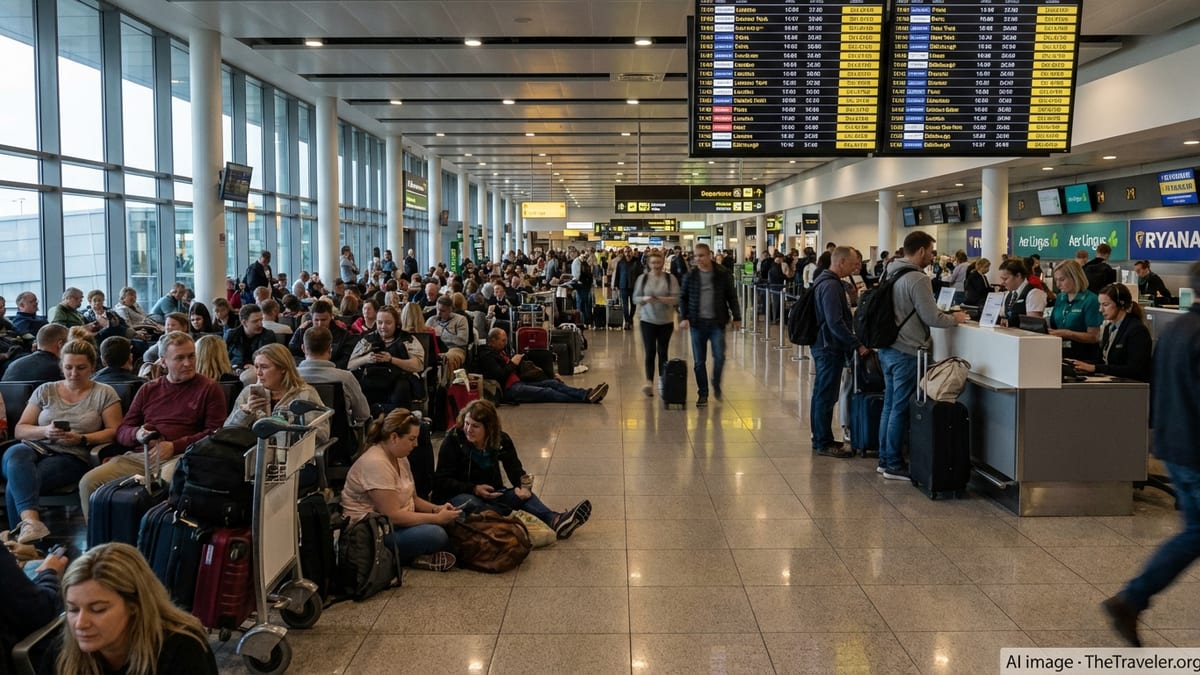
Hundreds of passengers were left stranded at Dublin Airport on Sunday as 123 flights were delayed and one was cancelled, triggering knock-on disruption for Aer Lingus, Ryanair, British Airways and other carriers on key routes linking Dublin with London, Paris, New York and Edinburgh.
Major Hub Brought to a Near Standstill
Dublin Airport, one of Europe’s busiest gateways and the primary international hub for Ireland, saw operations slow dramatically as a wave of delays spread across its morning and afternoon schedules. The disruption affected a mix of short- and long-haul services, creating growing bottlenecks in Terminal 1 and Terminal 2 as the day progressed.
Airport departure boards showed a rising number of flights pushed back by anywhere from 45 minutes to several hours. While only one service was formally cancelled, aviation analysts noted that the scale of delays had an impact comparable to a multi-flight grounding event, particularly for passengers with onward connections.
The shock to operations highlighted the sensitivity of Dublin Airport’s tightly timed schedule, where average turnaround times are short and aircraft are rostered for multiple rotations per day. Once early services were delayed, crews, aircraft and gates quickly fell out of sync, magnifying the disruption into the afternoon and early evening.
As the backlog built, airport staff and airline ground handlers were deployed to manage growing queues at security, check-in and customer service desks. Announcements urged passengers to remain patient while operations teams worked through the disrupted schedule flight by flight.
Passengers Face Missed Events, Lost Hotel Nights and Frayed Tempers
For travellers, the cumulative impact was immediate and personal. Families heading from Dublin to London and Edinburgh for weekend breaks reported missing hotel check-in times and pre-booked events, while business travellers en route to Paris and New York scrambled to rearrange meetings and ground transport at their destinations.
Long-haul passengers were among the hardest hit, with delays to transatlantic departures creating uncertainty over arrivals into New York and onward domestic connections across the United States. With aircraft already heavily booked at this busy time of year, rebooking options were limited, forcing some travellers to accept next-day departures or alternative routings via London or other European hubs.
Inside the terminals, food courts, cafés and seating areas filled up as passengers waited for updates. Many took to social media to share images of crowded departure gates and long customer service queues, complaining of limited information and conflicting messages from different airline desks.
While some travellers praised individual staff members for their efforts to provide updates and assistance, frustration was evident among those facing missed family occasions, holiday departures and once-in-a-lifetime trips. The sight of a single cancellation amid a sea of delays did little to reassure passengers worried their own flight could be next to be scrubbed from the departures board.
Multiple Airlines and Key Routes Caught in the Disruption
The disruption reached across Dublin Airport’s airline mix, with flag carrier Aer Lingus and low-cost operator Ryanair particularly exposed due to their large presence at the hub. British Airways services linking Dublin with London also suffered significant schedule slippages, while smaller carriers reported knock-on impacts as they competed for constrained gate and runway slots.
Short-haul routes to London and Edinburgh, usually among the most frequent and reliable connections from Dublin, saw rolling delays throughout the day. Passengers scheduled on early-morning departures often found themselves leaving around lunchtime instead, compressing the rest of the day’s rotations and affecting crew duty limits.
Services to major European hubs such as Paris were also disrupted, raising concerns for travellers with tight onward connections to other destinations across the continent, Africa and Asia. At the same time, delayed transatlantic flights to New York threatened to displace crew rosters and aircraft positioning for subsequent long-haul services in the following 24 hours.
Industry observers noted that the event underlined how interconnected modern airline networks have become. A delay to a narrow-body aircraft on a short intra-European leg can ripple outward, affecting a long-haul rotation hours later and hundreds or even thousands of kilometres away.
Operational Strain at One of Europe’s Busiest Airports
The incident once again placed a spotlight on operational pressures at Dublin Airport, which in recent years has handled record passenger volumes and sought to balance growth with constraints on infrastructure and environmental limits. As traffic has rebounded strongly, even minor operational shocks have been capable of causing disproportionate disruption.
Airport managers have argued that the hub needs regulatory flexibility and continued investment in runway, taxiway and terminal capacity to cope with sustained growth in passenger numbers. Delays such as Sunday’s, they say, demonstrate how limited buffers remain in the system once schedules are disrupted by weather, technical issues or wider air traffic congestion across Europe.
Critics, however, contend that staffing levels and resourcing at key pressure points such as security screening, baggage handling and stand allocation remain too tight. They argue that repeated episodes of severe congestion, missed flights and long queues indicate deeper structural vulnerabilities that have yet to be fully resolved.
For passengers on the day, such debates were largely academic. Many simply wanted clearer, faster information and greater certainty about whether their flights would depart, how long they might be delayed and what support would be available if they missed onward connections or arrived late at their destinations.
Knock-on Effects Felt in London, Paris, New York and Edinburgh
The ripple effects of Dublin’s disruption were felt far beyond Ireland. At London’s main airports, arrival boards showed inbound flights from Dublin landing well behind schedule, forcing adjustments to gate allocations and turnaround plans. Passengers waiting in London for return flights to Dublin faced their own delays as aircraft and crews arrived late.
In Paris, late-arriving services from Dublin threatened to upset carefully balanced connection windows for passengers heading onwards to other European and long-haul destinations. Ground staff worked to reroute travellers and issue updated boarding passes as missed connections mounted.
Across the Atlantic in New York, transatlantic arrivals out of schedule complicated immigration processing and ground transport plans. Passengers emerging from delayed Dublin flights faced congested arrival halls, with some missing pre-booked rail and bus connections into the city and beyond. Hotels near major airports reported a rise in last-minute bookings from travellers forced to stay overnight after missing onward flights.
Edinburgh, which maintains strong business and leisure links with Dublin, also reported late inbound services and delays on return journeys, a reminder that even regional routes are not immune to wider disruption once a major hub experiences operational turmoil.
Airlines Balance Recovery Efforts With Passenger Rights
As delays accumulated, airlines operated on two parallel fronts: restoring their schedules and responding to a surge in customer-service demands. Operations control centres worked flight by flight to re-sequence departures, reassign aircraft and, where possible, bring in spare capacity to close gaps created by the disruption.
At the same time, call centres, social media teams and airport-based staff handled a wave of refund and rebooking requests. Under European passenger rights regulations, travellers whose flights are significantly delayed or cancelled may be entitled to care, assistance and in some circumstances financial compensation, depending on the cause and length of disruption.
Passengers in Dublin reported varying experiences. Some were proactively rebooked on later flights, provided with meal vouchers and offered hotel accommodation where overnight stays were unavoidable. Others said they struggled to reach airline representatives or were left unsure about their eligibility for support, particularly in cases where delays were attributed to factors beyond the carrier’s direct control.
Consumer advocates reiterated long-standing calls for clearer communication of passenger rights and more transparent explanations of delays and cancellations. They argue that while airlines face genuine operational challenges, information gaps often exacerbate passenger frustration and erode trust.
Calls for Better Resilience as Travel Demand Stays High
The scenes at Dublin Airport fed into a broader European conversation about the resilience of air travel networks amid persistent high demand. In recent seasons, airports and airlines have struggled at times to keep operations running smoothly during peak travel periods, with staffing shortages, weather events and air traffic control constraints all contributing to repeated bouts of disruption.
Aviation analysts suggest that airports like Dublin, which serve as critical gateways for both short-haul and long-haul traffic, need greater operational headroom to absorb shocks. That could include more flexible slot management, enhanced staffing at known bottlenecks, and investment in technology to speed up decision-making when problems arise.
However, such measures must be balanced against environmental commitments and community concerns about noise and emissions, particularly as airports seek approval for growth in passenger numbers. This tension is especially acute in countries where aviation expansion is closely scrutinised by regulators and local residents.
For regular travellers, the focus remains more immediate. Many now build extra buffer time into itineraries, especially when connecting via busy hubs, and keep a closer eye on real-time flight information and weather patterns that could threaten to derail plans.
What Travellers Can Do When Disruption Hits
The latest disruption at Dublin Airport is a reminder that even well-planned journeys can quickly unravel when operations go awry. Travel experts recommend that passengers check their flight status repeatedly in the hours before departure, using both airline apps and airport information screens where possible.
Booking longer connection times, particularly when transferring between separate tickets or carriers, can provide valuable insurance against delayed departures. Where schedules allow, choosing earlier flights in the day can also offer more fallback options if disruption strikes.
Passengers are advised to familiarise themselves with their rights under European and international aviation rules and to keep receipts for any additional expenses incurred as a result of delays or cancellations. Travel insurance with robust disruption cover can help mitigate financial losses, although policies vary and travellers are urged to review terms carefully.
Above all, seasoned flyers emphasise the importance of flexibility and patience. As Sunday’s events in Dublin demonstrated, even a single cancelled flight and a cluster of significant delays can cascade through a tightly interconnected network, affecting airports and passengers far beyond the original point of disruption.