

More news on this day
Hundreds of passengers have been left stranded at airports in Paris, Marseille and Lyon after a fresh wave of disruption caused 192 flight delays and 43 cancellations affecting Lufthansa, Ryanair, Qatar Airways and several other international carriers, according to updated operational data from French and European aviation monitors on Thursday.
Get the latest news straight to your inbox!
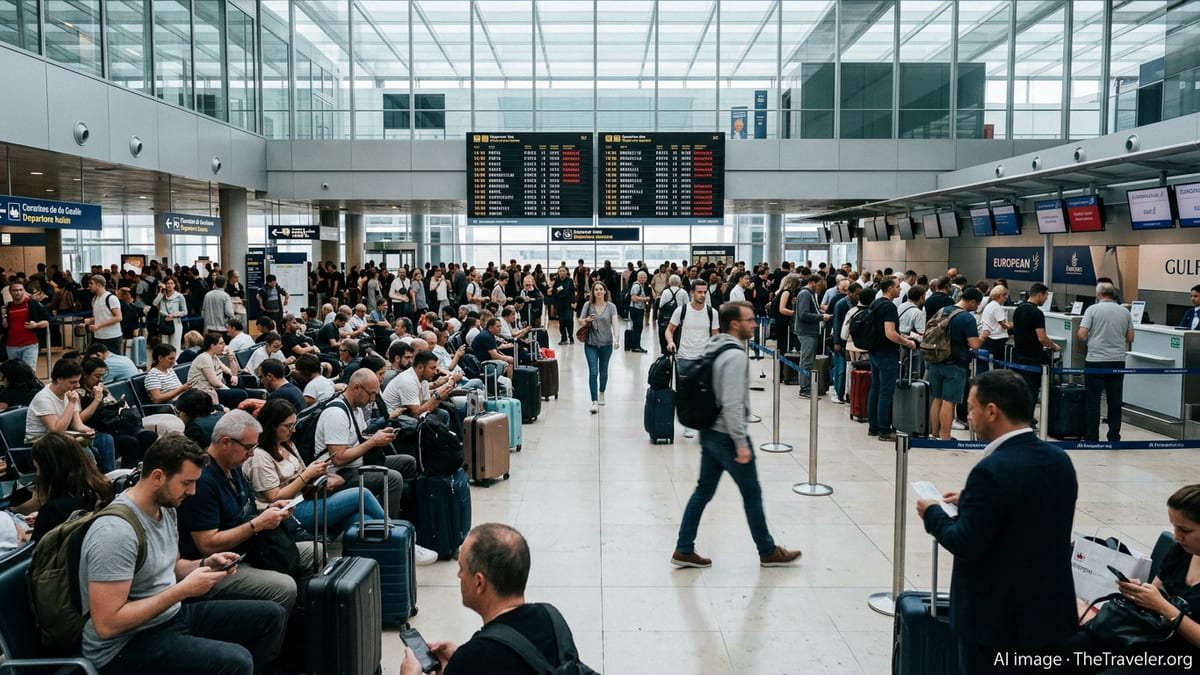
Major French Hubs Grapple With Widespread Disruption
The latest operational update points to significant disruption across France’s busiest air corridors, with Charles de Gaulle and Orly in the Paris region, Marseille Provence and Lyon–Saint Exupéry among the hardest hit. While the total number of affected flights is modest compared with continent-wide meltdowns earlier in the year, the concentration of delays and cancellations at these major hubs has left departure halls crowded and connection banks severely stretched.
Airlines including Lufthansa, Ryanair and Qatar Airways have reported schedule irregularities that cascade through their European networks when problems arise in French airspace. Passengers bound for long haul destinations via these carriers have been particularly exposed, with some forced to rebook overnight or reroute through alternative hubs in Germany, Italy or the Gulf.
Ground staff at the affected airports described a familiar pattern of rolling delays, with departure boards repeatedly revised as aircraft and crews struggled to get back in sequence. Long queues formed at check in and transfer desks, while airport volunteers distributed water and basic refreshments in the busiest terminals.
Although French authorities have not pointed to a single dramatic trigger such as severe weather or a nationwide shutdown, the latest figures underline how even limited constraints on airspace or staffing can quickly snarl operations at airports that already run close to capacity during peak travel periods.
Airlines Caught Between Operational Pressures and Passenger Anger
For carriers, the disruption highlights the delicate balance between tightly timed schedules and growing structural pressures, from staffing shortages to congested airspace. Lufthansa and Ryanair have both been operating intense European rotations this winter, which leaves little margin when a single aircraft or crew pair falls out of position. Qatar Airways, reliant on precise banked connections at its Gulf hub, faces knock-on effects when westbound departures from France leave late or are cancelled outright.
Airport observers noted that several of the delays in Paris, Marseille and Lyon stemmed from aircraft arriving late from earlier disrupted legs elsewhere in Europe. In practice this means that a weather issue, technical inspection or crew rostering problem in another country can result in missed connections and overnight stays for passengers who have never left French territory.
Customer frustration has been compounded by inconsistent information across channels. Some travelers reported that airline apps still showed flights as on time even as departure boards in terminals flipped to delayed or cancelled, leaving them unsure whether to proceed to security or begin rebooking. Others queued for hours at service desks only to be directed back to digital platforms that were struggling to keep pace with rapid schedule changes.
Industry analysts say these tensions are likely to persist as airlines try to rebuild profitability while operating with leaner staffing levels and equipment reserves. In that context, irregular operations days like the one now hitting France expose the fragility of recovery across the European aviation system.
Stranded Travellers Face Long Queues, Limited Options
For passengers on the ground, the human impact of 192 delayed and 43 cancelled flights is measured in missed weddings, lost workdays and disrupted holidays. In Paris, families were seen camped out on terminal floors with children sleeping on jackets and carry on bags, while in Marseille and Lyon long lines snaked from airline counters as travelers waited to be reprotected on later departures.
Several travelers described being handed meal vouchers that were difficult to use due to long lines at airport restaurants, or finding that nearby hotels had already sold out by the time they received confirmation of an overnight stay. Others faced the added stress of expiring visas or tight onward connections by rail and ferry, especially those headed for Mediterranean cruise departures and ski resorts in the Alps.
Passengers with flexible itineraries fared better, with some electing to accept rerouting through secondary hubs or even overnight train journeys rather than waiting for the next available direct flight. However, for those traveling with checked baggage, switching airlines or modes of transport was often complicated by the risk of suitcases going astray mid journey.
Consumer groups in France and across the European Union reiterated that travelers should retain boarding passes, booking confirmations and receipts for any out of pocket expenses, noting that these documents are often essential when seeking reimbursement or compensation once operations stabilize.
Regulatory Rights and What Passengers Can Claim
The disruption in France falls squarely under the scope of European Union passenger protection rules, which entitle eligible travelers to assistance and, in many cases, financial compensation. Under Regulation EC 261, passengers on flights departing from EU airports, or on EU carriers arriving into the bloc, may be entitled to fixed sum payments depending on flight distance and length of delay when the cause is within the airline’s control.
In practical terms, this means that many of those stranded in Paris, Marseille and Lyon on affected flights operated by Lufthansa, Ryanair or other covered carriers should be offered meals, refreshments and hotel accommodation when necessary, in addition to rebooking at the earliest opportunity. Where the disruption is not caused by extraordinary circumstances such as sudden airspace closures due to security threats, passengers may also be able to file for compensation once they reach their final destination.
Travel rights specialists advise that passengers carefully note the exact arrival time at their final destination, as eligibility thresholds are typically calculated on arrival delay rather than departure time. Keeping contemporaneous records, including photos of departure boards and written notes of information given at the gate, can help support later claims in cases where airline explanations evolve after the fact.
While the claims process is rarely swift, experts say that persistent travelers who understand the framework of EU passenger rights stand a better chance of recovering at least some of the costs associated with missed nights of accommodation, additional transport and lost pre booked services.
What Travellers Should Do If Flying Via France Next
With French hubs playing such a central role in European and global connectivity, aviation experts recommend that anyone traveling through Paris, Marseille or Lyon in the coming days build additional resilience into their plans. That starts with checking flight status frequently before leaving for the airport, using both airline apps and airport departure boards, and signing up for text or email alerts whenever possible.
Passengers with critical same day connections, particularly to long haul flights, are advised to allow wider buffers than usual in case today’s disruption triggers a lingering knock on effect. Where possible, booking earlier departures or avoiding the tightest legal connection times can provide valuable breathing room if an inbound leg runs late.
Travel insurance that explicitly covers delays, missed connections and additional accommodation can also soften the financial blow of irregular operations. Policyholders should review terms carefully, as some products exclude disruptions caused by strikes or certain types of air traffic control constraints, while others provide generous allowances for meals and hotels once a specified delay threshold has been reached.
Finally, both airlines and passenger advocates stress the importance of patience and preparedness. Carrying essential medications, chargers, a change of clothes and basic toiletries in hand luggage can make an unexpected overnight stay more bearable, while a clear understanding of one’s rights can help stranded travelers navigate the stressful hours that follow a sudden cancellation or long delay.