

More news on this day
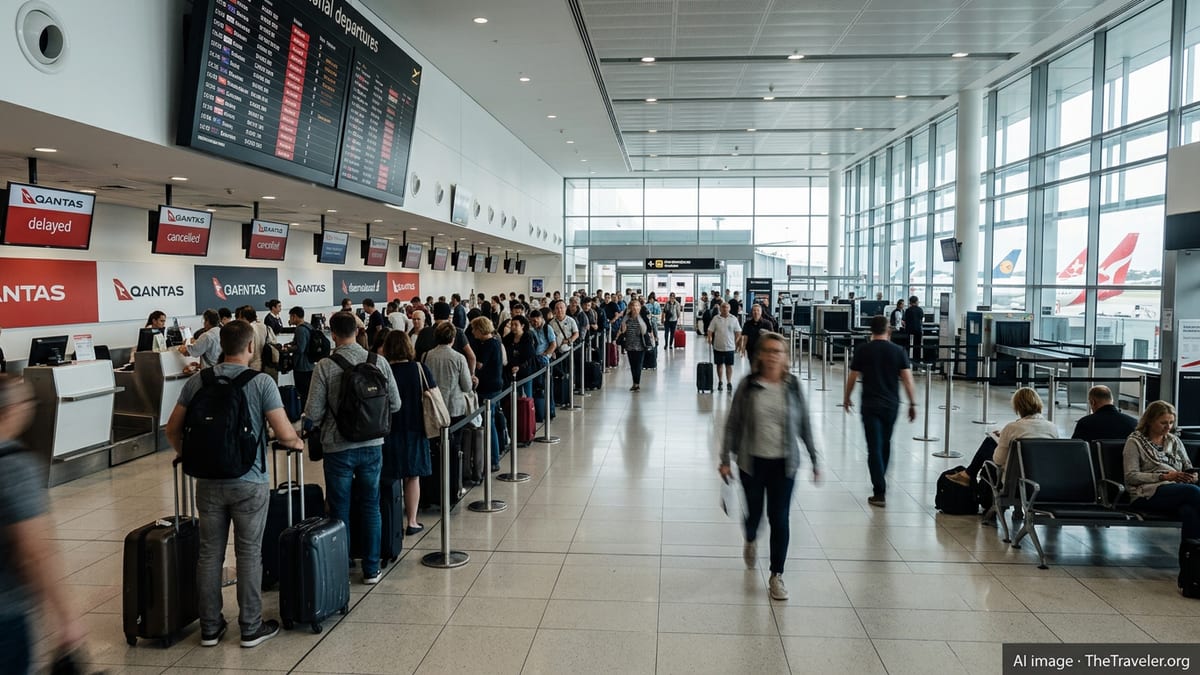
Hundreds of travellers have been left stranded or facing long delays across Australia, as a fresh wave of flight disruptions involving Qantas, Jetstar, Alliance Airlines, Network Aviation and several other carriers hit major airports in Sydney, Melbourne, Brisbane, Perth and Adelaide.
Get the latest news straight to your inbox!
Widespread Disruptions Across Key Australian Hubs
Newly compiled operational data for April 5, 2026 indicates that at least 168 flights were delayed and 23 were cancelled across Australia’s main domestic and international gateways, with the greatest impacts reported at Sydney, Melbourne, Brisbane, Perth and Adelaide airports. The disruption follows a broader pattern of instability in regional and long haul aviation, with tight aircraft utilisation leaving little room to recover from schedule shocks.
Reports indicate that Qantas and its subsidiaries, including Jetstar and Network Aviation, bore a significant share of the operational strain, alongside Alliance Airlines and a mix of international and regional carriers. The affected services spanned core trunk routes between eastern capitals as well as links to Perth and Adelaide, creating a knock-on effect for onward domestic and international connections.
Publicly available airport movement logs and industry trackers suggest that delays at the larger hubs rapidly cascaded across the network as aircraft and crew arrived out of position for later departures. Even where flights ultimately departed, many did so significantly behind schedule, triggering missed connections and forcing last minute rebookings.
The latest figures build on earlier updates showing more than 160 combined delays and cancellations at Sydney, Melbourne, Brisbane and Canberra, and a separate surge of nearly 400 delays and 13 cancellations across Australia and New Zealand on the same date. Against that backdrop, the additional 168 delays and 23 cancellations concentrated on routes touching Sydney, Melbourne, Brisbane, Perth and Adelaide point to a particularly acute pressure point for domestic travellers.
Airlines Most Affected and Routes Under Pressure
According to aggregated aviation tracking data and published coverage, Qantas and its related brands remained at the centre of the disruption, reflecting the group’s dominant position on key domestic routes. Network Aviation and Alliance Airlines, which operate a variety of regional and contracted services, also appeared among the carriers with multiple delayed or cancelled flights.
Jetstar, which in recent years has faced heightened scrutiny over reliability in domestic markets, recorded a fresh cluster of late departures on busy leisure and visiting-friends-and-relatives sectors. While some Jetstar flights managed to avoid outright cancellation, late pushbacks from Sydney and Melbourne contributed to congested departure banks and further delays downstream.
Internationally aligned carriers were not immune. Flights operated in partnership with American Airlines and other overseas airlines have been affected on earlier waves of disruption this week, and the latest data suggests further schedule stress on services linking Australia’s east coast with major Asian and Middle Eastern hubs. With many long haul itineraries built around tight domestic connections, even a short delay out of Brisbane, Sydney or Melbourne can cause passengers to miss onward legs and require costly re-accommodation.
Routes to and from Perth and Adelaide featured more prominently in the latest update than in some earlier disruption reports. Perth, already coping with rerouted ultra long haul operations and increased reliance on Asian hubs, reported dozens of delays and at least one cancellation in a parallel data set, while Adelaide’s links into the national network left travellers vulnerable to delays on inbound aircraft from Sydney or Melbourne.
Causes: Tight Capacity, Weather and Systemic Fragility
While a single, clear-cut cause has not been identified for the newest disruption wave, aviation analysts point to a mix of tight capacity, weather variability and persistent staffing and air traffic control constraints as underlying factors. Previous episodes of mass delays at Sydney and Brisbane have been linked in public reporting to shortages of air traffic controllers and the need to increase spacing between aircraft, which sharply reduces runway throughput during peak times.
At the same time, airlines have been operating with leaner spare capacity as they rebuild schedules after the pandemic period and adjust to new patterns of demand and international detours. Publicly available on time performance data compiled by government agencies show that Australian domestic cancellation rates have, at times in recent years, run above long term averages, particularly for some Qantas group brands.
A further destabilising influence in early April has been the broader regional disruption in the Asia Pacific, where airspace restrictions linked to conflict and operational constraints at key hubs have forced last minute schedule changes. Long haul services between Australia, the Middle East and Europe have been rerouted or trimmed, while some partner networks have reduced frequencies, narrowing the options for rebooking affected passengers.
Analysts suggest that this combination of structural pressures means even localised issues, such as a temporary ground stop, thunderstorm activity near a capital city or a shortfall in crew availability, can quickly reverberate across an entire day’s flying program and be reflected in statistics like the 168 delays and 23 cancellations seen in the latest Australian figures.
Impact on Travellers and Consumer Rights
For passengers, the numbers translate into missed holidays, disrupted business trips and unexpected overnight stays. Traveller accounts shared through social media and online forums describe long queues at service desks, difficulty securing alternative flights on the same day and limited availability of accommodation near major airports as disruption has rippled through the network.
Consumer guidance published by Australia’s competition and consumer regulator makes clear that travellers whose flights are significantly delayed or cancelled may be entitled to remedies such as rebooking, refunds or reimbursement for reasonable additional expenses, depending on the circumstances and the airline’s policies. However, surveys cited in previous reporting suggest many passengers face lengthy waits for refunds or find the claims process complex.
Airlines typically differentiate between disruptions within their control, such as some technical or staffing issues, and those attributed to weather or air traffic management decisions. This distinction often determines whether affected travellers receive meal vouchers, hotel accommodation or only a later flight. With multiple overlapping causes contributing to the current disruptions, passengers may encounter varied outcomes even where their experience appears similar.
Advocacy groups have continued to argue for clearer and more enforceable compensation rules, drawing comparisons to regimes in regions such as the European Union. The latest round of delays and cancellations across Sydney, Melbourne, Brisbane, Perth and Adelaide is likely to reinforce calls for stronger protections as travellers seek redress.
What Travellers Can Expect in the Coming Days
Operational data from previous disruption events suggests that it can take several days for airline schedules to fully recover, particularly when aircraft and crew have been pushed far from their planned rotations. Industry observers expect that residual delays may persist on some domestic and transcontinental routes from Australia’s main hubs as airlines work to reposition equipment and clear passenger backlogs.
Passengers scheduled to fly over the next 24 to 72 hours on routes touching Sydney, Melbourne, Brisbane, Perth or Adelaide are being urged in public advisories to monitor their flight status closely via airline apps, text alerts and airport information boards. Early arrival at the airport and flexibility around connection times are being recommended in many travel advisories as ways to reduce the risk of missed flights.
Published updates from carriers have emphasised efforts to add larger aircraft on busy routes where possible, open additional check in counters and extend call centre and digital support hours. However, with school holidays, major events and pent up demand still driving strong passenger numbers, spare seats on alternative flights may remain limited, particularly at short notice.
For now, the figures of 168 delays and 23 cancellations across Qantas, Jetstar, Alliance Airlines, Network Aviation and other operators serve as another reminder of the fragility of Australia’s aviation system in the face of regional shocks. Travellers are being advised by consumer advocates and travel agents to build more buffer time into itineraries and to familiarise themselves with the conditions of carriage and compensation policies of the airlines they choose.