

More news on this day
Hundreds of travellers were left stranded across Europe on Tuesday as a wave of delays and cancellations swept through major airports in the Netherlands, Italy, France, Austria and beyond, with 396 flights delayed and 169 scrapped in a single day, disrupting operations at hubs including Amsterdam, Munich and Vienna.
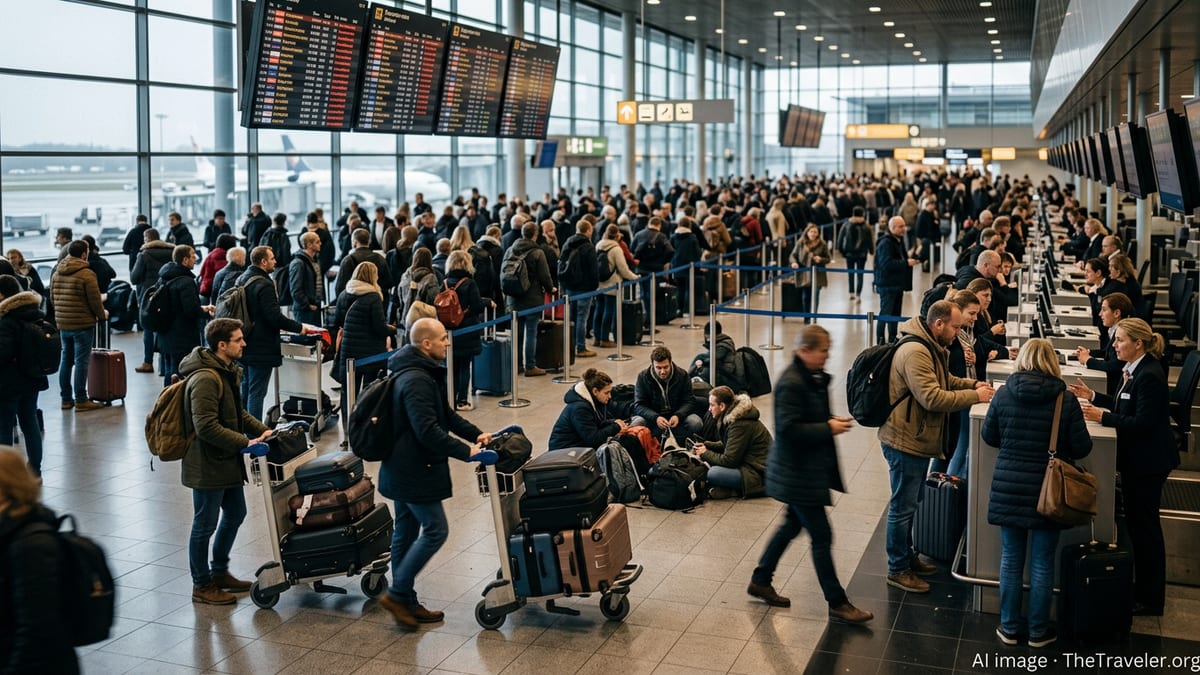
Major Hubs Buckle Under Mounting Disruptions
The latest figures from European aviation data trackers show a sharp spike in operational disruption, with hundreds of flights failing to depart on time or at all. Amsterdam Schiphol, Munich and Vienna International were among the hardest-hit hubs, alongside airports in France and Italy that reported mounting queues and ground holds throughout the day.
Flag carriers and low cost airlines alike were affected. KLM services at Amsterdam, Lufthansa departures from Munich and Austrian Airlines flights in and out of Vienna all reported rolling delays, while easyJet and other short haul carriers struggled to keep to their schedules on intra-European routes. Travellers reported waiting for hours at departure gates as departure boards filled with red and amber alerts.
Airport operators said the pattern of disruption was uneven but persistent, with some early morning services operating close to schedule before bottlenecks developed across the European network. Staff described a familiar knock on effect, where the late arrival of aircraft and crews cascaded into missed slots and forced cancellations later in the day.
By late afternoon, the total had climbed to 396 delayed and 169 cancelled flights across affected European markets, according to industry tallies, with aviation analysts warning that the true impact on passengers is far higher once missed connections and diversions are taken into account.
Weather, Congested Skies and Operational Strain
While Europe’s aviation system has been under pressure for weeks, industry experts say the current wave of disruption reflects a volatile mix of local weather, congested skies and lingering operational fragilities. Low cloud and gusty winds were reported around the North Sea and Alpine regions, prompting tighter spacing between aircraft and occasional runway changes at hubs including Amsterdam, Munich and Vienna.
Air traffic control providers in several European states also introduced flow restrictions to manage busy sectors, slowing departures from key airports in the Netherlands, France and Italy. Airlines said this eroded already slim schedule buffers during peak periods, particularly on short haul rotations that rely on rapid turnarounds.
On the ground, airlines and airports continue to grapple with chronic staffing challenges. Handling agents in several countries reported shortages of ramp and check in personnel during peak waves, lengthening turnaround times and reducing the flexibility to recover from earlier delays. Industry unions have repeatedly warned that recruitment since the pandemic has not fully closed the gap created by earlier job cuts.
Operational planners say that while each delay may only add a few minutes at departure, the cumulative effect across tightly scheduled networks can be dramatic. When aircraft and crews fall out of position, carriers can be forced to cancel entire rotations rather than risk extended curfews and crew duty time violations later in the day.
Travellers Face Long Queues and Limited Options
For passengers caught in Tuesday’s disruption, the statistics translated into missed meetings, abandoned holidays and hours of uncertainty in departure halls. At Amsterdam Schiphol, travellers described snaking queues at airline service desks as passengers from multiple cancelled departures attempted to rebook on a limited number of remaining seats.
In Munich and Vienna, departing customers encountered repeated gate changes and rolling estimated departure times as airlines waited for inbound aircraft or fresh crews. Those with tight connections were particularly vulnerable, with some travellers arriving in Europe from long haul services only to discover their onward sectors to Italy or France had been cancelled.
Airlines said they were working to accommodate disrupted customers on later services or alternative routings where possible, but many flights on key business and leisure routes were already heavily booked. In some cases, stranded passengers were advised that the next available seat could be a day or more away, forcing them to seek last minute hotel rooms or alternative transport by rail.
Consumer advocates warned that the fragmented nature of rebooking options leaves many travellers unsure of their rights, especially when itineraries include multiple carriers or separate tickets. They urged affected passengers to keep receipts for meals and accommodation and to push airlines for written confirmation of the cause of disruption when filing compensation claims.
Impact on Airlines and Broader European Networks
The disruption is the latest reminder of how quickly Europe’s interconnected aviation system can seize up when pressure mounts on multiple fronts. Even airports not directly listed among the worst affected saw indirect knock on effects as delayed arrivals from Amsterdam, Munich and Vienna rippled across route networks into secondary cities in Germany, Italy, France and neighbouring states.
For carriers such as KLM, easyJet and Lufthansa, the immediate financial impact includes the cost of passenger care, hotel vouchers, rebooking and aircraft repositioning, alongside lost ticket and ancillary revenue from cancelled services. For low cost operators that rely on high daily aircraft utilisation, the effect of losing even one rotation from the schedule can be significant.
Aviation analysts noted that repeated days of heavy disruption also risk damaging passenger confidence, particularly among business travellers who depend on predictable schedules. Travel management companies reported a rise in corporate clients asking for contingency plans, including flexible rail-air itineraries and guidance on routing that avoids the most fragile hubs during peak periods.
Neighbouring rail networks are already feeling the strain, with ticketing platforms in parts of Germany and the Netherlands reporting increased last minute demand for long distance trains as flyers sought to salvage their journeys. However, capacity constraints on popular cross border routes limit the ability of rail to absorb a sudden surge in demand.
What Passengers Can Expect in the Coming Days
Industry sources said most European airports and airlines expect operations to stabilise gradually if weather conditions remain manageable and no new airspace restrictions are introduced. However, they cautioned that stranded aircraft and crews will take time to reposition, meaning some knock on disruption could persist into midweek schedules.
Passengers due to travel in the coming days are being advised to monitor flight status closely, use airline apps for real time updates and arrive at the airport earlier than usual, particularly at busy hubs such as Amsterdam, Munich and Vienna. Travellers are also being encouraged to check in advance whether they are entitled to rebooking, refunds or compensation under European passenger protection rules when flights are significantly delayed or cancelled.
Some carriers are offering flexible change policies for affected routes, allowing customers to move travel dates without penalties or fare differences. Others are prioritising vulnerable passengers and those with essential travel needs when allocating scarce seats on remaining flights.
While Tuesday’s figures of 396 delayed and 169 cancelled flights are modest compared with the thousands of cancellations recorded during major airspace shutdowns, they highlight how fragile Europe’s aviation recovery remains. With the Easter and summer peak seasons approaching, airlines and airports face mounting pressure to reinforce staffing, improve contingency planning and restore traveller confidence before the next shock tests the system again.