

More news on this day
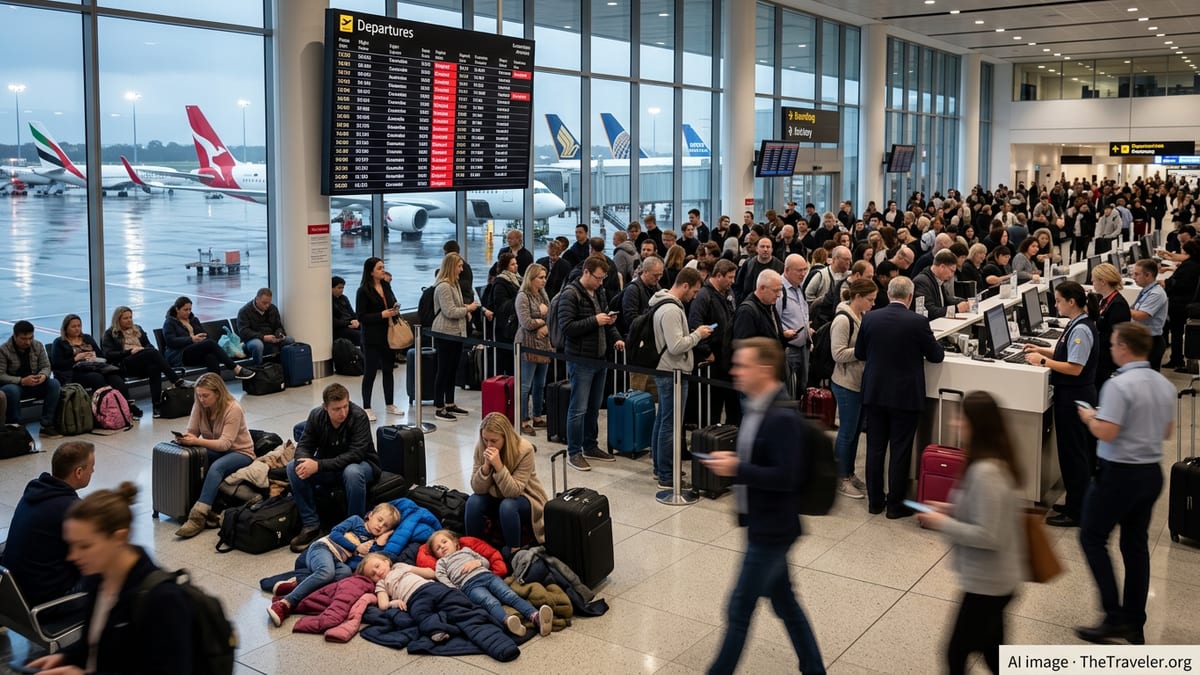
Hundreds of passengers were left stranded across Australia this weekend as rolling delays and cancellations at Sydney, Melbourne, Brisbane and Perth cascaded through global networks, disrupting services operated by Qantas, United, Emirates, Singapore Airlines and other major carriers to key hubs including Los Angeles, Abu Dhabi, Dubai and London.
Major Australian Hubs Grapple With Wave of Disruptions
Operational data and passenger reports indicate at least 314 flights were delayed and 47 cancelled across Australia’s four busiest airports over recent days, as airlines scrambled to reconfigure long haul schedules in response to closed or restricted airspace over parts of the Middle East. The disruption has affected both domestic connections and flagship international services, turning terminals into makeshift waiting rooms as travellers searched for information, food and somewhere to sleep.
At Sydney Airport, overnight crowds built as passengers on disrupted departures to Europe and North America found themselves without clear rebooking options. Similar scenes played out in Melbourne and Brisbane, while Perth’s role as a western gateway to Europe amplified the impact when direct and one stop links through the Gulf were disrupted or rerouted.
Airport operators said they were working with airlines to manage gate congestion, refuelling windows and crew duty limits as aircraft arrived out of sequence. However, they acknowledged that high load factors at the start of the southern autumn travel season left limited slack in the system, meaning delays quickly compounded into missed connections for onward flights.
Domestic schedules also came under pressure as carriers repositioned aircraft and crews to cover vulnerable international routes. Passengers on routes such as Sydney to Melbourne and Brisbane to Perth reported rolling departure pushes, as airlines held aircraft to await connecting passengers from severely delayed long haul services.
Global Shockwaves Reach Los Angeles, London and the Gulf
The turbulence on Australian tarmacs is part of a broader pattern of global air travel disruption triggered by conflict in the Middle East and the temporary closure or curtailment of operations at major Gulf hubs. Flight tracking analyses in recent days have shown thousands of flights delayed or cancelled worldwide, with ripples extending across transcontinental and transpacific networks.
Services linking Australia to Los Angeles have been hit as carriers attempt to absorb aircraft that were originally scheduled to route via the Gulf or Europe. Some Qantas and United passengers bound for the United States reported last minute aircraft swaps and revised routings via secondary hubs, adding hours to already long journeys and straining connections onward to cities across North America.
In Europe, London and other key gateways such as Frankfurt and Paris have seen arrival banks from Australia and Asia reshuffled, with late inbound flights forcing missed connections to regional destinations. Travel agents reported strong demand for alternative routings that circumnavigate Middle Eastern airspace, often funnelling passengers instead through East and Southeast Asian hubs such as Singapore and Hong Kong.
Within the Gulf itself, temporary closures and damage assessments at Dubai and Abu Dhabi led to suspended services on several days, cutting off primary transit points for Australians heading to and from Europe, North Africa and parts of the Middle East. Airlines are progressively restoring some links but warn that schedules remain dynamic and subject to rapid change.
Emirates, Singapore Airlines, Qantas and United Under Strain
Among the hardest hit carriers are those that rely heavily on Australia to Europe flows, often routed through Middle Eastern or Asian hubs. Emirates and Etihad have been forced to cancel or turn back flights between Dubai, Abu Dhabi and Australian cities, while Qatar Airways and partner operators have also curtailed services as governments reassess overflight permissions and risk profiles.
Singapore Airlines and its low cost affiliate have seen increased demand from Australians seeking to bypass Gulf hubs altogether, putting additional pressure on already busy routes from Sydney, Melbourne, Brisbane and Perth into Southeast Asia. This has occasionally left rebooking queues stretched and limited the availability of near term alternative departures for stranded travellers.
Qantas, which operates both direct and one stop services between Australia, Asia, the United States and Europe, has been adjusting its network in real time. The flagship Perth to London service has in recent days been rerouted via Singapore, while some passengers booked on nonstop or Gulf connected itineraries have found themselves rebooked through alternative Asian or North American gateways instead.
United Airlines and other North American carriers serving Australia have not been immune to the turbulence. Tight aircraft utilisation on long haul fleets has meant that even indirect impacts, such as delayed inbound aircraft from Europe or the United States, can cascade into schedule disruptions on routes linking Los Angeles and San Francisco with Sydney, Melbourne and Brisbane.
Passengers Sleep in Terminals as Information Lags
For many travellers, the most visible sign of the turmoil has been the sight of families and solo passengers sleeping on terminal floors or improvising makeshift resting spots near closed boarding gates. At Sydney and Melbourne, overnight closures of nearby hotel capacity, combined with short notice cancellations, left some passengers without realistic off airport options.
Several travellers described long waits to speak with airline staff, with call centres and service desks overwhelmed by simultaneous inquiries from passengers in multiple time zones. While most major carriers provided meal vouchers and hotel accommodation where possible, others offered only rebooking or refunds, leaving customers to cover incidental expenses themselves.
Consumer advocates in Australia noted that the country does not yet have a comprehensive, compensation based passenger rights regime comparable to those in parts of Europe. They argued that the current crisis highlights the need for clearer minimum standards on accommodation, meals and rebooking assistance when large scale disruptions occur, regardless of whether the cause lies within the airline’s control.
Airports, for their part, have set up additional seating zones, phone charging areas and staffed information booths to manage the crowds. Volunteers and ground staff have been seen distributing water and basic refreshments to passengers whose flights have been pushed back repeatedly or cancelled outright after extended delays.
How Long Could the Disruptions Last?
Aviation analysts warn that even if fighting in the Middle East stabilises or key airspace corridors reopen quickly, knock on effects for global flight schedules could linger for weeks or months. Aircraft and crew rotations will need time to rebalance, especially for ultra long haul routes that require specific rest periods and contingency planning.
For Australian travellers, that means continued uncertainty for journeys involving Europe, parts of Africa and some transatlantic connections. Travel advisers recommend that passengers scheduled to fly over affected regions in the coming weeks closely monitor airline apps and email notifications, and avoid assuming that a confirmed booking guarantees an unchanged route or departure time.
Industry groups stress that passengers should wait for airlines to formally cancel or significantly alter flights before seeking refunds, as voluntary cancellations by customers may limit eligibility for compensation or complimentary rebooking. They also suggest allowing extra buffer time for connections, particularly at congested hubs such as Singapore, London and Los Angeles where arrival waves remain unstable.
Despite the immediate disruption, airlines and airports insist they are working to restore predictability to timetables and prioritise stranded travellers. However, with global networks still reconfiguring around closed or constrained airspace, passengers departing Australia’s biggest airports in the coming days are being urged to prepare for extended journeys, last minute gate changes and a higher than usual risk of delays.