

More news on this day
Hundreds of passengers have been left stranded across Europe after a fresh wave of disruption triggered 1,720 flight delays and 61 cancellations, compounding a turbulent start to April for the region’s air travel network.
Get the latest news straight to your inbox!
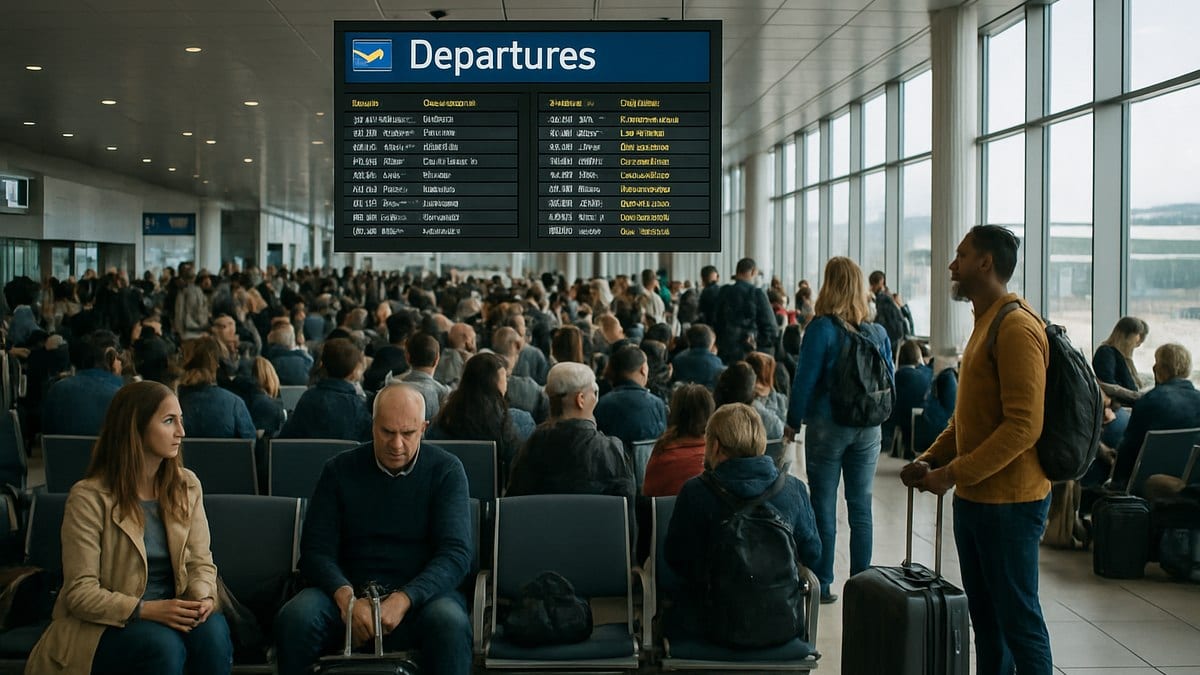
Storms, Airspace Limits and Staffing Strain Converge
Published industry data and travel reports indicate that a combination of severe spring weather, temporary airspace restrictions and ongoing staffing pressures at several hubs have converged to push delay and cancellation numbers sharply higher in recent days. Across Europe, 1,720 flights were reported delayed and 61 cancelled in a single 24-hour period, underscoring how quickly conditions can deteriorate when multiple constraints align.
Heavy rain, strong crosswinds and low cloud have affected northern and western Europe in particular, with several airports operating reduced runway capacity and extended separation between aircraft for safety. These measures, while routine in adverse conditions, significantly cut the number of movements an airport can handle each hour, forcing airlines to hold departures on the ground and slow arrivals into congested terminal areas.
At the same time, air traffic management has remained cautious over portions of European airspace as carriers continue to route around conflict zones and weather systems. This has led to longer routings and additional time in the sky, absorbing schedule buffers that would normally protect operations from minor disruptions. When flights arrive late into already busy hubs, the knock-on effects can quickly cascade across the network.
Operational reports also point to lingering staffing challenges at some airports and ground handling providers at the start of the summer build-up. Even modest gaps in ramp, security or baggage teams can lengthen turnaround times, particularly when aircraft are arriving off-schedule, compounding the impact of bad weather and airspace restrictions.
Major Hubs Feel the Pressure
The disruption has been most acute at large connecting hubs that knit together European and intercontinental traffic. Data collated from flight-tracking services and passenger-rights platforms shows elevated delay levels at big gateways such as London-area airports, Amsterdam Schiphol, Paris Charles de Gaulle, Frankfurt and key Scandinavian and Mediterranean hubs.
On some routes, departures have been pushed back by more than an hour as airlines attempt to sequence late-arriving aircraft, accommodate missed connections and manage crew duty-time limits. In several cases, carriers have opted to cancel individual flights to reset schedules for the following day, contributing to the 61 cancellations logged in the current wave of disruption.
Southern Europe has not been spared. Recent reports on operations in Greece and other Mediterranean destinations describe busy terminals coping with a mix of weather-related reroutes and congestion from earlier delays elsewhere in the network. Athens, for example, has seen a pattern of late inbound services leading to evening departure backlogs, even when local conditions have remained largely flyable.
Regional airports that rely heavily on feeder traffic from larger hubs are also feeling the strain. When an early-morning rotation from a major European gateway runs late or is cancelled outright, smaller outstations often lose their only direct link of the day, leaving passengers waiting for rebooking options that may involve lengthy detours or overnight stays.
Thousands of Travelers Face Long Waits and Missed Connections
The operational statistics translate into significant disruption for travelers across the continent. With 1,720 flights delayed, thousands of passengers have faced extended waits in departure lounges, missed onward connections and last-minute changes to itineraries. For those on the 61 cancelled services, rebooking onto alternative flights has often meant limited seat availability and extended travel times.
Travel forums and social media posts describe crowded customer-service desks at several major airports, with travelers seeking rerouting, hotel vouchers and updated information as schedules shift throughout the day. Airline and airport mobile applications have become critical tools for passengers trying to track gate changes, rolling departure times and baggage arrangements while on the move.
Families returning from holidays, business travelers on tight schedules and transit passengers moving between long-haul flights all appear among those affected. In some instances, late-evening cancellations have left passengers seeking last-minute accommodation in already busy airport districts, adding cost and complexity to disrupted journeys.
Rail and road links around several hubs have also seen a pickup in demand as passengers abandon disrupted flights in favor of overland alternatives for shorter journeys. This secondary shift can create additional crowding on key train corridors and long-distance bus routes, particularly where cross-border rail options offer a viable substitute for regional flights.
Why One Day of Disruption Spreads Across the Week
Analysts note that the current numbers are a textbook example of how a single day of adverse conditions can echo through schedules for several days. When aircraft arrive late at night, they often start the following morning’s rotation behind schedule, and there may be limited slack in tightly planned networks to absorb that delay without affecting onward sectors.
Crew duty-time regulations can further complicate recovery. If a flight runs too late into the evening, the operating crew may not be legally permitted to operate the next day’s early-morning service without a longer rest period. This can leave an aircraft temporarily without a crew, forcing airlines to reshuffle rosters or cancel a flight entirely, even if the aircraft itself is available and weather has improved.
Airports with chronic congestion or limited runway capacity are particularly vulnerable to these ripples. When scheduled demand is already close to maximum throughput, there is little space to insert recovery sectors, add extra flights or significantly extend turnaround times without triggering queues of arriving and departing aircraft.
The situation is being compounded this year by a generally high level of demand for European travel. Industry outlooks for 2026 point to robust passenger numbers as tourism rebounds and business travel continues to stabilize, meaning that many flights are operating close to full. Full cabins leave fewer empty seats available for stranded travelers needing to switch services after a delay or cancellation.
What Passengers Can Do When Disruption Hits
Consumer advocates and passenger-rights organizations routinely advise travelers to prepare for disruption during periods of unstable weather and heightened operational strain. While individual circumstances vary, general guidance drawn from public advisories emphasizes the importance of monitoring flight status early and often, ideally via official airline channels and reputable flight-tracking tools.
When a delay first appears, rebooking options are usually more plentiful. Passengers who act quickly through an airline’s app or call center may secure alternative routings before remaining seats are taken by other disrupted travelers. For those whose flights are cancelled outright, publicly available information indicates that most carriers in Europe will offer a choice between rerouting at the earliest opportunity or a refund, in line with applicable regulations.
Under the European Union’s air passenger rules, travelers on eligible flights may also be entitled to care such as meals, refreshments and hotel accommodation when long delays or cancellations occur, regardless of whether compensation is owed. However, the availability of financial compensation often depends on the underlying cause of the disruption, with severe weather and air traffic control restrictions typically treated differently to technical or staffing issues within an airline’s control.
Travel planners suggest that passengers build additional time into itineraries that involve tight connections, especially when traveling through weather-prone hubs or during peak holiday periods. Booking longer layovers, choosing earlier departures where possible and ensuring that essential items are carried in hand luggage can all help reduce the impact if schedules begin to slip.