

More news on this day
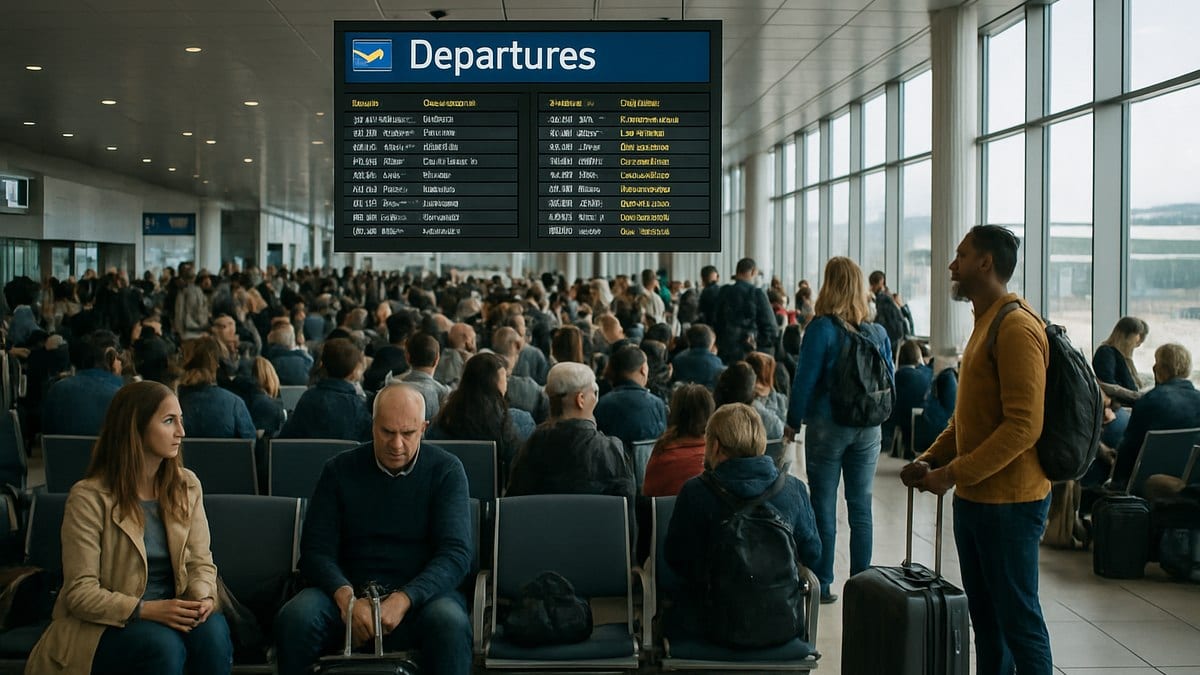
Hundreds of air passengers across Europe have been left stranded after a fresh wave of disruption triggered 1,720 flight delays and 61 cancellations at major hubs during the first week of April, compounding an already difficult spring travel season.
Get the latest news straight to your inbox!
Disruption Spreads Across Multiple Countries and Hubs
Operational data from flight-tracking and passenger-rights platforms for early April indicate that the latest disruption has not been confined to one airport or one airline. Instead, a patchwork of delays has spread across key hubs in the United Kingdom, Ireland, France, Italy, the Netherlands, Portugal, Switzerland, Germany, Denmark and Greece, with knock-on effects reaching secondary and regional airports.
Recent tallies for individual days show how quickly small issues can escalate. On 7 April, reports compiled by travel and aviation sites pointed to more than 1,400 delays and around 20 cancellations at airports including Amsterdam Schiphol, Zurich, Rome Fiumicino, Milan Malpensa, Dublin, Lisbon, Porto, Paris Charles de Gaulle, Lyon, Marseille, Copenhagen, London Heathrow and London Gatwick. Separate coverage of wider European operations over the same period described additional days where delays topped 1,600, with well over 150 cancellations linked to severe weather and airspace bottlenecks.
When aggregated across several days, these figures align with a broader picture of at least 1,720 delays and 61 cancellations affecting European services, with hundreds of passengers stranded in terminal buildings or forced into overnight stays. Because many European carriers operate tight, hub-based schedules, a late-arriving aircraft in the early morning can ripple through the network and contribute to missed connections for the rest of the day.
Smaller hubs are feeling the strain as well. Athens International Airport, Oslo Gardermoen and a number of Nordic and Mediterranean gateways have reported clusters of delays linked to congestion at larger Western European hubs, highlighting the interdependence of the continent’s air traffic flows.
Weather Systems, Airspace Constraints and Staffing Gaps
Publicly available information for the period points to a combination of factors behind the disruption rather than a single catastrophic event. Spring storms brought strong winds and heavy rain to parts of Western and Northern Europe, reducing arrival and departure rates at busy airports and slowing the flow of traffic through already constrained airspace.
In parallel, industry analyses have been warning that Europe’s air traffic management system is struggling to keep pace with demand. Data from regional aviation bodies show that air traffic flow management delays have risen faster than traffic growth in recent years, reflecting limited capacity in some control centers and the difficulty of rerouting traffic around storm cells, military airspace reservations and technical restrictions.
Staffing remains another pressure point. Although airlines and airports have rebuilt much of their workforce since the pandemic, ground handling and technical maintenance teams in several countries continue to report tight staffing levels. Even small gaps can have significant effects when schedules are full and aircraft are operating near their maximum daily utilization. When a crew or maintenance issue hits an aircraft that is already delayed by weather or airspace constraints, the result can be a late-night cancellation.
Industry commentary also highlights a global backdrop of elevated fuel prices and cost pressures. While the latest European wave has been driven primarily by operational factors, analysts note that carriers under financial strain may have less flexibility to maintain spare aircraft and crews, reducing the system’s ability to absorb shocks.
Passenger Impact: Missed Connections and Overnight Stays
For travelers, the statistics have translated into crowded terminals, snaking queues at customer service desks and long waits for rebooked flights. Reports from affected airports describe passengers sleeping in chairs or on the floor as hotel allocations near key hubs dried up during the worst evenings of disruption.
Hub airports with large connecting networks, such as Amsterdam, Paris, London and Rome, have seen particularly acute knock-on effects. When an incoming flight arrives an hour or more behind schedule, passengers may miss onward connections to smaller European cities or long-haul destinations, forcing airlines to rebook them onto later departures. In some cases, limited seat availability has meant that stranded travelers needed to wait until the next day to continue their journeys.
Families traveling at the start of the spring holiday period have been among the worst affected. Leisure travelers often have less flexibility than business passengers and may be working with tighter budgets when faced with unexpected hotel stays, meal costs and rearranged ground transport at their destination.
Travel forums and social media posts from recent days also highlight issues for people with tightly timed itineraries, including cruise departures, weddings and medical appointments. Once a delay or cancellation hits a key leg of the journey, the financial and emotional impact can go well beyond the immediate inconvenience at the airport.
What EU and UK Rules Mean for Disrupted Travelers
Under the European Union’s Regulation EC 261/2004 and equivalent UK rules, passengers departing from an EU or UK airport, or traveling on an EU or UK carrier, benefit from a defined set of rights when flights are heavily delayed or cancelled. Public guidance explains that airlines must offer care such as meals, refreshments and, where necessary, hotel accommodation when disruptions reach certain thresholds, typically starting at two hours for shorter flights and scaling with distance and delay length.
Cash compensation can apply when cancellations or long delays are within the airline’s control, for example due to technical issues or certain staffing problems. However, the same rules classify severe weather, air traffic control restrictions and some security-related events as extraordinary circumstances, in which case compensation is usually not owed even if the disruption is extensive.
Consumer advisers recommend that passengers keep boarding passes, confirmation emails and receipts for any additional expenses, and then use the airlines’ official channels or specialized claim services to check eligibility once the situation has settled. Travelers whose journeys involve multiple legs on a single ticket are often encouraged to focus on the arrival delay at the final destination, which can be critical in determining whether compensation is due.
Rights can differ if the disrupted flight originates outside the EU and is operated by a non-European carrier, or if the trip involves separate tickets booked independently. In those cases, passengers may need to look to the operating airline’s own policies or to travel insurance coverage for support.
Planning Ahead as Spring Travel Demand Rises
The latest wave of 1,720 delays and 61 cancellations comes as aviation forecasts point to continued growth in European passenger numbers through 2026. Network reports for February already showed longer arrival delays than a year earlier at several major hubs, with analysts attributing much of the increase to weather and airspace issues layered on top of high demand.
Travel advisers suggest that passengers build extra time into itineraries, especially when connecting between separate tickets or tying flights to events with fixed start times. Early-day departures are often recommended where possible, as these flights have less accumulated disruption behind them and may offer better chances of departing on time.
Passengers are also encouraged to make full use of airline apps and text alerts, which can provide quicker notice of gate changes, new departure times or automatic rebooking options. Carrying essential items such as medication, chargers and a change of clothes in hand luggage can help travelers cope more comfortably if they face an unexpected overnight stay.
While the current period of disruption has highlighted the fragility of Europe’s air travel network under pressure, industry data suggests that many flights are still operating broadly on schedule. For those yet to travel, staying informed, allowing buffer time and understanding basic passenger rights remain the most practical tools for navigating an increasingly unpredictable sky.