

More news on this day
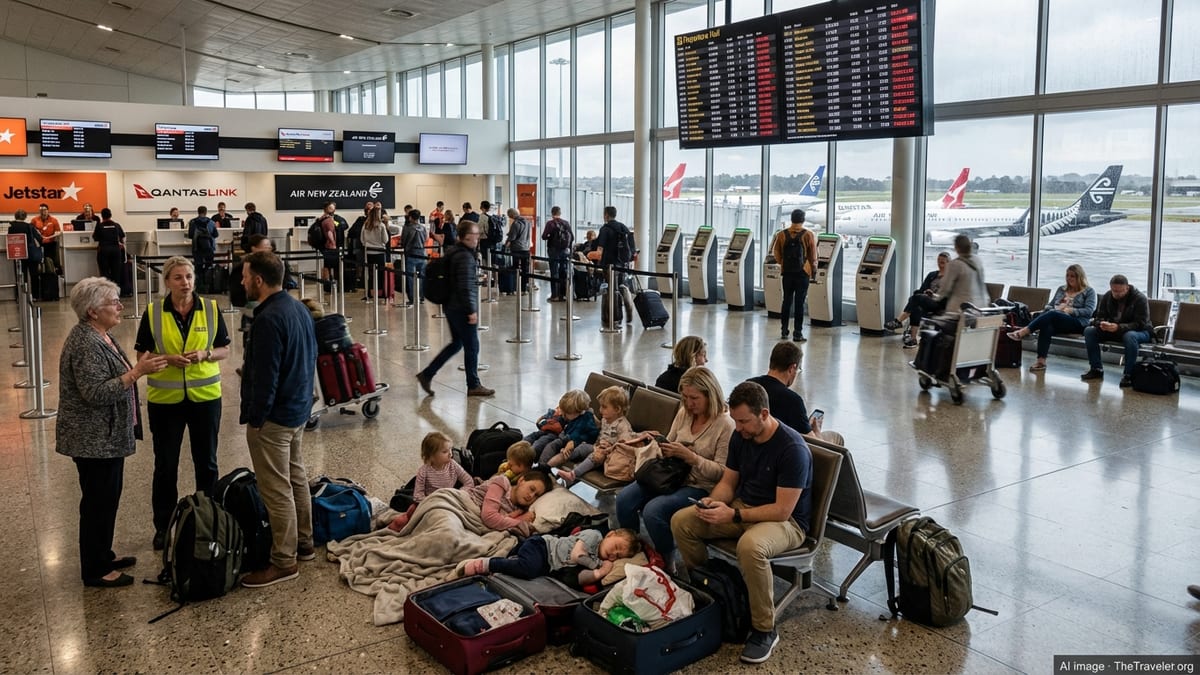
Major airports across Australia and New Zealand experienced widespread disruption today, with publicly available tracking data indicating more than 500 delays and over a dozen flight cancellations affecting services operated by Virgin Australia, Air New Zealand, Jetstar, Qantas and other carriers.
Get the latest news straight to your inbox!
Delays Ripple Across Trans-Tasman and Domestic Networks
Live aviation tracking platforms and airport operations data show that a total of 512 flights across Australia and New Zealand have been delayed today, with 13 services cancelled, creating a cascading impact for travelers on both domestic and trans-Tasman routes. The disruption has been most visible at the region’s busiest hubs, including Sydney, Melbourne and Brisbane in Australia, and Auckland and Wellington in New Zealand.
Virgin Australia, Qantas and Jetstar have borne a significant share of the domestic impact in Australia, where tightly scheduled shuttle corridors between Sydney, Melbourne and Brisbane are particularly sensitive to bottlenecks. In New Zealand, Air New Zealand and Jetstar have seen knock-on delays that have affected connections through Auckland and Wellington, as aircraft and crews fall out of position.
Operational data for the region in recent years has already pointed to pressure on on-time performance across major Australian and New Zealand routes, especially along the Sydney–Melbourne–Brisbane triangle and key trans-Tasman links. Today’s figures, with hundreds of late departures and arrivals logged in a single day, underline how quickly weather, air traffic control constraints or resourcing issues can translate into large-scale disruption for passengers.
Major Hubs Struggle to Keep Schedules on Track
Sydney Airport has seen some of the heaviest disruption, reflecting its role as a primary hub for Qantas, Jetstar and Virgin Australia, and as a major gateway for Air New Zealand and other international carriers. Delayed departures in Sydney have flowed through to late arrivals in Melbourne, Brisbane and Adelaide, as aircraft scheduled for quick turnarounds arrive behind schedule.
In Melbourne, similar patterns have emerged, with late-running inbound flights compressing turnaround times and leading to further delays on departures to Brisbane, Adelaide and New Zealand destinations. When multiple carriers are operating close to capacity, even modest timing slips can rapidly erode buffers that airlines build into their schedules.
Across the Tasman, Auckland and Wellington have also experienced a busy day of schedule changes. Auckland, the region’s main international gateway, often functions as a critical connecting point for travelers flying between Australia and other long-haul destinations. When arriving flights from Sydney, Melbourne or Brisbane are delayed, passengers may miss onward connections, requiring widespread rebookings that add further pressure to airline and airport operations.
Passenger Experience: Missed Connections and Overnight Stays
The immediate impact of today’s disruption has been felt most acutely by travelers facing missed connections, extended waits in terminal departure areas and, in some cases, unexpected overnight stays. Social media posts and public commentary from affected passengers describe long queues at service desks as travelers seek alternative flights after cancellations or lengthy delays.
For many domestic travelers, delays of one to three hours have meant lost business appointments, shortened leisure stays or the need to rearrange ground transport and accommodation. For long-haul passengers connecting through Sydney, Melbourne, Brisbane or Auckland, missed onward services can add a full day or more to total travel time, particularly when later flights are already heavily booked.
Airlines operating in Australia and New Zealand have, in recent years, come under scrutiny for punctuality and cancellation rates. Publicly available government performance statistics show that the region’s major carriers frequently operate with on-time arrival and departure rates hovering around the low 70 percent range, meaning that a sizable minority of flights depart or arrive later than scheduled even on routine days. On a day marked by more than 500 delays, the strain on passengers and airline support teams is significantly magnified.
Why One Day of Disruption Spreads So Widely
A combination of factors typically underpins large-scale disruption days of the kind seen today. Tight aircraft and crew scheduling means that when one rotation runs late, the aircraft may operate behind schedule for the remainder of the day. In busy corridors such as Sydney–Melbourne–Brisbane, small delays can propagate rapidly as aircraft shuttle back and forth.
Weather constraints, including low cloud, high winds or storms around major hubs, can reduce runway capacity or require increased spacing between aircraft, cutting the number of flights that can safely arrive or depart each hour. Air traffic control restrictions, whether due to weather, staffing limits or flow management measures, can further reduce capacity and generate additional holding patterns and ground delays.
Industry analysis in Australia and New Zealand has also highlighted the limited redundancy in many airline fleets and schedules. When spare aircraft and standby crews are scarce, there is less flexibility to recover from irregular operations. As a result, what begins as a localized issue at one airport can quickly evolve into a network-wide problem by afternoon or evening, especially during peak travel periods.
What Travelers Can Do on High-Disruption Days
Travel experts and consumer advocates routinely advise passengers in Australia and New Zealand to build additional time into itineraries on days with widespread disruption, particularly when connecting between separate tickets or airlines. Same-day connections between domestic and international flights via Sydney, Melbourne, Brisbane or Auckland can be risky when delays are accumulating across multiple carriers.
On days when live tracking tools show a large number of delayed departures and arrivals, travelers are often encouraged to check in online as early as possible, monitor airline apps or flight boards frequently, and consider earlier departures if rebooking is available. Passengers whose journeys are time-sensitive, such as those joining cruises or tours, are sometimes advised to travel a day in advance to allow for potential disruption.
Publicly available performance statistics for Australian and New Zealand airlines indicate that while most flights do ultimately operate, irregular operations days like today remain a recurring feature of travel in the region. For passengers heading through Sydney, Melbourne, Brisbane, Adelaide, Auckland and Wellington, staying informed and allowing extra time continues to be one of the most effective ways to navigate an increasingly congested aviation network.