

More news on this day
Hundreds of air travelers found themselves stranded or severely delayed in Germany today as Berlin, Munich, Frankfurt, Cologne, Düsseldorf, and Hamburg collectively reported 646 delayed and 28 cancelled flights, disrupting operations for Lufthansa, Pegasus Airlines, Eurowings, Ryanair, and several other carriers across the country.
Get the latest news straight to your inbox!
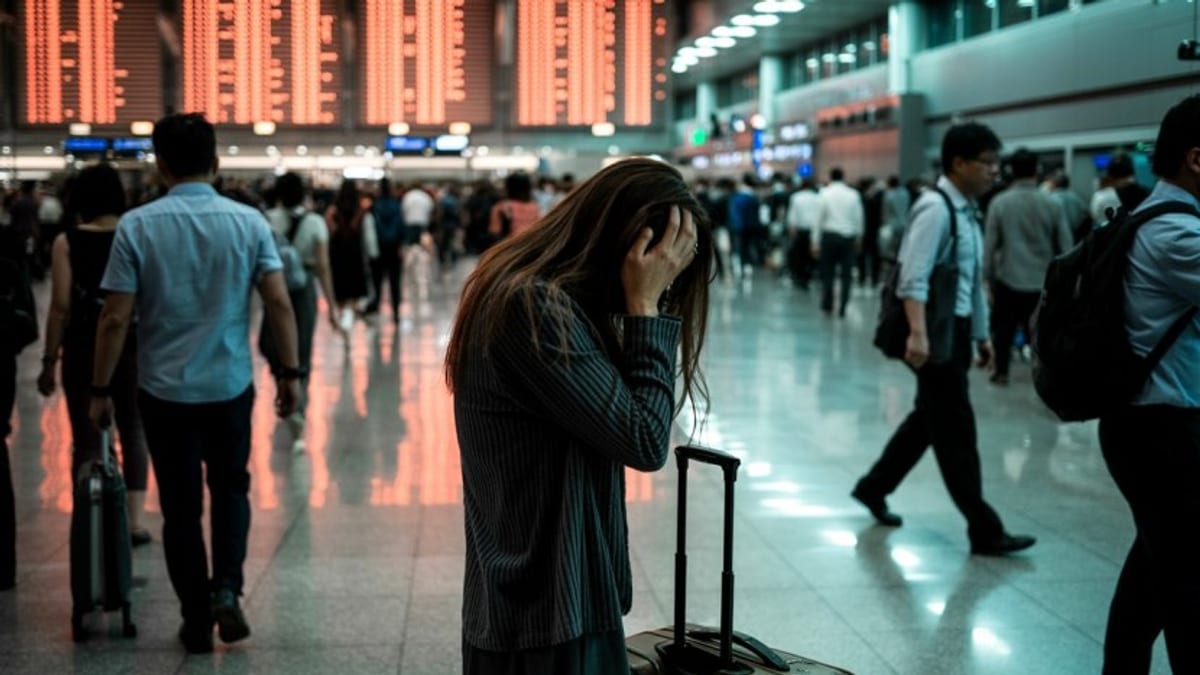
Image by Travel And Tour World
Major German Hubs Report Heavy Operational Disruption
Flight tracking data and airport status boards for Germany’s six busiest hubs show a wave of irregular operations building through the day, with knock-on effects across domestic and European networks. Delays predominated over outright cancellations, but the sheer volume of late departures and arrivals in Berlin, Munich, Frankfurt, Cologne, Düsseldorf, and Hamburg created widespread schedule instability.
The 646 delayed flights represent a significant share of daily movements at these airports, which together handle tens of millions of passengers per year in normal conditions. Even modest average delays can quickly translate into missed connections, missed rail links, and disrupted hotel and tour bookings for passengers transiting through Germany’s main gateways.
While only 28 flights were recorded as cancelled, each cancellation typically affects several hundred passengers when accounting for onward connections. In combination with high-load winter and early-spring schedules, the imbalance between disrupted flights and limited spare capacity made same-day rebooking particularly difficult on several trunk routes.
Operations at Frankfurt and Munich, the two largest hubs in the country, appeared to be especially exposed. Both airports serve as primary transfer points for long haul traffic and intra-European feeder services, meaning that delays on short sectors reverberated into intercontinental banks later in the day.
Lufthansa, Eurowings, Ryanair and Pegasus Among Most Affected
Publicly available flight status information indicates that the disruption is concentrated among airlines with dense German and intra-European networks. Lufthansa, which operates the largest number of departures in Germany, saw a high proportion of late-running flights, particularly on its short and medium haul services into and out of Frankfurt and Munich.
Eurowings, the low cost and regional arm of the Lufthansa Group, reported delays across multiple bases, including Cologne and Düsseldorf. As Eurowings carries a substantial share of leisure and visiting-friends-and-relatives traffic, even relatively short delays had an outsized impact on time-sensitive weekend and short-break itineraries.
Ryanair and Pegasus Airlines, both significant operators on point-to-point routes linking German cities with destinations around the Mediterranean and in Eastern Europe, also experienced knock-on delays. Their business model relies on tight turnaround times, so early disruption in the day often propagated through later rotations, leaving aircraft and crew out of position.
Other carriers serving Germany, including regional operators and foreign network airlines feeding into German hubs, were indirectly impacted as they relied on shared infrastructure such as runways, gates, baggage systems, and air traffic control flows that were operating under strain.
Weather, Congestion and Network Ripple Effects Combine
Initial assessments suggest that the disruption is not tied to a single, clearly defined incident but to a combination of factors that converged across the network. Seasonal weather in parts of Germany, including low clouds, precipitation, and varying visibility, contributed to slower runway operations and increased spacing between aircraft in busy terminal areas.
High baseline traffic levels at the end of March also played a role. Germany’s major airports routinely operate near capacity during peak periods, and any reduction in operational throughput can produce queues on the ground and in the air. As rotations accumulate delays, schedules that are designed around tight connecting banks can unravel within a matter of hours.
Reports from passenger-facing channels and airline communications further indicate that some flights were affected by aircraft and crew being out of position following recent days of irregular operations. When an aircraft arrives late from a previous leg, or when crews reach duty-time limits, subsequent flights may depart late, be consolidated, or be cancelled entirely, multiplying the impact beyond the original cause.
Capacity constraints on alternative modes of transport limited options for some travelers seeking to switch to rail or coach services at short notice. In heavily trafficked corridors such as those linking Berlin, Frankfurt, and Munich, seats on high speed trains can sell out quickly during aviation disruptions, adding an additional layer of complexity for stranded passengers.
Passenger Experience: Long Queues, Missed Connections and Rebookings
For travelers on the ground, the disruption translated into long waits at check in counters, transfer desks, and self service machines, as well as extended time in security and border control lines. With aircraft frequently departing late, passengers who successfully cleared formalities still faced additional waits in crowded gate areas.
Transit passengers were particularly vulnerable. Those connecting in Frankfurt and Munich on tight itineraries faced a heightened risk of misconnecting due to aircraft arriving behind schedule. Some were rebooked onto later flights or routed through alternative hubs, while others had to arrange overnight accommodation when onward options were no longer available on the same day.
Families and leisure travelers also felt the impact, especially on routes served primarily by low cost carriers where frequencies are lower and viable same day alternatives are limited. When only one or two flights operate per day between city pairs, a cancellation or long delay can effectively erase an entire day from a short trip.
Staff at airports and airlines worked to manage expectations using departure boards, mobile apps, and public announcements, but high passenger volumes and fluid conditions meant information sometimes lagged behind real time developments. In several cases, flights cycled through multiple estimated departure times before either leaving the gate or being formally cancelled.
What Impacted Travelers Can Do Next
Passengers whose flights were delayed or cancelled today are turning to existing consumer protection frameworks to understand their options. Under European passenger rights regulations, travelers may be entitled to meals, refreshments, hotel accommodation, and, in specific circumstances, financial compensation, depending on delay length, cause, and flight distance.
Consumer advocacy organizations routinely advise affected passengers to retain boarding passes, booking confirmations, and any written communication from airlines showing revised departure or arrival times. This documentation can prove important when submitting claims directly to carriers or through third party claim services.
Travel experts also recommend checking flight status information regularly rather than relying solely on original itineraries, as aircraft and crew rotations may continue to shift in the aftermath of today’s disruption. In some cases, proactive rebooking via airline apps or online portals can secure better alternatives than waiting for automatic reassignments during peak congestion.
With Germany’s main hubs playing a central role in European air travel, today’s wave of delays and cancellations illustrates how quickly local operational pressures can echo across the continent. Passengers scheduled to travel through Berlin, Munich, Frankfurt, Cologne, Düsseldorf, or Hamburg in the coming days are being encouraged to build in additional buffer time and monitor their journeys closely for further changes.