

More news on this day
Hundreds of travellers across Europe are facing missed connections, overnight airport stays and rebooked itineraries after a new wave of delays and cancellations swept through major hubs in the Netherlands, the United Kingdom, Italy and neighbouring countries this week, disrupting schedules for airlines including Lufthansa, KLM and Finnair.
Get the latest news straight to your inbox!
Network Strain as Delays Top 1,700 Flights in a Week
Publicly available flight-tracking data for the first full week of April 2026 shows a European aviation network under sustained pressure, with more than 1,700 flights delayed and over 170 cancelled on some days as disruption cascades across borders. Recent analyses of flight movements indicate that, over several days, delays and cancellations have built on earlier operational issues at Italian and Dutch hubs, leaving aircraft and crew out of position for onward services.
Reports on European operations point to a pattern in which primary bottlenecks in countries such as Italy, the Netherlands and the United Kingdom quickly translate into missed slots and late departures at airports in France, Germany and the Nordic region. With tight aircraft rotations and high load factors at the start of the spring travel season, relatively modest punctuality problems have produced wider shockwaves that are now stranding passengers at key transfer points in London and Paris.
Although the precise totals vary by source and day of travel, aviation data firms and regional media consistently describe a picture of widespread disruption that, taken together, equates to well over 1,700 delayed flights and more than 60 outright cancellations across Europe over a short multi-day window. Travellers affected include both point-to-point passengers and those relying on complex connections through major alliance hubs.
The knock-on nature of the disruption means that some of the most heavily affected services are not limited to the original problem airports. Once early-morning departures run late, the same aircraft may remain behind schedule for the rest of the day, extending the impact to evening flights and to cities that initially appeared far from the centres of disruption.
Italy and the Netherlands Feed Disruption Into London and Paris
Operational problems at Rome Fiumicino and Milan Malpensa on 5 and 6 April triggered hundreds of delayed flights and a cluster of cancellations, according to travel-rights organisations that monitor flight data. Those issues resurfaced on 9 April, with delays again mounting at Italy’s two main intercontinental gateways before spreading outwards to hubs in London, Paris, Frankfurt and Amsterdam as the day progressed.
At the same time, airports in the Netherlands and the United Kingdom have been dealing with their own challenges. Earlier winter-weather and capacity constraints at Amsterdam Schiphol have left airline schedules finely balanced, while London Heathrow has experienced more than 300 delayed or cancelled flights in a single day this week, based on figures compiled by passenger-rights platforms that track operations in real time.
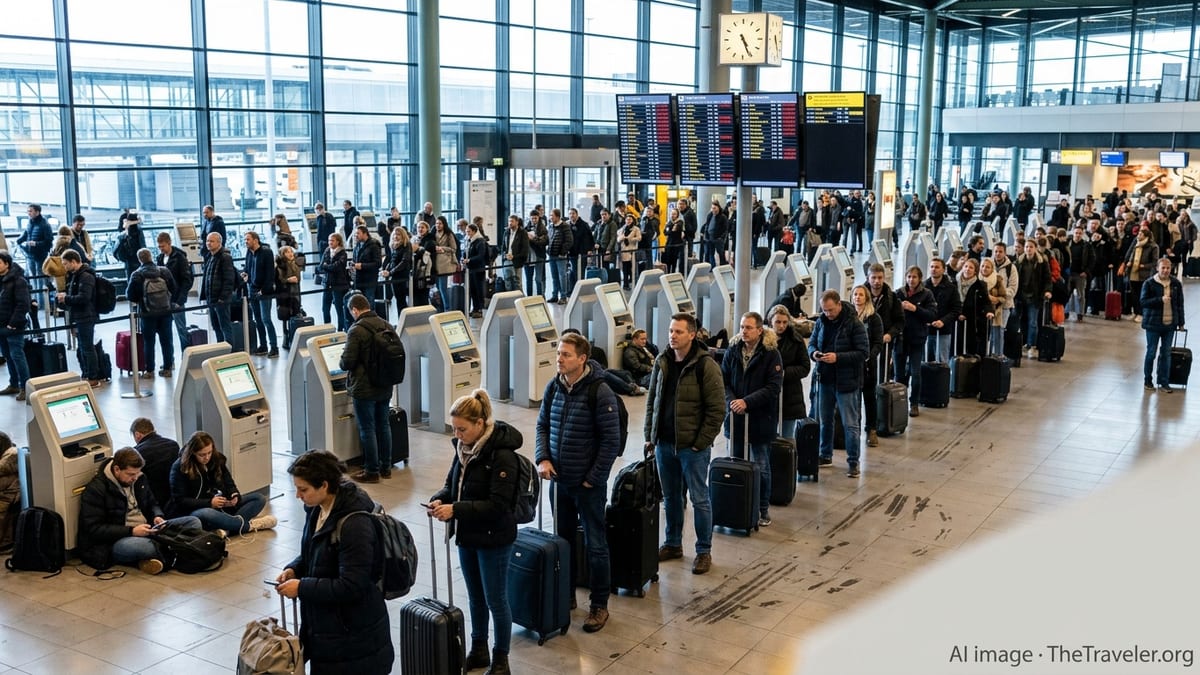
The combination has been particularly disruptive for connecting traffic using London and Paris as transfer points between regional European cities and long-haul destinations. Reports from affected airports describe busy departure halls, queues at customer-service desks and travellers waiting hours for clarity on replacement flights after missing connections from Italy or the Netherlands.
Paris Charles de Gaulle and London Heathrow, both heavily reliant on tightly timed banks of arrivals and departures, are especially vulnerable when inbound flights from multiple European origins are delayed at once. Even a limited number of cancellations can have an outsized effect when they occur within these concentrated waves of traffic.
Lufthansa, KLM and Finnair Among Carriers Hit by Ripple Effects
The unfolding disruption has affected a broad mix of airlines, with network carriers bearing the brunt of missed connections and aircraft rotations gone awry. Publicly available coverage of recent operations shows that Lufthansa, KLM and Finnair are among those seeing schedules impacted, alongside British Airways and several southern European and low-cost operators.
Lufthansa is already bracing for further turmoil linked to a one-day cabin crew strike on 10 April, which is expected to affect flights across Germany and amplify existing delays at Frankfurt and Munich. Consumer-rights organisations warn that knock-on delays and cancellations are likely to ripple beyond Germany into the wider Lufthansa network, including services that feed through London, Paris and other major European cities.
KLM’s operations remain sensitive after a challenging winter that brought repeated bouts of disruption at Amsterdam Schiphol. Recent commentary from travel advisers highlights how shortages of de-icing capacity, air-traffic control constraints and tight crew-rostering rules have made it harder for the Dutch flag carrier to absorb fresh schedule shocks without cancelling flights or trimming frequencies at short notice.
Finnair, meanwhile, continues to operate a hub-and-spoke model centered on Helsinki, where delays on feeder services from Western and Southern Europe can quickly jeopardise onward flights to Asia and North America. In a week of heightened disruption, travellers booked on itineraries combining Finnair with partner airlines are particularly exposed when a single delayed leg causes a missed connection and leaves no same-day alternatives.
Passengers Face Long Waits, Rebookings and Overnight Stays
For travellers caught in the latest wave of disruption, the most immediate impacts are practical and personal. Reports from airports across Europe describe passengers spending extended periods in terminals while airlines attempt to rebook them, often competing for limited seats on alternative flights as aircraft reach capacity at the start of the busy spring period.
In London and Paris, where a high proportion of traffic is connecting rather than point-to-point, missed onward flights have led to clusters of stranded travellers with complex itineraries. When delays on short-haul legs into these hubs cascade into missed long-haul departures, passengers may be forced to wait until the next scheduled service, which in some cases does not operate daily.
Consumer advocacy groups underline that, under European air-passenger regulations, travellers facing cancellations or long delays on flights departing from EU and UK airports are entitled to care such as meals, refreshments and accommodation where necessary. However, recent coverage suggests that, during peaks of disruption, access to hotel rooms near major airports can be limited, leaving some passengers to spend the night in terminal buildings.
Families travelling with children and those on time-sensitive journeys, such as business trips or onward cruise departures, are among the hardest hit. In several published accounts, travellers describe rearranging ground transport, hotel bookings and even key events after arriving many hours or a full day later than planned.
What Travellers Can Do as Disruption Continues
As delays and cancellations continue to affect multiple countries and carriers, travel experts recommend that passengers take proactive steps to reduce their exposure to disruption. Public guidance from passenger-rights organisations suggests that travellers monitor their flight status closely on the day of departure, use airline apps where available and keep contact details updated so that rebooking options can be delivered quickly if schedules change.
For those with upcoming connections through major hubs such as London, Paris, Frankfurt or Amsterdam, current travel commentary points to the value of building in longer layovers where possible. A wider buffer between flights can make the difference between a stressful sprint through the terminal and a missed connection that triggers an overnight stay.
Travel insurers and consumer advocates also stress the importance of understanding both airline obligations under European regulations and the coverage limits of any separate travel insurance policy. In many cases, passengers can seek reimbursement for additional costs such as meals, hotels and replacement transport, provided they keep receipts and can show that the expenses were directly related to the disruption.
With airlines and airports still working through the operational legacy of winter weather, regional conflicts and staffing constraints, observers suggest that further uneven days of flying are likely in the weeks ahead. For travellers heading through Europe’s busiest hubs, flexibility, preparation and an awareness of their rights remain key defences against the risk of becoming stranded.