

More news on this day
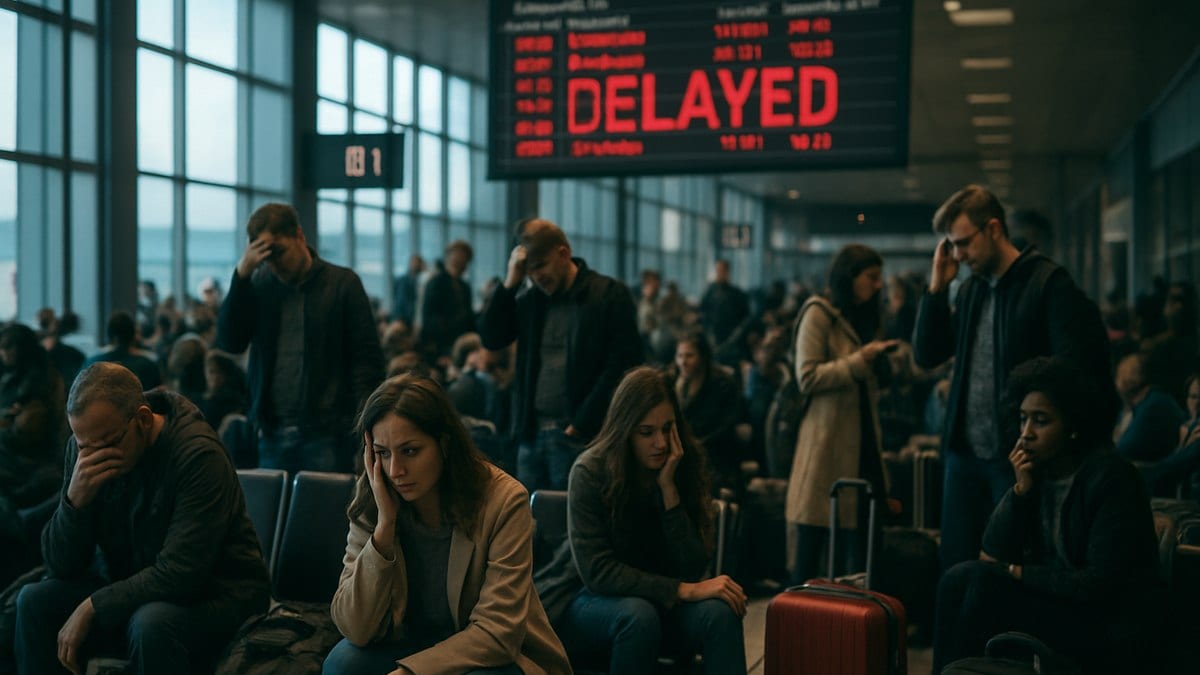
Hundreds of passengers were left stranded across Europe this week as a fresh wave of delays and cancellations swept through major hubs, snarling connections and underlining how fragile the region’s air travel network remains in early 2026.
Get the latest news straight to your inbox!
Schiphol Disruptions Ripple Across the Continent
Operational data and published coverage indicate that Amsterdam Schiphol was among the hardest-hit hubs on April 9, with a cluster of cancellations and long delays rippling through short and medium haul routes. Reports describe hundreds of travelers stuck in terminal waiting areas after missed connections, particularly on services linking northern Europe with Mediterranean and Middle East destinations.
Tracking platforms cited in European travel reports show Schiphol registering one of the continent’s highest disruption levels on the day, with more than a dozen flights canceled outright and many more operating hours behind schedule. The knock-on effect extended to feeder services that supply long haul departures, forcing itinerary changes for passengers who never set foot in the Netherlands but relied on Dutch connections.
Travel analysis notes that Schiphol’s recent disruptions follow a winter and early spring marked by weather events and infrastructure constraints across northwestern Europe. Each new spike in delays has compounded the challenge for airlines already working with tight aircraft and crew rotations, leaving little spare capacity when schedules begin to unravel.
Germany Braces for Strike Related Flight Chaos
In Germany, a new round of labor action is poised to deepen the disruption picture, with cabin crew walkouts at a major carrier scheduled for April 10. Public advisories and airline statements summarized in consumer rights briefings warn that flights at Frankfurt and Munich, two of Europe’s most important hubs, face substantial delays and cancellations as crews withdraw their labor.
Industry commentary suggests that thousands of passengers could be affected in a single day, not just in Germany but across the broader European network that depends on German hubs for transfers. Feeder flights from smaller European cities risk being canceled or arriving too late for onward connections, while long haul sectors may depart with empty seats or suffer last minute schedule changes.
Recent European air traffic assessments highlight industrial action as a recurring driver of delays, building on several years in which strike days significantly reduced capacity and complicated airline planning. Passenger advocacy organizations continue to emphasize that, under European Union and United Kingdom air passenger rights rules, strike related disruption on many flights can trigger eligibility for compensation and care, even when the underlying dispute is outside travelers’ control.
Weather and Fuel Pressures Add to Network Strain
The latest disruption wave is unfolding against a backdrop of volatile weather and rising fuel costs that are already weighing on airline operations. Reports from recent European windstorms describe widespread transport upheaval, including flight cancellations and diversion patterns as carriers routed aircraft away from high winds and heavy precipitation.
At the same time, industry reporting on jet fuel markets points to supply constraints and higher prices that have prompted some airlines to trim schedules in recent weeks. Analytics cited in European and global aviation coverage suggest that capacity reductions and a cautious approach to adding new flights have left little flexibility to absorb sudden spikes in demand or weather related interruptions.
For passengers on the ground, these overlapping pressures are largely invisible until they manifest as long queues at customer service desks, rolling departure boards and last minute gate changes. Travel analysts argue that the combination of weather vulnerabilities, fuel costs and labor tensions has shifted European aviation into a more fragile operating environment, where localized disruption can more quickly cascade across borders.
Impact on Travelers and What Passengers Can Expect
Across Europe’s main hubs, the human impact of this week’s delays has been visible in crowded terminal concourses and overnight stays in airport hotels. Accounts compiled by travel outlets describe passengers sleeping in seating areas, searching for scarce power outlets and refreshing airline apps as they waited to learn whether flights would operate at all.
Consumer rights platforms note that travelers departing from European Union or United Kingdom airports, or flying with European and UK carriers, may be covered by compensation and assistance rules when long delays or cancellations occur. Public guidance stresses the importance of keeping boarding passes and booking confirmations, as well as documenting actual arrival times, to support any later claims.
Even when compensation is not owed, such as in certain severe weather scenarios, airlines are generally expected under prevailing regulations to provide basic care in the form of meals, refreshments and, if necessary, overnight accommodation. Passenger advocates recommend that stranded travelers check their carrier’s published conditions of carriage and approach airline staff to request written confirmation of the reason for disruption whenever possible.
Outlook for the Coming Days
Short term projections from aviation data providers suggest that disruption levels in Europe may remain elevated through the weekend as airlines work through the combined effects of weather, fuel pressures and upcoming labor action. Schedule monitoring indicates that recovery could be uneven, with some hubs clearing backlogs faster than others, and regional airports remaining vulnerable to late running aircraft arriving from congested centers.
Airline planners face the challenge of repositioning aircraft and crews while also maintaining already busy spring schedules. Publicly available timetables show little spare capacity on popular leisure and business routes, increasing the likelihood that a canceled flight may translate into long waits for the next available seat, particularly for passengers traveling in groups or on complex multi stop itineraries.
Travel experts quoted in recent coverage recommend that passengers flying through European hubs in the coming days build extra time into their plans, monitor flight status frequently and consider alternative routings where feasible. For now, the hundreds of travelers stranded during this latest episode serve as a reminder that air journeys across Europe remain highly sensitive to any shock, whether from the weather, labor disputes or the economics of keeping aircraft in the air.