

More news on this day
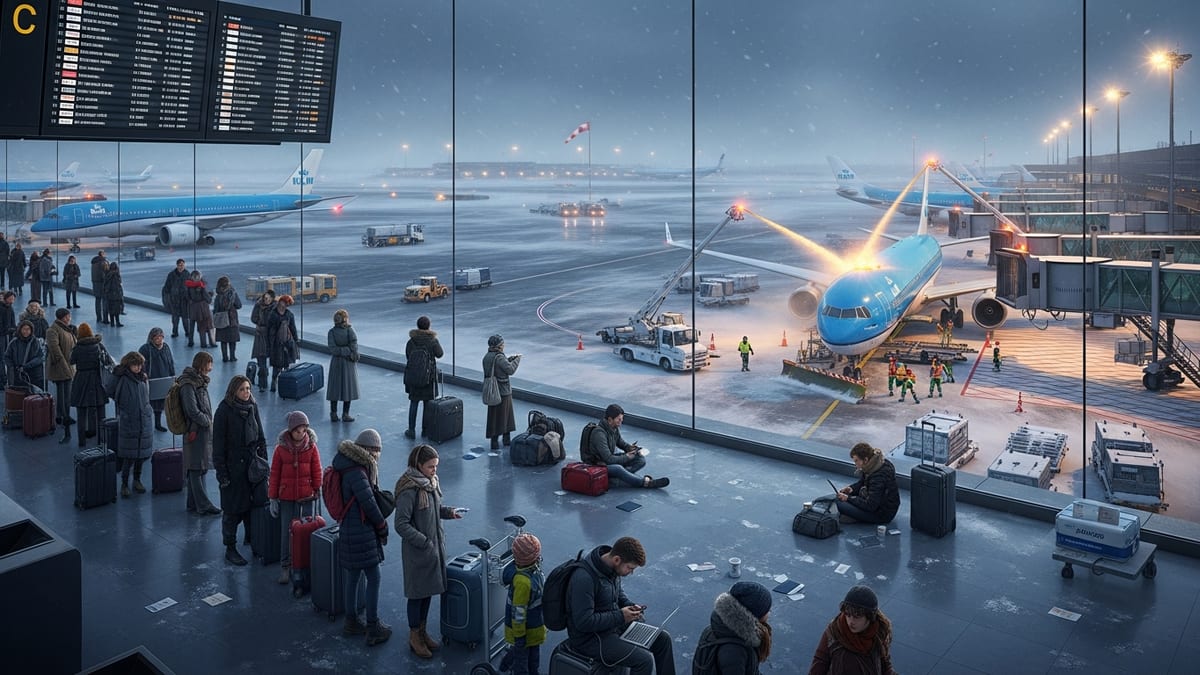
Hundreds of travellers were stranded across Europe this week as a fresh surge of disruption saw more than 1,700 flights delayed and over 60 services cancelled, snarling operations at major hubs in the Netherlands, the United Kingdom, Italy, France and beyond.
Get the latest news straight to your inbox!
Pan-European Disruption Hits Major Hubs
Publicly available flight-tracking and operational data for early April indicate that Europe’s air network has endured another intense day of disruption, with 1,720 services delayed and 61 flights cancelled across multiple countries. The impact has been concentrated on busy corridors linking the Netherlands, the United Kingdom, Italy, France, Ireland and Portugal, compounding an already unsettled start to the spring travel season.
Airports serving major capitals have been among the hardest hit. London’s Heathrow and Gatwick, Paris Charles de Gaulle, Amsterdam Schiphol, Rome Fiumicino and Milan’s main gateways all reported clusters of heavily delayed departures and arrivals, alongside targeted cancellations designed to ease pressure on congested schedules. Reports indicate that secondary airports in cities such as Dublin, Lisbon, Manchester and Zurich have also experienced rolling delays as aircraft and crews struggled to stay in position.
Although the aggregate percentage of cancelled flights remains relatively modest compared with pandemic-era peaks, the high volume of delayed services has created outsized disruption for individual travellers. Missed connections, overnight layovers and last-minute rebookings have become common across intra-European routes, particularly for those connecting through London and Paris from long-haul services.
Lufthansa, KLM, Finnair and Others Under Strain
Among the carriers affected, legacy airlines with dense European networks are facing significant operational challenges. Public data compiled by travel-industry outlets show that Lufthansa services from Germany into the UK, the Netherlands and Italy have recorded dozens of delays alongside a cluster of cancellations, particularly on flights touching Frankfurt, Munich and Berlin, where hub banks are tightly timed.
KLM’s operations at Amsterdam Schiphol have also been disrupted, with a notable share of the delayed and cancelled flights linked to its short- and medium-haul European schedule. The knock-on effect has rippled across the airline’s network, affecting connections from cities such as London, Paris and Rome that rely on punctual feeder services into Amsterdam for onward long-haul travel.
Finnair and other northern European carriers have been caught in the wider disruption pattern, especially on routes threading through crowded Western European airspace. While some operators have managed to limit outright cancellations, extended ground holds, late-arriving aircraft and crew rescheduling have translated into substantial delays for passengers on flights between Scandinavia, the UK, the Netherlands and southern Europe.
Weather, Staffing and Airspace Restrictions Combine
Travel-data providers and aviation-focused publications attribute the latest wave of disruption to a familiar mix of triggers. Episodes of severe spring weather have continued to affect Western and Northern Europe in recent days, bringing strong winds, thunderstorms and low visibility to airports from the UK and Ireland to the Low Countries and the Alps. When conditions deteriorate quickly, ground handling and arrival rates are reduced, leading to sudden capacity squeezes.
Weather issues have coincided with lingering staffing constraints and occasional airspace restrictions, creating a fragile operating environment. Controllers and ground teams are working to balance safety margins with heavy seasonal demand at major hubs, and small operational setbacks can quickly cascade into broader congestion. Once delays build during a morning peak, they often persist through the afternoon and evening, particularly at airports like Heathrow, Schiphol and Charles de Gaulle that operate close to capacity even on normal days.
Airlines have responded by trimming some frequencies, consolidating rotations and preemptively cancelling a limited number of flights in order to protect the remainder of their schedules. While these strategies can stabilise operations over a several-day period, they also contribute to the perception among travellers that disruption is worsening, especially for those whose flights are among the targeted cancellations.
Stranded Travellers Face Long Queues and Limited Options
The operational statistics translate into difficult on-the-ground experiences for passengers. Reports from affected hubs describe long check-in and security queues, busy transfer desks and packed customer-service lines as hundreds of travellers seek new itineraries after missed connections or cancelled flights. With popular routes already heavily booked for the spring period, same-day alternatives are often limited, and many travellers are being rebooked for departures one or more days later.
In airports such as London Heathrow, Paris Charles de Gaulle and Amsterdam Schiphol, the concentration of delayed flights has placed additional strain on terminal facilities, from seating areas to food outlets and airport hotels. Travellers posting updates via social channels and consumer forums describe crowded departure halls late into the evening as airlines attempt to clear backlogs, with some passengers provided with overnight accommodation and meal vouchers while they wait for new flights.
At Italian hubs including Rome Fiumicino and Milan Malpensa, the pattern has been similar, with large numbers of delayed departures creating uncertainty for those connecting to smaller domestic or regional destinations. Even where only a small number of flights have been cancelled outright, extended delays of 45 minutes to more than two hours have been enough to break tight connections and strand passengers partway through their journeys.
What Travellers Can Expect in the Coming Days
Industry analysis suggests that the immediate disruption from the latest set of delays and cancellations may take several days to fully clear. Aircraft and crews must be repositioned across the continent, and schedules will need to be rebalanced as airlines work through maintenance and duty-time constraints triggered by the chaotic operating conditions. Travellers booked on short-haul services involving the Netherlands, the UK, Italy or France in the near term may continue to encounter residual delays, gate changes and occasional tactical cancellations.
Passenger-rights organisations note that most of the disruption appears to be linked to weather and airspace capacity issues rather than internal airline failures, meaning cash compensation under European and UK consumer rules may be limited. However, carriers are generally expected to offer options such as rerouting at the earliest opportunity, refunds for unused tickets and basic care in the form of meals and accommodation when travellers are left stranded overnight.
Analysts point out that the early April problems follow several previous days of heavy disruption across Europe, underscoring how sensitive the continent’s air traffic system remains to spikes in demand and short-notice operational shocks. With the main summer holiday season still to come, the latest episode serves as a warning that travellers may need to build additional buffer time into itineraries, particularly when planning tight same-day connections through London, Paris, Amsterdam or Rome.