

More news on this day
Hundreds of travelers were left stranded across the United States and on international routes after a disruptive day at New York’s LaGuardia Airport, where data from flight-tracking services on March 23 and March 24 indicated roughly 315 cancellations and 383 delays tied to a cascading shutdown that affected Republic, Endeavor, Delta, Jazz, Southwest, American, United and other carriers.
Get the latest news straight to your inbox!
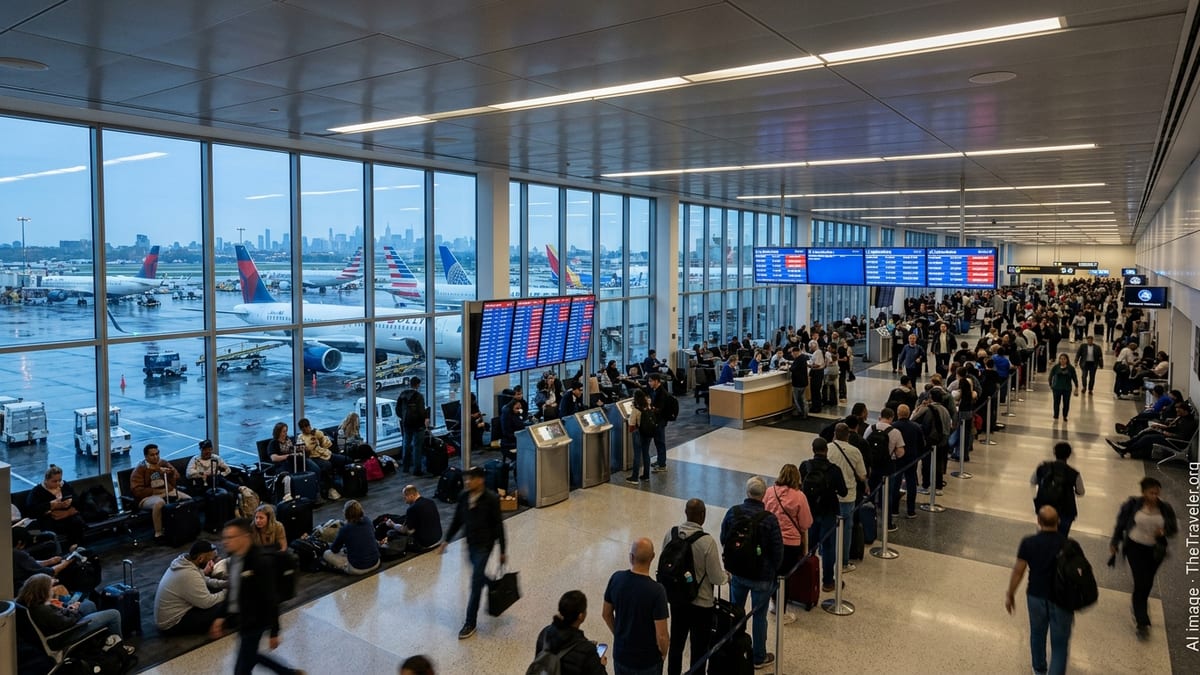
Chain Reaction After LaGuardia Collision and Closure
The disruption followed a ground collision at LaGuardia involving an Air Canada Jazz aircraft and an airport vehicle on March 23, which led to an extended closure of runways and taxiways for safety checks and debris removal. Publicly available accounts from aviation monitoring platforms describe a halt to operations that lasted into the afternoon, forcing airlines to cancel or divert flights and leaving aircraft and crews out of position.
As runway capacity was sharply reduced, airlines shifted from short delays to widespread cancellations, prioritizing aircraft already airborne and diverting some arrivals to other Northeast airports. Tracking sites showed cancellations accumulating rapidly through the midday hours, eventually reaching more than 300 scrubbed departures and arrivals associated with LaGuardia and onward connections.
The localized closure at LaGuardia quickly turned into a broader operational shock because the airport is a key node in several major carriers’ networks. Regionals such as Republic Airways and Endeavor Air, which operate flights on behalf of American, Delta and United, were particularly exposed as schedules built around tight turnarounds unraveled.
Major Carriers and Regional Partners Hit Hard
Published flight-status data indicated that Delta and its regional affiliate Endeavor saw dozens of cancellations from LaGuardia alone, with follow-on disruptions at hubs including Atlanta, Detroit and Minneapolis as aircraft and crews failed to reach their next rotations. Flights marketed as Delta but operated by regional partners accounted for a significant share of the affected departures, amplifying the impact far beyond New York.
American Airlines and United Airlines also experienced substantial operational strain as Republic-operated services were canceled or heavily delayed. Because Republic flies under multiple major-brand banners, disruptions to its LaGuardia flying affected passengers booked on different airlines but relying on the same pool of aircraft and crews. That overlap made it more difficult for carriers to recover quickly, as spare capacity was limited across several brands at once.
Southwest Airlines, which maintains a smaller but strategically important presence at LaGuardia, reported a cluster of delayed and canceled flights to cities such as Chicago, Nashville and New Orleans. For point-to-point carriers, a canceled LaGuardia departure often meant a lost roundtrip for the day, further reducing available seats for travelers trying to rebook.
Air Canada’s Jazz operation, already contending with the aftermath of the ground incident, faced additional scrutiny as flights linking LaGuardia with Canadian gateways were delayed or canceled. International connections that relied on those feeders, including transatlantic itineraries via Montreal and Toronto, saw knock-on effects as missed connections rippled into evening and overnight departures.
Travelers Face Overnight Stays and Cross-Country Disruptions
For passengers, the numbers translated into hours-long queues at customer service counters, crowded gate areas and impromptu overnight stays. Reports from travelers on social media platforms on March 23 and March 24 described families sleeping in terminal chairs, long lines for meal vouchers where offered, and difficulty securing hotel rooms near New York airports as cancellations piled up.
The impact was not confined to New York. Because LaGuardia sits at the heart of domestic business and leisure traffic, disruptions there pushed missed connections and aircraft shortages as far as the West Coast. Publicly available schedules showed flights to and from cities such as Dallas, Denver, Orlando and Los Angeles either delayed by several hours or removed from the boards altogether as airlines attempted to consolidate passengers.
Travelers on multi-stop itineraries reported losing entire weekends or work trips when a canceled LaGuardia leg broke the rest of their journey. In several cases documented online, passengers were rebooked via alternate hubs like Newark, Philadelphia or Boston, adding hours of additional travel and, in some instances, ground transfers between airports.
Operational Recovery and Ongoing Residual Delays
By the morning of March 24, LaGuardia’s runways had reopened and departure boards showed a gradual normalization of operations, particularly at Delta’s Terminal C and other newly renovated facilities. Travelers arriving early in the day reported busier-than-usual security lines but relatively smooth processing once past checkpoints, suggesting that the worst of the immediate gridlock had begun to ease.
Even as flights resumed, the residual effects of the previous day’s cancellations remained visible in flight-tracking data. Aircraft and crews were still out of position, leading to scattered delays and schedule changes throughout the network for several carriers. Some early-morning departures left with substituted aircraft types or reduced seating capacity, while later flights were consolidated as airlines sought to restore normal rotations.
Industry data on typical recovery patterns suggests that a disruption of this magnitude can take 24 to 48 hours to fully work through complex networks, especially at slot-constrained airports such as LaGuardia. Travelers with flights during this period were advised through carrier apps and public alerts to monitor their status frequently and allow extra time for potential gate or schedule changes.
What the LaGuardia Disruption Reveals About System Fragility
The events at LaGuardia highlighted how a single incident at a major urban airport can swiftly cascade into nationwide disruption, particularly within the intertwined relationships between mainline carriers and regional operators. With airlines running tight schedules and limited spare aircraft, any prolonged closure narrows the margin for recovery and magnifies the impact of each cancellation.
Publicly available federal performance reports have long shown that factors such as air carrier delays, extreme weather and national airspace constraints already put pressure on on-time rates for airlines like Delta, American, United, Southwest, Republic and Endeavor. Against that backdrop, an unexpected closure at a critical airport like LaGuardia can act as a tipping point that exposes system-wide vulnerabilities.
For travelers, the episode underscores the value of contingency planning, including flexible tickets where possible, awareness of alternate airports and proactive use of airline apps and notifications. While weather and operational incidents cannot be avoided entirely, understanding how quickly disruptions at key hubs can spread across the map may help passengers make more informed choices about connection times and routing in the future.