

More news on this day
Hundreds of travelers were left stranded at Chicago O’Hare International Airport on March 12 as 396 flights were delayed and 31 canceled, snarling operations for United Airlines, American Airlines and other carriers serving key domestic routes to New York, Los Angeles, Dallas and Miami.
Get the latest news straight to your inbox!
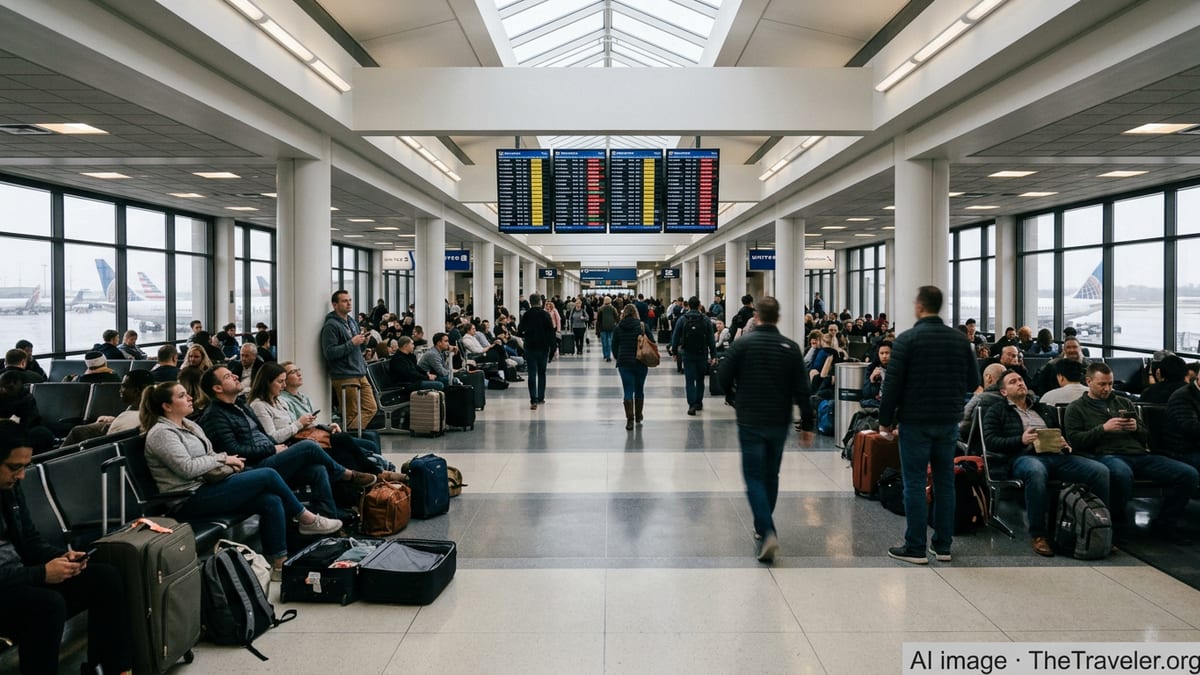
Severe Disruptions Ripple Across One of America’s Busiest Hubs
The latest wave of disruptions hit O’Hare early Thursday, quickly cascading across the massive hub’s domestic network. By late morning, arrival and departure boards across multiple terminals showed long lines of red and yellow status alerts, with flights marked delayed by anywhere from 45 minutes to more than three hours.
Passengers reported crowded gate areas, long queues at customer service counters and difficulty reaching airline call centers as they scrambled to rebook. Many travelers found themselves stuck in Chicago overnight after missing tightly timed connections to coastal cities and major Sun Belt destinations.
The disruptions affected a wide range of carriers, but the impact was most visible at the terminals dominated by United and American, O’Hare’s largest tenants. With both airlines operating dozens of daily departures to New York, Los Angeles, Dallas and Miami, delays on early bank flights quickly rippled into later services as aircraft and crews fell out of position.
While some flights continued to operate close to schedule, the cumulative effect of rolling delays and targeted cancellations left hundreds of passengers either stranded in Chicago or uncertain if they would reach their final destinations the same day.
United and American Face Operational Strain
United Airlines, which uses O’Hare as its primary Midwest hub, saw some of its most popular routes snarled throughout the day. Morning departures to New York’s LaGuardia and Newark airports, Los Angeles International and Miami experienced extended delays as aircraft arrived late from earlier segments and turnaround times stretched at crowded gates.
American Airlines, which concentrates its O’Hare operations in another terminal complex, also reported significant disruptions to its Dallas Fort Worth services and key East Coast routes. Equipment rotations tying Chicago to other American hubs meant that a single delayed aircraft could affect multiple flights in quick succession, compounding the strain on scheduling teams.
To ease bottlenecks, both carriers encouraged travelers to rebook via mobile apps and websites rather than lining up at service counters, where waits stretched to an hour or more at peak times. Some passengers were offered same-day rebooking to alternate airports in the New York and South Florida regions, while others were given hotel and meal vouchers when no reasonable same-day options were available.
Regional partners operating under United Express and American Eagle brands were also affected, with several feeder flights to and from smaller Midwestern cities delayed or canceled. That added another layer of complexity for travelers relying on Chicago connections to reach long-haul flights on the coasts.
New York, Los Angeles, Dallas and Miami Routes Hit Hard
The impact was felt most acutely on the busy corridors linking Chicago with other major U.S. metros. O’Hare’s high-frequency schedules to New York and Los Angeles are designed to give business and leisure travelers near-hourly options throughout the day, but Thursday’s disruption undercut that reliability.
Travelers heading to New York described watching multiple departures change from on time to delayed within minutes as inbound aircraft were held up. Some were rebooked onto later flights to alternate New York area airports, while others opted to stay in Chicago overnight rather than risk missing onward connections.
On transcontinental routes to Los Angeles, long lines for stand-by lists formed as travelers who missed connections tried to secure seats on later services. Similar scenes played out on flights to Dallas and Miami, where heavy demand from business travelers, family visitors and early spring vacationers left few empty seats to absorb displaced passengers.
Airline staff at the gates urged passengers with flexible plans to voluntarily accept next-day departures or reroutes through other hubs in exchange for travel credits, an effort to relieve pressure on oversold peak-time flights.
Weather, Congestion and Capacity Limits Under Scrutiny
The disruption at O’Hare comes amid heightened scrutiny of congestion and capacity constraints at one of the country’s busiest airports. In recent weeks, federal aviation officials have flagged concerns that overscheduling at peak hours, combined with ongoing construction and seasonal weather, is making the airport more vulnerable to widespread delays.
Even when skies above Chicago are relatively clear, thunderstorms, low clouds or heavy traffic elsewhere in the national airspace can trigger ground holds and flow restrictions that quickly stack up at major hubs. At O’Hare, where multiple runways are in use and terminals are undergoing long-term upgrades, small timing disruptions can amplify into broader operational challenges over the course of a day.
Travel industry analysts note that the tight scheduling of both aircraft and crew leaves airlines with limited margin when irregular operations occur. Once delays reach a certain threshold, carriers may choose to cancel a portion of flights outright to reset schedules and ensure that remaining services can operate more reliably.
Thursday’s figures, with nearly 400 delayed flights and dozens canceled, illustrate how even a moderate operational shock at a heavily used hub can strand hundreds of travelers and disrupt travel plans far beyond the Chicago region.
Passengers Face Long Waits and Limited Options
For travelers caught in the middle of the disruptions, the experience was a familiar but frustrating part of modern air travel. Families returning from vacations, business travelers aiming for same-day meetings and students connecting through Chicago for spring travel all found themselves weighing whether to stay in the terminal, seek nearby hotels or attempt to reroute through other cities.
With major routes to New York, Los Angeles, Dallas and Miami heavily booked, same-day alternatives were scarce, particularly for groups traveling together. Some passengers turned to social media to share updates and advice, while others sought help from airline lounges or contracted assistance desks to navigate rebooking options.
Airport officials urged patience as airlines worked through the backlog of delayed departures and arrivals. They advised travelers to monitor their flight status closely, allow extra time for security and terminal transfers within O’Hare, and consider contacting airlines digitally before heading to the airport for later flights.
As operations gradually stabilized into the evening, airlines expected some residual delays to persist, with crews and aircraft still out of optimal position. For many travelers, the disruption served as a reminder of how quickly issues at a single major hub can reverberate across the national air network, particularly on high-demand routes linking the Midwest to key coastal and Sun Belt cities.