

More news on this day
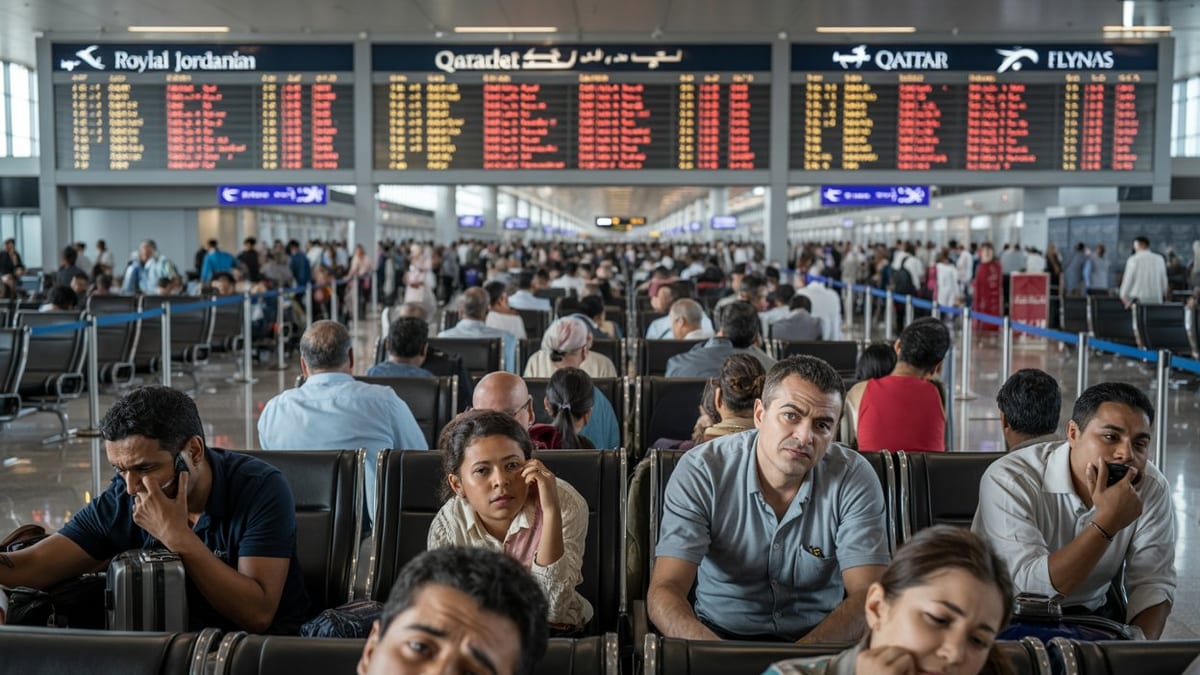
Several hundred travelers were left stranded on Tuesday as a fresh wave of flight disruptions rippled across the United States, with 245 flights canceled and a further 445 delayed at key hubs including Hartsfield–Jackson Atlanta, Los Angeles, Chicago O’Hare, Denver, John F. Kennedy, Dallas–Fort Worth, San Francisco, Seattle–Tacoma, Houston Bush and Cincinnati/Northern Kentucky International Airport.
Get the latest news straight to your inbox!
Nationwide Disruptions Concentrated at Major Hubs
Publicly available aviation tracking data and recent industry coverage point to a concentrated build-up of disruption at the country’s busiest airports, where the volume of traffic magnifies the impact of any operational strain. Hartsfield–Jackson Atlanta International Airport and Chicago O’Hare, both consistently among the world’s most heavily trafficked hubs, have each reported clusters of cancellations and rolling delays that quickly cascaded through domestic and international networks.
Los Angeles International, Denver International and New York’s John F. Kennedy International have seen similar patterns, with departure banks slowed or reset as airlines adjusted schedules to account for aircraft and crew out of position. Even modest weather systems, air traffic control flow programs, or earlier mechanical issues can rapidly compound at these mega-hubs, resulting in hundreds of passengers facing missed connections, overnight stays and rebookings.
In Texas, Dallas–Fort Worth International and Houston George Bush Intercontinental have also been affected, as carriers restructured routes through their central and southern gateways. These airports serve as critical links between coasts and for connections into Latin America, which means that disruptions can extend far beyond the United States and into long-haul networks.
On the West Coast, San Francisco International and Seattle–Tacoma International have reported notable pockets of delayed departures, particularly on transcontinental and Pacific-facing services. The combined effect across the ten highlighted airports has been a measurable spike in systemwide disruption, with the 245 cancellations and 445 delays representing a significant one-day setback for airline schedules.
Weather, Congestion and Tight Schedules Drive the Disruption
Recent days have underscored how vulnerable tightly timed domestic networks remain to a mix of routine and seasonal pressures. Aviation analysts note that even after the peak of winter storms earlier in 2026, lingering weather fronts, low ceilings and gusting winds at hub airports continue to trigger ground stops and spacing restrictions. When those measures are introduced at facilities such as Atlanta, Chicago O’Hare or New York, knock-on effects are often felt across dozens of downstream cities.
Congestion in the national airspace system adds a further layer of complexity. Longstanding bottlenecks at busy departure and arrival corridors, combined with the sheer density of flights at the largest hubs, can lead to extended taxi times and airborne holding patterns. Over the course of a single day, those incremental delays add up, pushing aircraft and crews beyond regulated duty limits and prompting carriers to cancel rather than risk further schedule deterioration.
Industry reporting also highlights the role of tight aircraft utilization in amplifying disruption. Many fleets are scheduled with minimal buffers between rotations, which helps airlines boost efficiency in normal conditions but leaves little margin when irregular operations unfold. As a result, a single canceled early-morning departure out of Denver or Dallas–Fort Worth can ripple through multiple later flights, culminating in stranded travelers by evening at connecting points such as Houston Bush, San Francisco or Seattle–Tacoma.
Impact on Passengers at Affected Airports
The human impact of the 245 cancellations and 445 delays has been especially visible in crowded concourses and rebooking queues. At Atlanta and Dallas–Fort Worth, reports indicate that passengers connecting from early arrivals often discovered their onward flights scrubbed or rescheduled, forcing last-minute changes to business trips, vacations and family visits.
At coastal hubs such as JFK, Los Angeles and San Francisco, disrupted transcontinental and international services created additional complications. Travelers confronting missed long-haul flights faced limited same-day alternatives, sometimes requiring overnight hotel stays, rerouting through secondary hubs, or extended layovers in cities such as Chicago O’Hare, Denver or Seattle–Tacoma.
Cincinnati/Northern Kentucky International, while smaller than the largest coastal and southern gateways, has not been immune. As a connecting point within several domestic networks, the airport has seen its share of stranded passengers whenever flights into or out of its larger partner hubs are curtailed. The cumulative effect at all ten airports has been a day marked by uncertainty, crowded gate areas and shifting departure boards.
Traveler advocacy organizations reiterate that passenger experiences vary widely depending on ticket type, routing and airline policies. Some customers are rebooked swiftly onto alternative departures, while others face lengthy waits on customer service lines or struggle to secure new itineraries that match their original plans.
How Airlines and Travelers Are Responding
Airlines have responded to the latest wave of disruption with a mix of schedule adjustments, rolling rebookings and limited fee waivers. According to published coverage, several major carriers have been proactively consolidating lightly booked flights and rerouting aircraft to the most time-sensitive routes in an effort to stabilize their operations at key hubs. Where possible, additional capacity has been introduced on select trunk routes linking cities such as Atlanta, Chicago, Dallas–Fort Worth and Denver to help absorb stranded passengers.
For travelers already at the airport, digital tools continue to play a central role. Carriers encourage use of mobile apps and self-service kiosks for seat changes, same-day flight switches and standby lists, which can reduce the need to queue at staffed counters. At congested hubs like Los Angeles, San Francisco and Houston Bush, same-day rebooking via apps has allowed some passengers to move onto earlier departures from nearby gates when seats become available.
Travel experts recommend that, in periods of heightened disruption, passengers build in additional buffer time when connecting through major hubs and consider the earliest departures of the day, which historically have a higher likelihood of operating close to schedule. Flexible itineraries, including the option to accept alternate routings via cities such as Seattle–Tacoma or Cincinnati, can also improve the chances of reaching a final destination on the same day.
What Today’s Chaos Signals for the Coming Travel Season
The latest cancellations and delays arrive as airlines and airports prepare for the busier late spring and summer travel seasons, when passenger volumes typically surge. Operational data from earlier in 2026, including major storm-related disruptions in January and March, has already underscored the fragility of the system under stress. The current episode, even at a smaller numerical scale, serves as a reminder that relatively modest triggers can still produce substantial traveler inconvenience.
Industry observers point out that major hubs in Atlanta, Chicago, Dallas–Fort Worth, Houston and New York handle millions of passengers each month, leaving little room for error once traffic builds. If underlying structural issues such as staffing, air traffic control capacity and infrastructure constraints are not addressed, days with 200 or more cancellations and several hundred delays could remain a recurring feature of the travel calendar rather than isolated events.
For now, airlines are expected to continue refining their schedules, building slightly more slack into turnaround times and adjusting fleet deployment across the network. Travelers passing through Hartsfield–Jackson, Los Angeles, Denver, JFK, San Francisco, Seattle–Tacoma, Houston Bush and Cincinnati may see more modest schedule tweaks in coming days as carriers work to realign aircraft and crews after the latest disruption.
With demand for leisure and business travel projected to remain strong through 2026, the experience of hundreds of passengers stranded across the ten highlighted airports is likely to inform both traveler behavior and airline planning. The day’s disruptions underline how closely connected the nation’s major hubs are, and how quickly localized issues at one airport can cascade into a nationwide challenge for air travel.