

More news on this day
Hundreds of passengers were left stranded across Thailand on Saturday as airports in Bangkok, Phuket, Chiang Mai and Krabi cancelled 33 flights and delayed a further 557 services, disrupting operations for Thai AirAsia, Emirates, Thai Lion Air, Etihad, Thai Vietjet Air and several other carriers amid continuing Middle East airspace turmoil.
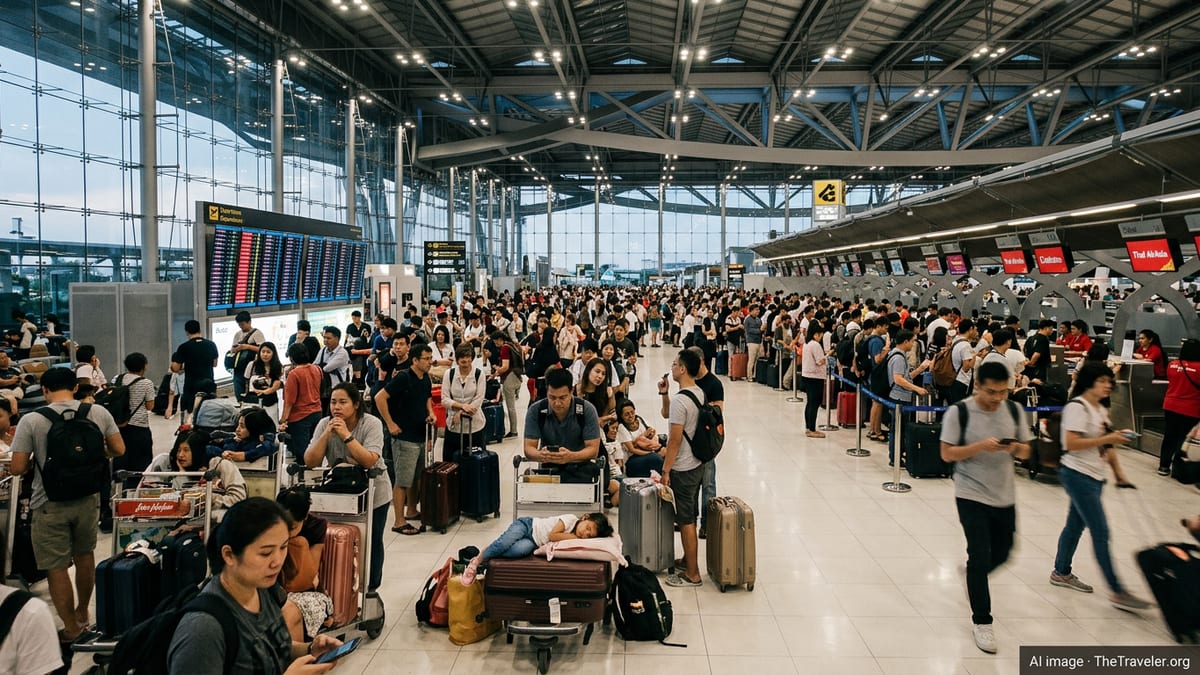
Nationwide Disruptions Across Key Thai Gateways
The latest figures, compiled on March 7 from real-time airport operations data and airline schedules, show a fresh wave of disruption sweeping through Thailand’s busiest international and domestic gateways. Suvarnabhumi and Don Mueang in Bangkok, together with Phuket, Chiang Mai and Krabi, all reported significant operational strain as airlines recalibrated routes and crew rosters in response to unstable airspace over parts of the Middle East.
In total, 33 flights serving Thailand were cancelled over the course of the day, while 557 were delayed, a volume that aviation analysts say is far above typical seasonal disruption. While not every affected flight originated in or departed from the country, the knock-on impact was most visible in crowded departure halls and arrival areas at Thai airports, where passengers faced long queues at airline counters and mounting uncertainty over onward connections.
Operational data indicate that Bangkok’s two airports absorbed the bulk of cancellations, while Phuket logged the heaviest concentration of delays, particularly on regional services linking popular beach destinations with hubs across the Gulf and wider Asia-Pacific region. Chiang Mai and Krabi, though smaller, reported a sharp uptick in late-running flights as congestion cascaded through national schedules.
Airport authorities said safety and airspace availability remained the overriding priorities, but acknowledged that the operational picture was changing hour by hour as airlines attempted to re-time and re-route services around bottlenecks in the Middle East corridor.
Multiple Airlines Hit, From Gulf Giants to Thai Low-Cost Carriers
The disruption cut across the aviation spectrum, affecting both full-service long-haul operators and Thailand-based low-cost carriers. Emirates and Etihad saw services to and from Bangkok and Phuket cancelled or heavily delayed as their networks continued to absorb the effects of airspace closures and safety restrictions on key Gulf and Levant routes.
Thai AirAsia, Thai Lion Air and Thai Vietjet Air reported extensive delays across domestic and short-haul international routes, particularly out of Phuket and Bangkok, where aircraft and crew rotations were thrown out of sync. In Phuket, Thai AirAsia and Thai Lion Air logged clusters of delayed departures to regional destinations, while Thai Vietjet Air struggled to keep its domestic services running on schedule as incoming aircraft arrived late.
Other carriers, including Qatar Airways and Bangkok Airways, were also drawn into the disruption web, either as a result of their reliance on Middle Eastern hubs for connecting traffic or through simple network knock-on effects. Aviation observers noted that even airlines with no direct exposure to the Middle East had to retime services or swap aircraft as congestion built up at Thai airports and connecting hubs across Asia and Europe.
Industry sources said that while the raw number of outright cancellations remained limited compared with the worst days of the crisis, the sheer scale of delays was putting unusual stress on ground operations, from check-in staffing and baggage handling to immigration processing and aircraft turnaround times.
Passengers Stranded as Rebooking Systems Struggle
For passengers, the statistics translated into a day of frayed tempers and improvised contingency plans. At Suvarnabhumi and Don Mueang airports in Bangkok, travellers described overnight waits on terminal benches, long lines at transfer desks and difficulty reaching airline call centres as carriers tried to rebook disrupted itineraries in real time.
In Phuket, where many visitors are at the tail end of beach holidays, families reported being told that the earliest available alternative flights were several days away, particularly on routes transiting the Gulf. Some travellers turned to regional detours, accepting itineraries via alternative hubs such as Singapore, Kuala Lumpur or East Asian gateways in order to get home sooner.
Chiang Mai and Krabi saw fewer outright cancellations but still recorded scores of long delays, leaving passengers uncertain whether to remain airside or seek hotels while awaiting new departure times. Several travellers shared accounts of boarding, deplaning and then facing rolling delay announcements as airlines waited for slots and overflight clearances to firm up.
Travel insurers and consumer advocates urged affected passengers to keep all documentation, including delay notifications from airlines and receipts for hotels, meals and ground transport. These records, they said, will be essential for any later compensation claims under airline policies, national regulations where applicable, or private travel insurance contracts.
Thai Authorities Roll Out Support and Visa Flexibility
Thai officials moved to soften the impact of the disruptions on foreign visitors, stressing that the country remained open but acknowledging that some tourists had effectively become stranded by circumstances beyond their control. The Ministry of Tourism and Sports reiterated that it is preparing a support mechanism for travellers who cannot depart as scheduled, focusing on key holiday destinations such as Phuket, Krabi, Phang Nga, Chiang Mai and Bangkok.
The government has also announced temporary leniency on overstay penalties for tourists whose visas expire while they are unable to leave due to cancelled or severely delayed flights linked to the Middle East situation. Immigration officers at major international gateways have been instructed to consider airline documentation as evidence when assessing travellers who present themselves late for departure.
Airports of Thailand, which manages Suvarnabhumi, Don Mueang, Phuket, Chiang Mai and several other major airports, said it had activated contingency measures, including additional information counters, extra seating in congested departure areas and complimentary drinking water for passengers facing long waits. Public address systems in terminals were used throughout the day to broadcast updated information in Thai and English.
Local tourism officials, already contending with volatile booking patterns since the first wave of cancellations in late February, warned that prolonged uncertainty could dent confidence among high-spending visitors from Europe and the Middle East, especially those relying on multi-leg itineraries and tight connection windows.
Outlook: High Fares and Rolling Disruptions Likely to Persist
Aviation analysts caution that while today’s 33 cancellations and 557 delays mark a notable spike, they are part of a wider pattern of instability likely to persist in the short term. As long as parts of Middle Eastern airspace remain constrained or subject to sudden restrictions, Thailand’s role as a transit and destination hub will expose it to recurring timetable upheavals.
Thailand’s Civil Aviation Authority has signalled that it expects fares on some long-haul routes, especially those linking Thailand with Europe via Gulf carriers, to remain elevated through at least late March as capacity is reduced and demand is funnelled through fewer available seats. That squeeze is already being felt in higher last-minute ticket prices and limited rebooking options for stranded passengers.
Airlines, for their part, are trying to balance schedule reliability with financial and operational realities. Some are temporarily trimming frequencies or upgauging select flights to larger aircraft to move backlogs of passengers more efficiently when slots and routings allow. Others are focusing on maintaining core trunk routes while accepting patchy performance on secondary sectors.
For travellers currently in Thailand or due to transit through the country in the coming days, industry experts recommend monitoring flight status frequently, allowing extra connection time where possible and being prepared for last-minute changes. While the majority of services are still operating, today’s wave of cancellations and delays underscores how quickly conditions can shift in a regionally interconnected aviation network.