

More news on this day
Hundreds of travellers across Australia and New Zealand have been left stranded or facing lengthy delays after a fresh wave of disruption hit more than 800 flights operated by Qantas, Virgin Australia, Network Aviation, Jetstar, Air New Zealand and other carriers on key domestic and trans-Tasman routes.
Get the latest news straight to your inbox!
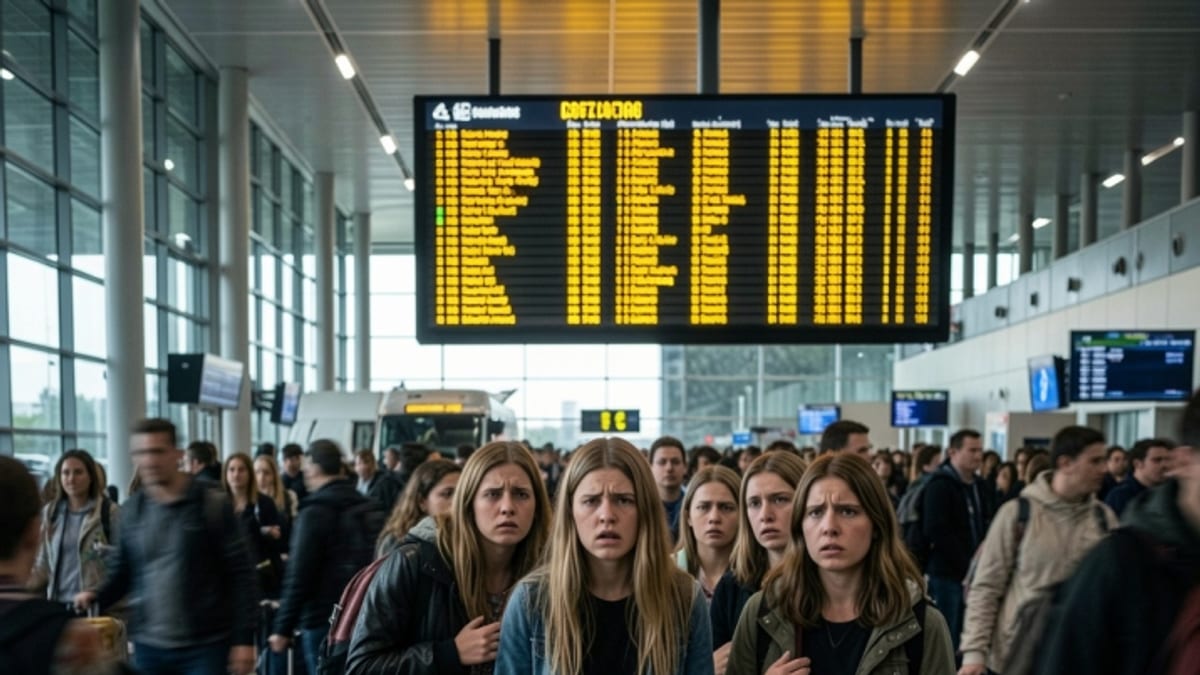
Image by Travel And Tour World
Major hubs from Melbourne to Auckland hit by rolling disruption
The latest disruption has rippled across some of the busiest airports in the Australia–New Zealand corridor, with reports of stranded passengers and missed connections in Melbourne, Sydney, Brisbane, Auckland and Wellington. Secondary airports and regional gateways feeding those hubs have also been affected as aircraft and crews fall out of position.
Operational data and media coverage indicate that at least 806 services have been delayed, with a further 45 flights cancelled, affecting domestic networks in both countries as well as trans-Tasman and Pacific routes. While not all affected flights are long-haul, bottlenecks at major hubs have magnified the impact for travellers attempting multi-leg journeys.
Peak morning and evening departure banks have been particularly impacted, with queues reported at check-in, transfer and customer service desks as travellers seek rebooking options. In several cases, passengers have been forced to stay overnight after the final departures to their destination were cancelled or heavily delayed.
The disruption is the latest in a series of reliability challenges that have dogged the region’s carriers since demand rebounded strongly following the pandemic, placing pressure on aircraft availability, airport infrastructure and staffing.
Qantas, Virgin, Jetstar, Network Aviation and Air New Zealand under strain
The bulk of the delays and cancellations are concentrated among the largest operators in the Australia and New Zealand markets: Qantas and its subsidiaries, including Network Aviation and budget arm Jetstar, together with Virgin Australia and Air New Zealand. Industry performance reports for recent months have highlighted elevated cancellation and delay rates across these brands compared with pre-pandemic norms.
Publicly available performance statistics from Australian and New Zealand transport agencies show that on-time arrival rates for mainline carriers have frequently hovered around the low-70-percent range in recent periods, with cancellation rates in some months pushing close to or above typical long-term averages. Those figures translate into thousands of disrupted journeys as peak holiday and event periods strain tightly scheduled fleets.
In addition, reports from passenger advocacy groups and online travel communities point to ongoing challenges with recovery once disruption begins. Limited spare aircraft, crew duty limits and high load factors on remaining flights can make same-day rebooking difficult, especially on busy trans-Tasman sectors linking cities such as Sydney, Melbourne, Brisbane, Auckland and Wellington.
The current wave of disruption has again highlighted the vulnerability of point-to-point networks when several airlines experience operational pressure at the same time, leaving limited alternative capacity for stranded passengers.
Weather, capacity pressures and fuel costs create a volatile mix
While individual carriers have cited a range of causes in recent disruption events, including adverse weather, resource constraints and technical issues, the wider pattern points to a system operating with little spare capacity. When storms, strong winds or low-visibility conditions affect a major hub such as Sydney or Auckland, flow-on effects can cascade across the network for many hours.
At the same time, airlines across the region are managing complex fleet renewal programs and aircraft maintenance schedules while demand remains strong. Industry commentary suggests that, in some cases, aircraft have less buffer time built into daily rotations, which can amplify the impact of a single delayed or cancelled sector.
Rising fuel costs are adding another layer of complexity. Recent coverage in New Zealand has highlighted how higher fuel prices have already prompted Air New Zealand and rival carriers to adjust schedules and fares, with thousands of passengers expected to be affected by targeted cancellations over coming months. Similar pressures are evident in Australia, where airlines are balancing fare levels, capacity and reliability as they seek to maintain profitability.
Against this backdrop, a single day involving hundreds of delayed flights and dozens of cancellations across multiple airlines underscores how quickly normal operations can unravel when several risk factors align.
Passengers face missed connections, out-of-pocket costs and limited recourse
For travellers, the most immediate impact of widespread disruption is missed holidays, business meetings and family events, along with additional accommodation and transport costs. Social media posts and online forums from recent disruption episodes across both countries show passengers reporting overnight stays at their own expense, last-minute rebookings on competing airlines and difficulties accessing timely customer support.
Consumer advocates in Australia have long argued that the current framework leaves passengers exposed when flights are significantly delayed or cancelled. A draft passenger rights charter developed at the federal level has proposed clearer minimum support standards, such as assistance with alternative flights and basic care after lengthy delays, but it stops short of mandating cash compensation for missed connections or lost time.
In New Zealand, similar debates are under way around the balance between operational flexibility for airlines and stronger rights for passengers who find themselves stranded. With major carriers now operating at high load factors on many routes, particularly during holiday peaks, securing a replacement seat on the same day can be challenging even when an airline accepts responsibility for the disruption.
The latest incident involving hundreds of delayed and dozens of cancelled flights has renewed calls from consumer groups and frequent travellers for clearer, enforceable standards on rebooking, refunds and care obligations when services do not operate as scheduled.
Growing pressure for long-term reliability reforms
The recurring nature of large-scale disruption across the Australia–New Zealand aviation market is prompting broader questions about planning, resilience and regulatory oversight. Industry analysts note that while reliability metrics have improved from the worst of the post-pandemic recovery period, they remain volatile and vulnerable to external shocks.
Airports, including major hubs such as Sydney, Melbourne, Brisbane, Auckland and Wellington, are investing in infrastructure upgrades to handle future growth and improve flow through terminals and runways. However, many of these projects are long term and, in the short term, construction activity can itself contribute to congestion and operating constraints.
On the airline side, carriers are progressively adding newer, more fuel-efficient aircraft and restoring regional capacity, which may in time build more flexibility into the system. Yet as long as demand remains strong and spare capacity is limited, days like the current one, where more than 800 services are delayed and 45 flights are cancelled across several brands, are likely to continue drawing public scrutiny.
For now, travellers are being urged by consumer advocates and travel planners to factor the possibility of disruption into itineraries by allowing extra connection time, considering travel insurance that covers delays and cancellations, and monitoring flight status closely in the hours before departure.