

More news on this day
Hungary has joined Germany, Denmark, Italy, Finland, the Netherlands, Spain and scores of other countries whose citizens must now obtain a UK Electronic Travel Authorisation before boarding flights, ferries or trains to Britain, as London fully enforces a new digital pre-screening system designed to tighten border security and modernise immigration controls.
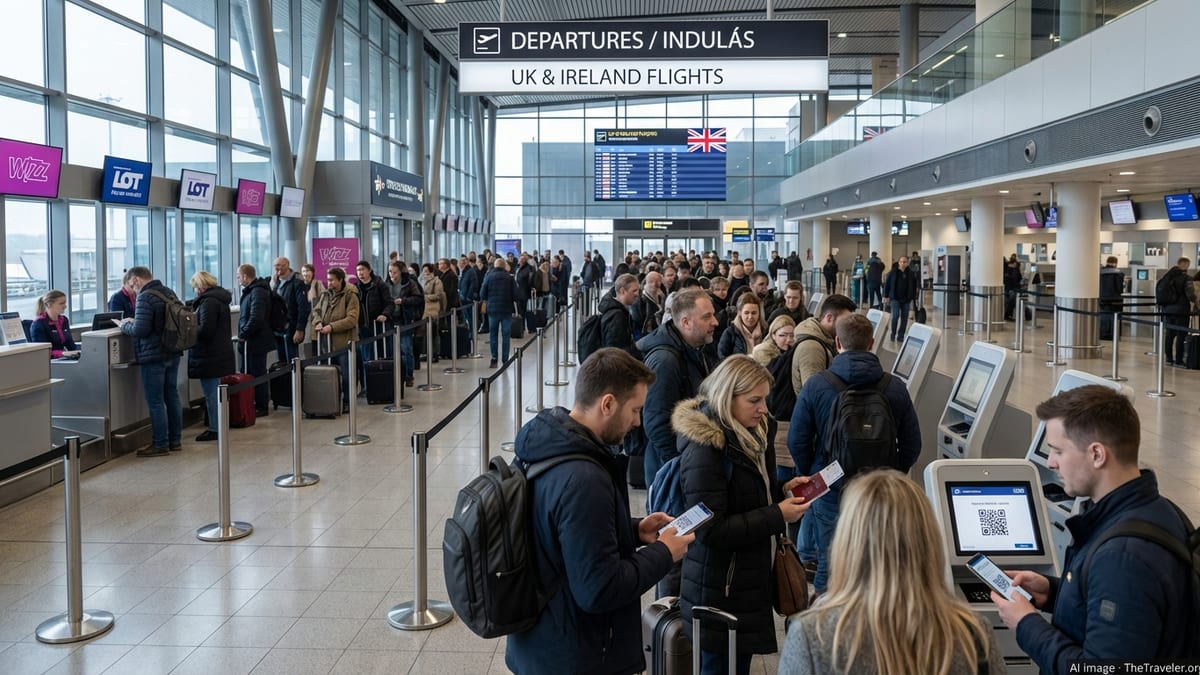
A New Reality for Visa-Free European Travellers
The UK’s Electronic Travel Authorisation, or ETA, is now mandatory for visitors from 85 visa-exempt countries, marking a decisive shift in how Britain manages short-term arrivals. Following a phased rollout that began with Gulf states and later extended to non-European nations, the scheme now fully captures European visitors, including citizens of Hungary alongside Germany, Denmark, Italy, Finland, the Netherlands and Spain.
For EU nationals, this represents a significant change from the pre-Brexit era, when freedom of movement allowed spontaneous, document-light trips across the Channel. Since April 2025, citizens of 34 European countries, among them Hungary, have been required to secure an ETA to travel to the UK for tourism, business or family visits of up to six months. With enforcement now tightened, carriers are under instruction to deny boarding to travellers who lack the digital clearance.
The new requirement brings the UK in line with similar systems such as the United States’ ESTA and the forthcoming European Union ETIAS programme. British officials argue that pre-travel screening offers a more secure and data-rich frontier, allowing authorities to vet passengers before they arrive, while promising a faster, more automated experience for those who are approved.
How the UK ETA Works for Hungarian and Other European Visitors
Under the scheme, travellers who previously entered the UK visa-free must complete an online application or use an official mobile app before departure. Applicants provide passport details, biometric information such as a digital photograph, and answer a series of security and eligibility questions. Decisions are typically issued within three working days, though many approvals are granted more quickly.
The ETA is electronically linked to the passport used in the application and is valid for two years, or until the passport expires, whichever comes first. During its validity, visitors can make multiple trips to the UK, usually for stays of up to six months at a time for tourism, business, or short-term study. Transit passengers who pass through UK border control will also need an ETA, tightening requirements for those using hubs such as Heathrow as a stepping stone to other destinations.
The cost of an ETA has been set in line with comparable schemes overseas. Travellers are warned that they will be refused boarding if the authorisation is missing, expired or does not match the passport they intend to travel on. Each individual, including children, must hold a separate ETA, and applications refused cannot be appealed through the ETA system itself; instead, applicants must pursue a full visa if they still intend to travel.
UK Steps Up Enforcement to Tighten Border Security
While the ETA has been available for many nationalities for some time, strict enforcement only began in late February 2026, ending a lengthy grace period during which some carriers and travellers were still adjusting. Airlines, ferry operators and rail companies have now been formally instructed to carry out rigorous checks and to bar non-compliant passengers from boarding services bound for the UK.
Officials present the measure as a pivotal element in a broader effort to create a more digital, intelligence-led border. By gathering passenger data in advance and running automated risk assessments, authorities say they can identify potential security or immigration risks before they reach UK soil, while smoothing the path for the vast majority of legitimate visitors.
The move comes as other regions tighten their own external borders. The European Union is preparing to introduce its Entry/Exit System, which will require non-EU nationals, including Britons, to supply biometric data on arrival, alongside the forthcoming ETIAS travel authorisation. Together, these parallel schemes point to a new era of data-driven border management across Europe, in which pre-travel permissions become the norm rather than the exception.
Implications for Travellers, Airlines and the Wider Tourism Industry
For leisure and business travellers from Hungary and other affected European countries, the ETA adds a new administrative step and a modest cost to visiting the UK. Travel advisers are urging passengers to build the authorisation into their trip planning in the same way they would a passport check, applying several days before departure and ensuring they travel on the passport registered with their ETA.
Industry groups have expressed concern that any confusion or last-minute applications could trigger disruption at airports and ports, particularly during peak holiday seasons. Airlines have warned that frontline staff are now in the position of enforcing immigration rules at check-in and boarding gates, with the risk of denied boarding incidents if passengers arrive without the proper authorisation.
On the other hand, some tourism officials argue that the low cost and multi-year validity of the ETA should limit its impact on visitor numbers once awareness improves. They note that many travellers are already familiar with similar systems in the United States and other destinations, and that the ability to reuse an authorisation for repeat trips could encourage frequent short breaks and business visits.
What Hungary’s Inclusion Signals About the Future of European Travel
Hungary’s inclusion alongside Germany, Denmark, Italy, Finland, the Netherlands, Spain and other European nations in the UK’s ETA programme underlines how deeply the continent’s travel landscape has changed since Brexit. Where once EU citizens crossed borders with little more than an identity card, they are now increasingly subject to pre-travel permissions, biometric checks and digital risk assessments.
For Hungarian travellers with long-standing cultural, economic and educational links to the UK, the new system formalises a relationship that was previously more informal. Students visiting universities, professionals attending conferences and families planning city breaks in London or Edinburgh must all now factor in digital paperwork, processing times and the possibility of refusal.
At the same time, travel analysts note that the UK’s move is not an outlier but part of a global trend toward advanced passenger screening, mirrored in North America, the European Union and parts of Asia and the Pacific. As governments seek to balance openness with security, travellers across Europe may find that the spontaneous cross-border trips that once defined the Schengen area are increasingly replaced by journeys that begin with an online form and a digital authorisation code.