

More news on this day
Hungary’s decision to reintroduce fuel price caps amid surging global energy costs has placed the country alongside Ireland, Italy, the United Kingdom, France and Turkey in a widening European struggle to contain gasoline prices, ease shortages and shield tourism-dependent economies from deepening travel disruption.
Get the latest news straight to your inbox!
New Price Caps Revive Old Fears in Hungary
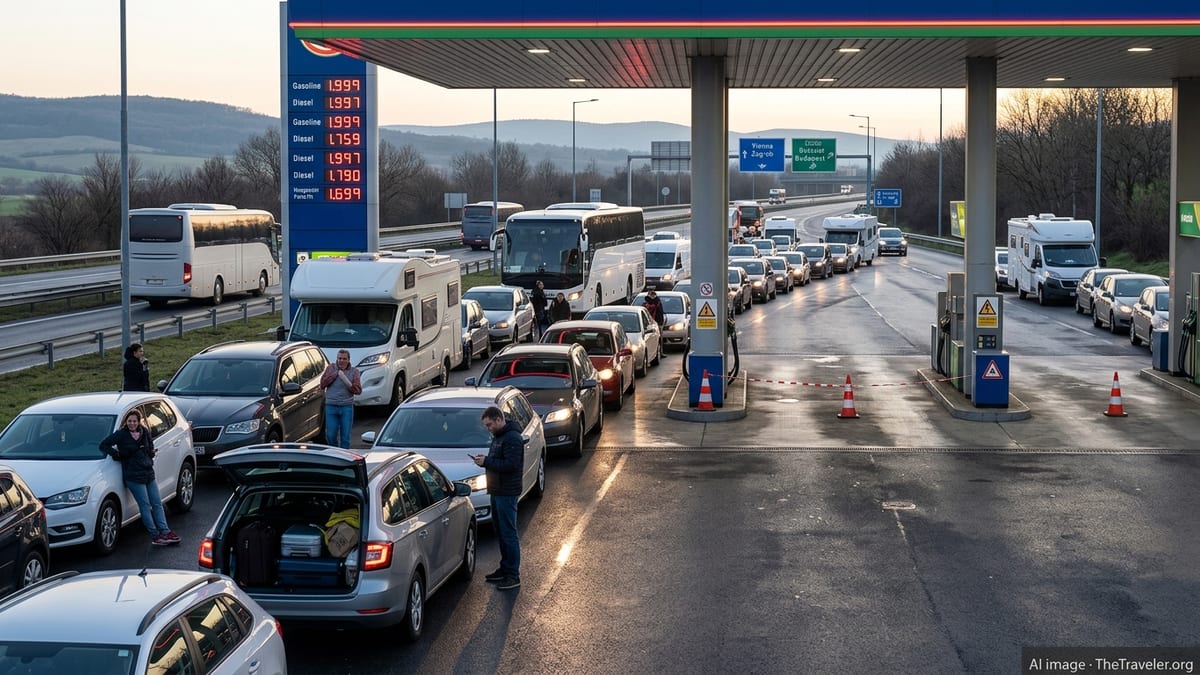
Publicly available information shows that Hungary has moved again to cap retail prices for gasoline and diesel in March 2026, setting maximum pump rates in response to a rapid rise in global oil prices linked to the conflict in the Middle East and the closure of key shipping lanes. The move follows a previous experiment with caps in 2021 and 2022, when regulated prices helped consumers in the short term but ultimately contributed to fuel shortages and queues at filling stations.
Reports from regional news outlets indicate that trade and industry groups in Hungary are warning of renewed supply stress as wholesalers weigh the cost of importing fuel at elevated international prices and reselling it below market levels. Earlier episodes showed that when margins are squeezed, distributors tend to divert supplies to neighboring markets, leaving domestic stations with intermittent stockouts and motorists facing long waits at pumps.
Travel and tourism operators in Hungary are watching the situation closely. Road-based tour companies and coach operators rely heavily on predictable fuel costs to plan itineraries, while domestic travelers and cross-border visitors use private cars extensively for regional trips. Any return of localized shortages or rations could complicate travel during the upcoming spring and summer seasons, adding another layer of uncertainty to an industry still recalibrating after the pandemic.
Analysts note that Hungary’s continued dependence on Russian crude imports, and the sensitivity of its refinery system to external shocks, remain structural vulnerabilities. These factors heighten the country’s exposure when international tensions or shipping disruptions trigger sudden spikes in oil and gas prices, forcing policymakers to choose between budgetary strain, consumer pain at the pump or renewed market interventions.
Energy Shock Ripples Across Ireland, Italy, UK, France and Turkey
Across Europe, published economic analysis links the latest jump in energy prices to the 2026 Iran war and related disruptions in the Strait of Hormuz, a critical corridor for global oil and gas shipments. Benchmark crude prices have moved well above 100 dollars per barrel at points in March, and natural gas benchmarks in Europe have also swung sharply higher, intensifying pressure on households, transport companies and tourism businesses.
In Ireland and the United Kingdom, energy-market commentary highlights the combined strain of volatile wholesale gas prices, high taxation on fuels and lingering infrastructure damage from recent winter storms that hit transport networks. Motorists have faced higher pump prices and, in some regions, temporary closures or reduced hours at rural fuel stations, complicating long-distance road travel and adding costs for holidaymakers planning self-drive itineraries.
In France and Italy, where summer road trips and domestic tourism are central to the travel economy, rising fuel costs are filtering into broader price levels. Industry surveys suggest that car rental rates, regional flight fares and some package tours have climbed as operators adjust to higher operating expenses. Publicly available tourism data for 2025 already pointed to strong demand, and current reports indicate that many travelers are now trading flexibility for certainty by booking earlier, locking in prices but accepting reduced spontaneity.
Turkey, a major hub for both European beach tourism and long-haul connections between Europe, Asia and the Middle East, is contending with the dual challenge of elevated jet fuel prices and currency volatility. Aviation and travel market coverage notes that carriers serving Turkey have begun to adjust schedules, recalibrate capacity and, in some cases, introduce fuel surcharges on international routes. This dynamic is feeding through to package holiday prices from the United Kingdom, Ireland, France and other origin markets.
Travel Disruption Mounts as Fuel and Weather Strains Collide
While outright nationwide fuel shortages remain limited, localized disruptions across several European countries have combined with severe winter weather to create what travel commentators describe as a particularly unstable operating environment. In the United Kingdom, France and Ireland, powerful storms during the 2025 to 2026 winter season damaged transport infrastructure, triggered flooding and led to periods of hazardous driving conditions and rail interruptions.
When extreme weather coincides with high fuel prices and constrained supply, transport operators have fewer options to absorb shocks. Bus and coach companies may be forced to consolidate services, reduce frequencies or impose surcharges, while regional airlines face difficult choices about maintaining marginal routes that have become more expensive to operate. Travelers have reported tighter seat availability on popular corridors, longer journey times on rerouted services and higher last-minute fares, especially where flights need to circumvent closed airspace near conflict zones.
Reports from aviation monitoring agencies underline that jet fuel price increases are now pushing up the cost base for airlines worldwide, with long-haul routes between Europe, Asia and the Pacific particularly affected. Some carriers have introduced targeted fare hikes or fuel surcharges on routes transiting around the Middle East, while others are adjusting schedules to prioritize the most profitable services. For leisure travelers from Ireland, the United Kingdom, France and Italy heading to Turkey or beyond, these changes can translate into higher prices, less choice and more complex itineraries.
At ground level, motorists in several European cities are encountering fluctuating pump prices and occasional queues at service stations on high-traffic days, particularly along major holiday corridors. While governments have deployed a mix of tax rebates, temporary subsidies and appeals for moderation in fuel use, the underlying volatility in global energy markets means such measures provide only partial, time-limited relief.
Tourism Faces Unprecedented Cost and Demand Pressures
Despite these headwinds, tourism demand across Europe remains robust, according to recent European and global travel industry assessments. Many travelers appear determined to continue or even expand their trips after several disrupted years, even as higher fuel costs feed through into airfares, accommodation rates and local transport prices. This combination of strong demand and rising costs is reshaping travel patterns in ways that are becoming more pronounced in Hungary and its European peers.
In price-sensitive markets, households are increasingly shifting from multiple short breaks by air to fewer but longer holidays, often within driving distance. However, when gasoline prices rise sharply and availability becomes uncertain, the value proposition of car-based tourism is eroded. Operators in Hungary, Ireland, Italy and France are therefore testing incentives for rail and coach travel, positioning these modes as relatively more stable and predictable than private car use during periods of fuel stress.
Tourism boards and local authorities are also under pressure to manage visitor flows to avoid congestion at key transport nodes already strained by fuel-related disruptions. In Turkey and parts of southern Europe, travel planners are highlighting off-peak travel, alternative airports and secondary destinations in an effort to spread demand and reduce pressure on the busiest hubs. At the same time, industry groups note that smaller destinations with limited fuel storage capacity or weaker transport links may be more vulnerable to even temporary supply interruptions.
Economic studies of recent seasons emphasize that tourism is a critical employer and source of foreign exchange for much of Europe. When high fuel prices collide with supply constraints, the impact is felt not only by airlines and fuel retailers but also by hotels, restaurants, cultural sites and small businesses that depend on visitor spending. This makes fuel policy decisions, such as Hungary’s renewed price cap and comparable measures debated in other countries, central to broader discussions about economic resilience and social stability.
Policy Responses and the Search for Longer-Term Stability
European governments are pursuing a range of strategies to respond to the current surge in energy costs while balancing fiscal constraints, climate commitments and political pressures. Some countries have focused on temporary tax cuts or targeted subsidies for low-income households and essential transport services, while others, like Hungary, have resorted to direct caps on retail fuel prices. Each approach carries trade-offs, from budgetary strain and potential distortions in supply to concerns about undermining incentives for energy efficiency.
At the European Union level, recently introduced rules to promote sustainable aviation fuel and accelerate the transition to lower-carbon transport are intersecting with the immediate challenges of affordability and reliability. Industry briefings describe a delicate balance: while sustainable fuels are seen as critical for long-term resilience and climate goals, they remain significantly more expensive than conventional jet fuel, adding to cost pressures during a period of heightened geopolitical risk.
In this context, travel and tourism stakeholders across Ireland, Italy, the United Kingdom, France, Hungary and Turkey are calling for clearer medium-term frameworks that would reduce uncertainty around fuel pricing, taxation and supply security. Suggestions in policy debates include expanding strategic fuel reserves dedicated to critical transport, enhancing cross-border coordination on emergency supplies and accelerating investment in rail and other lower-emission modes that are less dependent on imported oil.
For now, reports indicate that travelers planning trips in 2026 face a more complex landscape than in previous years. From Budapest to Dublin, Rome, London, Paris and Istanbul, decisions about where and how to travel are increasingly shaped by considerations of fuel cost, route stability and the risk of sudden disruption. The experience of Hungary, once again experimenting with price caps to shield consumers from global volatility, underscores how closely energy policy and tourism fortunes are intertwined across Europe.